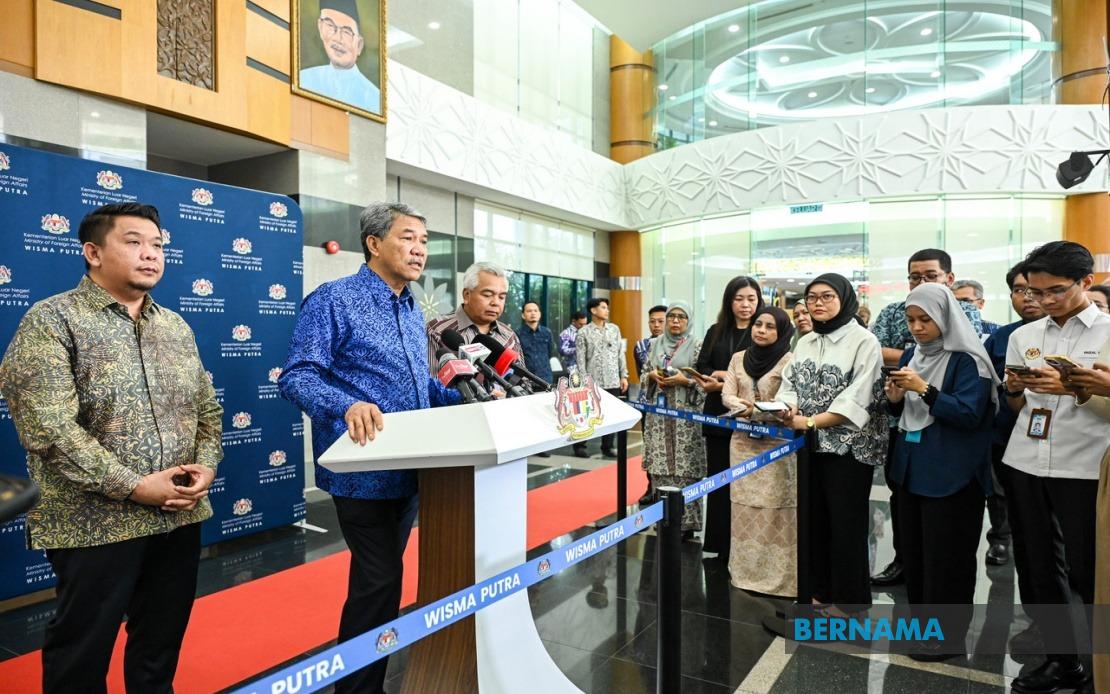
Myanmar has expressed its readiness to repatriate approximately 5,000 of its nationals currently sheltering in Malaysia, with maritime transport identified as the preferred method for the return journey. Foreign Minister Datuk Seri Mohamad Hasan disclosed this development following recent diplomatic engagement with Myanmar's newly appointed Foreign Minister Tin Maung Swe, revealing that both nations are exploring practical pathways to address one of Southeast Asia's most persistent displacement crises.
The Malaysian government has already completed the identification process for all 5,000 individuals targeted for repatriation, representing a significant administrative milestone in the planning stages. While Mohamad Hasan acknowledged that no concrete timeline has yet been established for the operation, he indicated that accelerating the repatriation schedule should become a priority for both administrations. The emphasis on expediting the process reflects growing pressure across ASEAN to resolve the humanitarian challenge posed by sustained refugee populations in receiving nations, particularly Malaysia, which hosts one of the largest concentrations of Myanmar's displaced persons.
Safety considerations remain the pivotal challenge in advancing the repatriation scheme. Mohamad Hasan articulated specific concerns about the vulnerabilities inherent in maritime return operations, questioning whether seafaring routes could adequately protect returnees and what conditions they might encounter upon arrival in Myanmar. These reservations underscore the delicate balance policymakers must strike between facilitating rapid repatriation and ensuring that refugees do not face persecution, trafficking, or dangerous transit conditions. The Foreign Minister's candid acknowledgment of these risks suggests Malaysia is insisting upon robust safeguards before endorsing any maritime repatriation initiative.
The conversation between Malaysian and Myanmar officials has also brought into sharper focus the need to broaden the regional understanding of Myanmar's refugee crisis beyond its most visible demographic dimension. Mohamad Hasan emphasized that the displacement phenomenon extends far beyond the internationally prominent Rohingya population, encompassing substantial communities of Chin, Karen, and other ethnic minorities fleeing violence and instability in Myanmar. This perspective is critical for Southeast Asian policymakers, as it contextualizes the refugee challenge as a structural consequence of Myanmar's internal ethnic and political tensions rather than as an isolated humanitarian issue affecting a single group. Recognising this diversity of displaced populations has implications for how ASEAN designs regional burden-sharing mechanisms and support structures.
ASEAN's institutional response to the Myanmar crisis continues to pivot around the Five-Point Consensus, a framework adopted by the bloc to establish parameters for addressing Myanmar's political and humanitarian dimensions. Mohamad Hasan reaffirmed Malaysia's commitment to maintaining this consensus as the foundational architecture for ASEAN engagement, stressing that any modifications to the agreement must undergo formal negotiation and approval by the collective membership. His insistence reflects concerns within ASEAN that ad-hoc bilateral arrangements or unilateral policy shifts could fragment the bloc's coordinated approach and undermine its leverage with Myanmar's government. The Foreign Minister made clear that Myanmar's current leadership must honor the undertakings made by previous administrations when the Five-Point Consensus was originally endorsed.
The push for regional coherence on Myanmar policy stems from ASEAN's recognition that uncoordinated refugee management creates vulnerabilities for all member states. Malaysia, Thailand, and Bangladesh have historically borne disproportionate shares of Myanmar's displaced populations, creating asymmetrical humanitarian and security burdens within the region. By framing refugee repatriation as an ASEAN-wide responsibility requiring collective decision-making, Mohamad Hasan is signalling that bilateral arrangements alone cannot sustainably resolve the crisis. This approach seeks to distribute both the responsibility for facilitating returns and the advocacy pressure on Myanmar's authorities across the full membership, rather than allowing it to concentrate on frontline states.
The timing of these discussions coincides with commemorations of ASEAN's founding principles, occasions that typically prompt reflection on the bloc's capacity to address transnational challenges. Malaysia's articulation of a coordinated, safety-conscious approach to refugee repatriation demonstrates how principles of regional solidarity can inform practical humanitarian policy. Yet the continued absence of a specific repatriation timeline also reveals the constraints within which ASEAN operates when engaging with one of its members on sensitive issues of internal governance and population management. The diplomatic language employed by Malaysian officials reflects the careful calibration required to maintain ASEAN unity whilst addressing legitimate concerns about refugee protection.
For Malaysia specifically, progress on repatriating even 5,000 refugees would provide meaningful relief from the resource pressures associated with hosting one of the world's largest undocumented populations. The country has long advocated for burden-sharing within ASEAN and globally, pointing to the disproportionate impact that protracted displacement exerts on its own development priorities and public services. A successful maritime repatriation operation could establish a precedent for larger-scale returns, though success hinges on Myanmar demonstrating genuine commitment to refugee reintegration and protection upon arrival. The sustainability of such returns depends equally on Myanmar's willingness to address the underlying political and security conditions that originally compelled displacement.
Looking ahead, the Malaysian Foreign Minister's statements suggest that ASEAN is exploring multiple pathways—diplomatic, institutional, and logistical—to incrementally reduce refugee populations whilst maintaining respect for international protection standards. The emphasis on safety protocols and collective decision-making reflects lessons learned from previous migration crises in Southeast Asia, where inadequately planned operations have resulted in trafficking, exploitation, and loss of life. Malaysia's insistence that Myanmar government leadership uphold previously agreed commitments indicates that Kuala Lumpur views the refugee issue not merely as a humanitarian concern but as integral to broader questions of accountability and responsible governance within the ASEAN framework. As negotiations advance, the success of this 5,000-person repatriation will likely serve as a test case for larger-scale returns and for ASEAN's capacity to manage complex transnational displacement challenges in an era of escalating regional instability.

