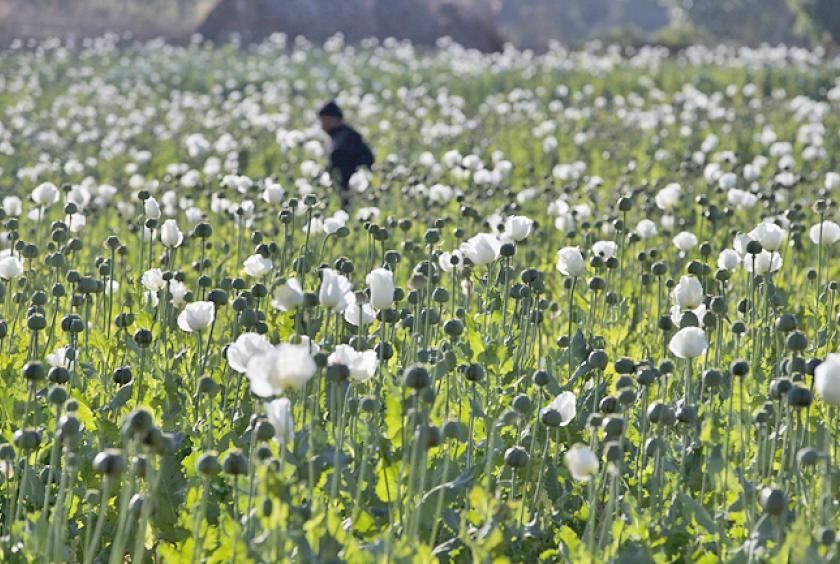
Myanmar's law enforcement agencies have delivered twin blows against trafficking networks, seizing substantial quantities of illicit narcotics across two separate operations in the country's heartland. The Central Committee for Drug Abuse Control (CCDAC) announced the coordinated enforcement actions, which together represent a notable disruption to drug supply chains that have long plagued Myanmar and the broader Southeast Asian region.
Antinarcotics officers acted swiftly following intelligence gathered from community informants, conducting a targeted operation in Amarapura township, situated within the Mandalay region. On Tuesday, police intercepted four motorcycles—vehicles commonly employed by traffickers for their speed and manoeuvrability through congested urban areas and rural routes alike. The roadside operation yielded 17.6 kilogrammes of heroin, one of the most dangerous and addictive substances in global drug markets. The bust resulted in the apprehension of four individuals suspected of involvement in the distribution network, marking a significant disruption to local trafficking operations.
The heroin seizure underscores Myanmar's ongoing struggle with opiate trafficking, a persistent challenge rooted in the country's position along the notorious Golden Triangle. The region, spanning parts of Myanmar, Laos, and Thailand, has historically functioned as a primary production zone for illicit poppies and refined heroin destined for markets across Asia and beyond. Despite Myanmar's efforts to combat cultivation through crop substitution programmes and law enforcement initiatives, heroin continues flowing through established trafficking corridors, often following ancient trade routes modernised for contemporary smuggling networks.
Paralleling this enforcement action, police in Lewe township of Naypyitaw Union Territory executed a separate but equally significant operation on July 23. Officers seized one million stimulant tablets—drugs increasingly prevalent in Southeast Asia's nightlife scenes, truck stops, and among rural labourers seeking to enhance endurance and alertness. The seizure netted five additional suspects, suggesting a more sophisticated distribution operation than the heroin case. Stimulant trafficking represents a growing concern for regional authorities, as these pills remain cheaper and more accessible than other narcotics, creating a mass-market appeal that complicates enforcement efforts.
The dual operations reflect Myanmar's commitment to activating drug enforcement mechanisms, even as the country grapples with political instability and institutional fragmentation following recent upheaval. The CCDAC's announcement demonstrates that certain elements of Myanmar's security apparatus maintain operational capacity and international coordination standards, despite broader governance challenges. These seizures, though significant, remain proportionally modest against the estimated trafficking volumes flowing through Myanmar annually—suggesting the enforcement successes represent merely the visible fraction of a far larger problem.
For Malaysia and other Southeast Asian nations, these Myanmar seizures carry direct relevance. Drug trafficking networks operate across porous borders with sophisticated compartmentalisation, meaning heroin and stimulants seized in Mandalay or Naypyitaw may have been destined for Malaysian, Thai, or other regional markets. Malaysian law enforcement agencies recognise that supply disruption in source countries provides marginal but meaningful relief to domestic drug markets, particularly when coordinated across borders through frameworks like the ASEAN Regional Forum on Drug Matters.
The legal consequences for those apprehended remain severe under Myanmar's Narcotic Drugs and Psychotropic Substances Law, which prescribes lengthy imprisonment and, in cases involving large quantities, capital punishment. This stringent legal framework theoretically serves as a deterrent, though traffickers continue operating despite elevated risks. The nine suspects detained across both operations will face judicial proceedings that could consume months or years, reflecting Myanmar's overwhelmed court system and investigative capacity constraints.
Stimulant trafficking particularly merits attention in Southeast Asian policy circles. Unlike heroin, which carries substantial social stigma even among users, stimulants enjoy perceived legitimacy in working-class communities where they substitute for proper nutrition and rest. They remain cheaper than heroin and attract different consumer demographics—construction workers, farmers, and transport operators—making supply reduction markedly more difficult. The one million tablets seized represents a fraction of stimulant circulation, yet signals that organised networks continue supplying the region despite interdiction efforts.
These operations also illuminate Myanmar's geography as a fundamental trafficking advantage. Naypyitaw's central location and Mandalay's position as Myanmar's largest city after Yangon position both areas as natural transit hubs where drugs converge before distribution to Thailand, Laos, Bangladesh, and maritime shipment toward Malaysia and beyond. Law enforcement presence in these locations, while growing, remains insufficient to seal trafficking corridors that have operated for decades.
The CCDAC's public announcement of these seizures serves multiple purposes within Myanmar's political context. It demonstrates state capacity and commitment to international drug control norms, signalling to regional partners that Myanmar remains engaged despite internal challenges. The disclosure also satisfies international reporting obligations under UN conventions on narcotic drugs, positioning Myanmar within the legitimate international community despite ongoing political questions.
For Malaysian authorities and regional counternarcotics officials, these Myanmar seizures reinforce the reality that upstream supply disruption requires sustained, intelligence-driven operations coupled with transparent information sharing. The heroin and stimulants confiscated in central Myanmar represent drugs prevented from reaching Southeast Asian markets, validating cooperative enforcement frameworks. Yet the sheer quantities seized also demonstrate the immensity of trafficking challenges—the nine suspects arrested represent merely the visible operational tier of networks extending across multiple countries and involving hundreds of facilitators.

