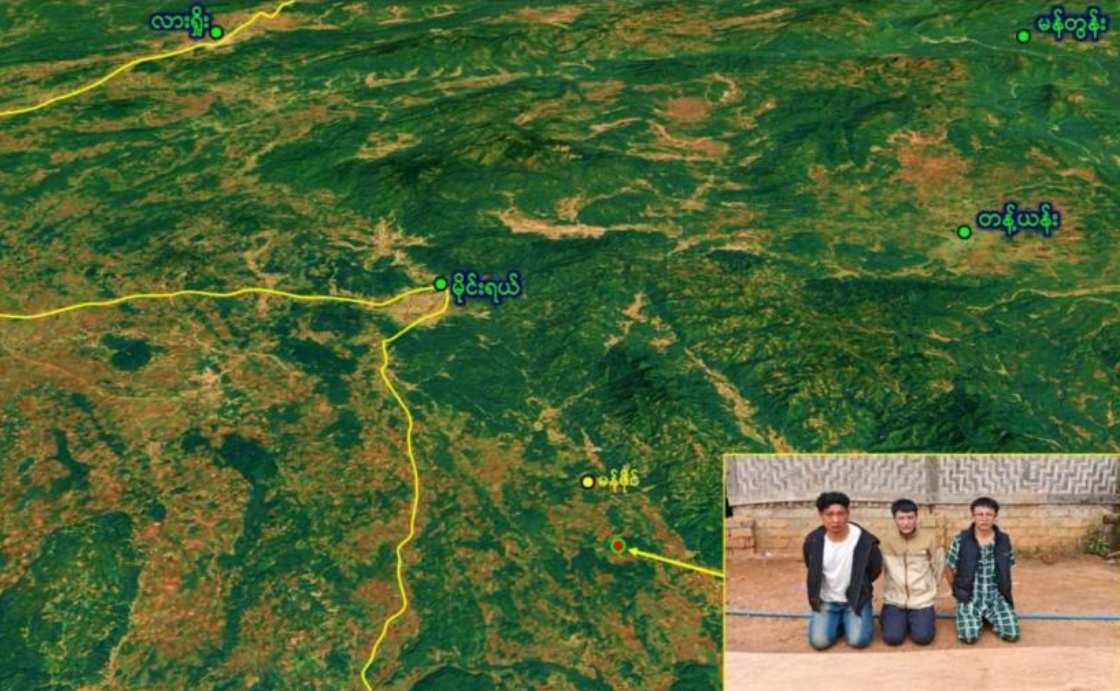
Myanmar's military has arrested three Chinese nationals suspected of orchestrating an online scam gambling operation in Mongyai Township, located in the remote border regions of northern Shan State. The August 26 apprehension represents the latest enforcement action in Myanmar's escalating crackdown on cross-border financial crimes that have proliferated in areas beyond effective government control.
The sophisticated nature of the seized equipment underscores how online scam gambling networks have evolved into well-resourced criminal enterprises. Authorities recovered 25 mobile phones, five all-in-one computers, two power stations, one Starlink satellite communications device, and ten communication radios from the operational site. This technological arsenal enabled the suspects to maintain sophisticated communications with victims and accomplices across international boundaries, demonstrating the infrastructure required to sustain large-scale digital fraud schemes targeting unsuspecting gamblers across Asia.
The operation revealed how criminal networks exploit Myanmar's porous borders and limited state capacity in peripheral regions. The three Chinese nationals had established temporary shelters comprising one corrugated iron structure with bamboo walls and five separate tarpaulin enclosures of varying sizes, intentionally constructed for easy dismantling and relocation. This tactical approach reflects how such operations leverage borderland geography to evade detection, operating in jurisdictional grey zones where multiple armed groups maintain influence and government authority remains contested.
Myanmar's intensified campaign against online scam gambling reflects regional security concerns that have resonated across Southeast Asia. Thailand, Cambodia, and Laos have all grappled with similar criminal networks exploiting vulnerable migrant workers and local residents through fraudulent gambling platforms. The spillover effects extend beyond immediate victims, as proceeds from these operations often finance broader criminal enterprises including drug trafficking and human smuggling networks operating throughout the Mekong region.
The arrest follows intelligence gathered from local residents who reported suspicious activity in the area, highlighting how community cooperation remains essential for identifying concealed operations in remote locations. Security personnel subsequently conducted investigations that confirmed the online gambling enterprise, leading to the coordinated military operation that resulted in the arrests. This intelligence-gathering approach has become standard practice across Myanmar's security apparatus, though its effectiveness remains limited in territories controlled by ethnic armed organizations resistant to central government authority.
Authorities seized the physical infrastructure used in the operation with plans to systematically dismantle all illegally constructed shelters in the region. This physical destruction component of enforcement operations carries symbolic significance beyond practical crime-fighting, as it demonstrates state commitment to reclaiming territory from criminal elements. However, the ease with which perpetrators can rapidly reconstruct operational sites in alternative border locations suggests that dismantling physical infrastructure alone provides only temporary disruption to networks with established logistics and financial resources.
The investigation will proceed through Myanmar's existing legal framework, with the detained suspects facing prosecution for illegal border crossing and operating unlicensed gambling enterprises. The legal process typically involves extended questioning periods and formal investigations before formal charges are filed. Conviction rates in online scam cases have varied considerably, partly reflecting the technical complexity of gathering evidence and the challenge of establishing jurisdiction when victims are located in different nations.
This enforcement action carries significant implications for Southeast Asian states confronting similar challenges. The arrest demonstrates that cross-border cooperation mechanisms, while imperfect, can yield results when multiple agencies coordinate operations. However, the fundamental vulnerability remains unchanged: sprawling border regions with limited infrastructure and competing authorities continue providing ideal environments for criminal entrepreneurs to establish sophisticated fraud operations targeting regional populations.
The prevalence of Chinese nationals operating scam gambling networks reflects both the technical sophistication of criminal organizations based in China and the cultural-linguistic advantages they possess when targeting Chinese-language speakers throughout Southeast Asia. These networks have demonstrated remarkable resilience and adaptability, quickly relocating operations when one site faces enforcement pressure and establishing new bases in alternative border jurisdictions. Myanmar's border regions, spanning approximately 2,400 kilometres with multiple armed groups controlling significant territory, remain particularly vulnerable to this persistent criminal activity.
Forward-looking enforcement efforts face structural obstacles that physical arrests and equipment seizures cannot overcome. As long as profit margins remain extraordinarily high and detection risks remain proportionally low, criminal syndicates will continue investing in borderland operations. Regional cooperation frameworks must evolve to address the transnational nature of these schemes, including intelligence sharing, extradition protocols, and coordination on financial investigations to disrupt the money laundering networks that sustain these operations.

