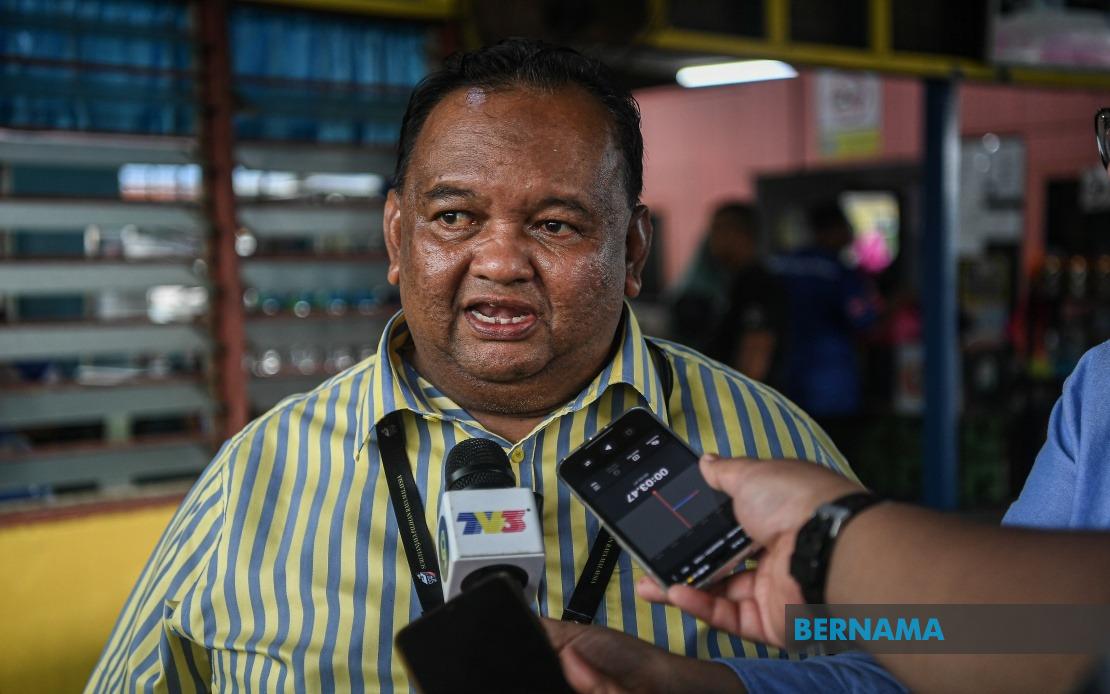
Muszaide Makmor, Barisan Nasional's representative for the Sedili state seat, is banking on an agricultural modernisation agenda to secure re-election in the July 11 Johor state polls. The incumbent is positioning technological advancement in farming as his primary platform, announcing plans to expand agro-technology ventures into Felda areas through partnerships with leading research universities. The strategy reflects a broader push to revitalise rural livelihoods and arrest youth migration from the constituency, a persistent challenge across Malaysian agricultural zones.
The centrepiece of Muszaide's economic vision involves deploying expertise from Universiti Putra Malaysia and Universiti Malaysia Terengganu to establish high-value aquaculture and specialty crop projects throughout Felda settlements. Giant freshwater prawn farming operations in Sungai Sedili Kecil and mud crab breeding initiatives in Sungai Sedili Besar serve as proof-of-concept ventures, demonstrating the income potential available to small-scale farmers willing to adopt modern techniques. Alongside these aquatic farming schemes, ginger cultivation represents another diversification avenue designed to reduce dependence on traditional palm oil monoculture and create multiple revenue streams for participating smallholders.
Muszaide highlighted the multiplier effects that these initiatives can generate, particularly benefiting Felda's second-generation settlers who inherit land rights but often lack sufficient capital or market access to achieve financial security. During a recent visit to Aping Timur, local residents expressed enthusiasm for programme expansion, suggesting genuine grassroots demand for alternative income sources. The emphasis on bolstering settler incomes addresses a long-standing tension within Felda schemes, where land ownership does not automatically translate into sustainable prosperity, especially as commodity prices fluctuate.
The campaign platform extends beyond agriculture into industrial development with the planned establishment of a large-scale integrated palm oil mill serving the region. Officials project that this facility will generate over 200 direct employment opportunities for young people, directly tackling the youth unemployment and out-migration patterns that undermine community stability. By anchoring downstream processing capacity locally rather than exporting raw commodities, the strategy aims to create a more robust economic multiplier effect within Sedili, keeping value-added activities and associated wages circulating within the district economy.
Muszaide framed the mill project explicitly as a retention mechanism, designed to persuade young residents to build careers locally rather than seeking opportunities in urban centres. The logic reflects recognition that agricultural communities cannot compete with cities on wage levels alone; instead, they must offer comparable living standards and career progression. By positioning the district as a processing hub rather than merely a production zone, Muszaide argues that Sedili can achieve the economic dynamism necessary to justify long-term residence and investment by its youth demographic.
His approach to the campaign itself suggests confidence in his track record, stating that he would defer to voter judgment on his developmental accomplishments. This rhetoric, common among incumbents, invites examination of what has actually been delivered during his tenure. The implicit claim that Sedili has progressed measurably under his stewardship forms the foundation of his re-election case, though voters will weigh this against alternative visions presented by his opponents.
The Sedili contest has evolved into a three-way race, with Muszaide facing competition from Rasman Ithnain representing Perikatan Nasional and Pakatan Harapan candidate Amirul Husni Onn. This constellation reflects the fragmented political landscape in Johor, where the traditional two-bloc contest has fractured into multipolar competition. The presence of three credible contenders means that victory margins could narrow significantly, and voter mobilisation intensity may prove decisive.
Rasman Ithnain, the former Sedili assemblyman, mounted a pointed critique of development outcomes, focusing on the gap between land titling success and housing completion. While his past efforts reportedly enabled nearly 3,000 second-generation Felda recipients to secure land titles, Rasman observed that many recipients remain unable to construct or occupy homes, creating a paradox of legal ownership without usable assets. This situation has imposed genuine hardship, with title holders burdened by monthly loan repayments of RM300 to Syarikat Perumahan Negara Berhad while their properties languish incomplete due to inadequate infrastructure development.
Rasman alleged that infrastructure approval delays reflect political considerations rather than technical or financial constraints, a claim that strikes at the heart of governance legitimacy. If accurate, such delays would represent a particularly cynical form of political manipulation, weaponising development approvals to disadvantage constituencies represented by opposition parties. Johor's integrated water system makes his analysis plausible, as state-level infrastructure decisions can effectively facilitate or obstruct local development regardless of local effort.
Water supply disruptions emerged as another critical grievance, particularly affecting both traditional villages and Felda settlements within the constituency. These disruptions intensify during festive seasons when demand peaks and supply management becomes acute, suggesting a systemic capacity problem rather than isolated incidents. The water crisis transcends agricultural or industrial development discourse; access to reliable clean water represents a basic utility that developed constituencies take for granted, making its absence a powerful symbol of neglect.
Rasman's proposed remedy involves securing a special federal loan to address the utility deficit, contingent on Johor's water debt already being fully settled. This technical argument carries weight, as it specifies a funding mechanism rather than making vague promises. The suggestion reflects understanding that state finances constrain what Johor can accomplish independently, necessitating federal intervention for large-scale infrastructure rehabilitation. Whether federal authorities would accede to such a request depends on political factors beyond Sedili's control, complicating any single assemblyman's ability to deliver on water infrastructure promises.
The Johor election overall sees 172 candidates competing for 56 state seats, representing an intensely crowded field and suggesting significant voter fragmentation across multiple parties and independent candidates. Early voting on July 7 will provide initial signals of turnout patterns and relative candidate strength before the main polling day on July 11. The outcome in Sedili, as one constituency among many, will contribute to determining which coalition commands Johor's legislative majority and hence controls state resources and developmental priorities for the coming term.

