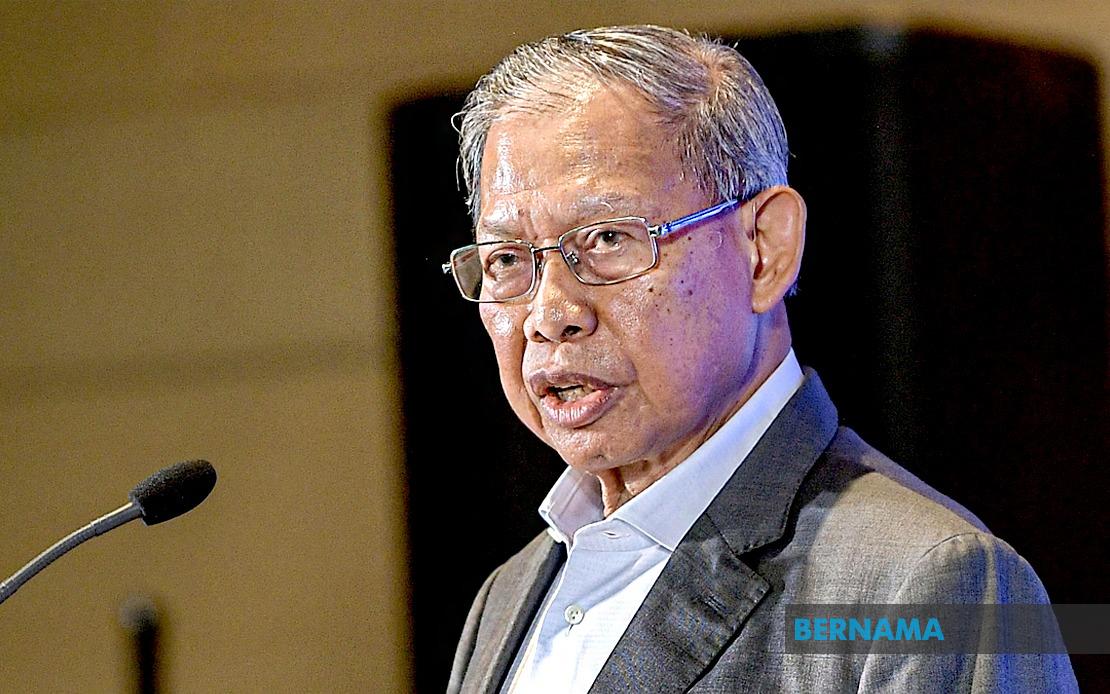
Datuk Seri Mustapa Mohamed has firmly closed the door on any electoral return, declaring that the 16th General Election will see him remain on the sidelines as UMNO charts its future with a fresh crop of political talent. Speaking at a gathering in his hometown of Pasir Mas honouring his political career, the 76-year-old former Jeli Member of Parliament left no room for ambiguity: his years of seeking office have ended, and it is time for Malaysia's political landscape to shift toward younger voices.
Mustapa's pronouncement carries particular weight given his substantial track record in Malaysian politics. As former Minister of International Trade and Industry, he accumulated decades of ministerial experience and policy expertise that shaped Malaysia's economic trajectory. His decision to step back represents a generational inflection point within UMNO at a time when the party, like many established political organisations across Southeast Asia, grapples with questions of succession planning and institutional renewal. His explicit framing of this retirement as a matter of fairness—acknowledging that younger figures deserve their turn at leadership—signals a conscious choice rather than mere circumstantial withdrawal.
The political arithmetic underlying Mustapa's stance reflects broader dynamics within Malaysia's governing coalition. UMNO has in recent years confronted internal pressures around youth representation and the concentration of power among senior figures. By voluntarily stepping aside and explicitly advocating for generational transition, Mustapa positions himself as a statesman prioritising institutional health over personal ambition. This approach contrasts with patterns observed elsewhere in Southeast Asia, where veteran politicians often cling to office far longer, creating bottlenecks in leadership succession and frustrating younger cadres seeking advancement.
Mustapa's acknowledgement of his physical limitations—specifically his admission that his gait is no longer as steady as it once was—grounds his decision in practical reality. He recognises that the demands of electoral campaigning and parliamentary duties require vigour that advancing age has diminished. This candid self-assessment stands out in a region where leaders frequently deflect questions about age-related fitness for office. His willingness to articulate such vulnerabilities publicly may provide implicit permission for other senior figures to contemplate similar decisions, though political traditions typically make such admissions rare.
Yet Mustapa has carefully distinguished between stepping away from electoral politics and withdrawing from public service entirely. He emphasises that he intends to remain an active contributor to UMNO's development through non-electoral channels. His commitment to mentoring younger colleagues, sharing strategic insights, and strengthening the party's grassroots engagement suggests he envisions a continuing role as a keeper of institutional memory and strategic wisdom. This model of elder statesmanship—positioning experience as a resource for the next generation rather than as a power base to defend—offers a template for how veteran politicians might remain constructive without blocking advancement.
Mustapa's trajectory through Malaysia's recent political turbulence has been noteworthy. He departed UMNO in September 2018 to join Bersatu during a period of significant flux in Malaysian politics, only to return to UMNO in June this year. His willingness to navigate these shifts and ultimately commit again to UMNO, whilst simultaneously announcing his electoral retirement, suggests someone at peace with his political legacy. Rather than seeking to cement his influence through one final election cycle, he appears confident enough in his accomplishments to enable others to build upon them.
The timing of his announcement—during an Independence Month celebration alongside a "Welcome Home" event—carries symbolic resonance. Mustapa effectively frames his return to UMNO and his electoral exit as part of a coherent narrative of homecoming and completion. He returns to the party he long represented to help shepherd it forward, but through channels of mentorship rather than contestation. This narrative arc allows him to position retirement not as diminishment but as evolution.
For Malaysian observers, Mustapa's stance raises questions about how UMNO and other major parties will institutionalise youth advancement. The party's electoral performance in recent years has been mixed, and demographic pressures mean that voters increasingly comprise younger cohorts with different expectations and concerns. Parties that successfully rotate leadership toward these younger generations whilst retaining institutional memory and strategic continuity may enjoy advantages over rivals locked in intergenerational power struggles. Mustapa's explicit championing of this approach suggests at least some recognition within UMNO's senior ranks that generational transition is not optional but essential.
The former minister has also flagged his intention to contribute through academic platforms, sharing knowledge with university students across both public and private institutions. This pivot toward educational engagement suggests that Malaysian political veterans increasingly recognise the value of shaping thought and policy discourse beyond parliament. Academic spaces offer opportunities to mentor future leaders across party lines and to shape thinking on policy issues that will confront Malaysia for decades. This approach mirrors trends observed in other developed democracies where retired senior politicians transition into educational and think-tank roles.
Mustapa's statement that "we must continue striving to ensure Malaysia regains its excellence" encapsulates a patriotic impulse underpinning his decision. Rather than presenting retirement as a withdrawal from national service, he frames it as a reallocation of effort toward different forms of contribution. This language subtly invokes Malaysia's economic and political standing relative to regional peers, tapping into nationalist sentiment whilst avoiding the self-serving rhetoric that often accompanies political exits.
For UMNO specifically, Mustapa's endorsement of generational transition arrives at a moment when the party must navigate complex internal dynamics. The coalition government requires UMNO as a cornerstone, yet the party's ability to attract and retain younger voters remains contested. Having respected figures like Mustapa actively encourage youth advancement, rather than competing with them for office, strengthens the party's claim to be modernising and renewing itself. His positioning as a mentor figure available to guide younger leaders through challenges provides continuity and institutional anchoring during periods of transition.
The practical impact of Mustapa's announcement will depend partly on how UMNO's organisational structures and senior leadership respond. Genuine mentorship systems and mechanisms for channelling elder statesmen's expertise into party development require intentional design. Whether UMNO moves swiftly to formalise advisory roles for figures like Mustapa, or whether his offer of continued service remains largely rhetorical, will signal the party's genuine commitment to managing generational transition. Other Southeast Asian political organisations watching UMNO's evolution will draw their own conclusions about how major parties can refresh themselves whilst retaining institutional knowledge and strategic perspective.

