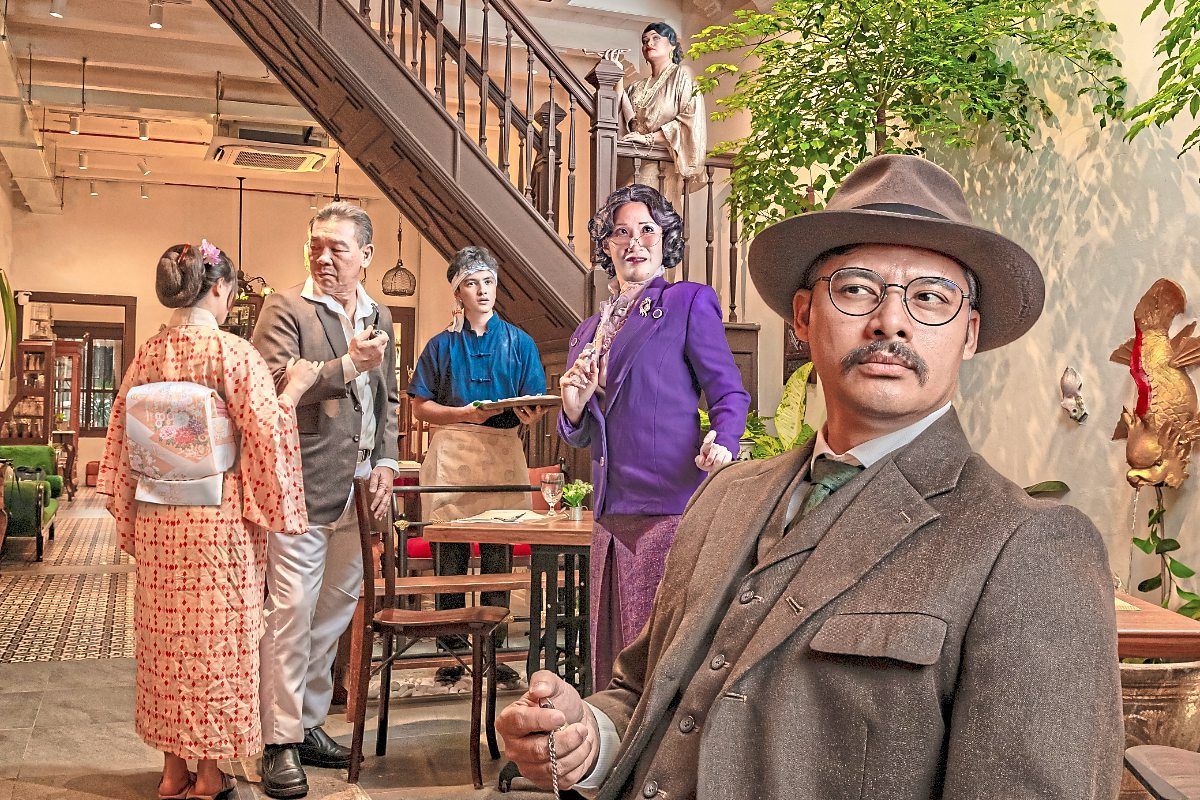
An innovative theatre production launching this month in Melaka offers audiences the chance to become amateur detectives while savouring authentic Peranakan cuisine in a carefully curated heritage setting. Presented by Krate Creative Space in partnership with The Garden@Heeren—a historic Peranakan house situated on Jalan Tun Tan Cheng Lock—the experience unfolds across four separate weekends spread between July and August, inviting guests aged 15 and above to participate in an evening of mystery, intrigue and culinary tradition.
The evening begins with an elaborate Peranakan multi-course dinner, featuring signature dishes that define the region's gastronomic heritage: pie tee, pongteh chicken, cincalok omelette and other traditional offerings. Rather than passive observation of a theatrical performance, however, diners become active participants in an unfolding narrative. As courses are served, characters materialise within the dining rooms and throughout the venue's spaces. Guests encounter clues embedded in the environment, engage in scripted exchanges with professional performers, and navigate the house as investigators piecing together fragments of a mystery. The immersive structure allows audiences flexibility in their engagement level—some guests may observe as bystanders while others assume more prominent investigative roles that directly influence how the narrative develops.
The mystery itself is anchored in a compelling scenario: the grand reopening of a refurbished restaurant operated by the celebrated Chef Fa. What begins as an elegant celebratory gathering transforms dramatically when a shocking tragedy occurs within the venue. Fortuitously, a detective portrayed by Francis Augustine is present to assume command of the investigation. From that pivotal moment, guests transition from dinner companions to members of an investigative ensemble, tasked with examining crime scenes, searching for concealed evidence, interviewing suspects portrayed by cast members including Sonia Lee, Lee You Meng, Elijah Skye and Neena Shu, and constructing theories about the perpetrator's identity. The two-and-a-half-hour experience culminates with audience members presenting their own verdicts, determining whom they believe committed the crime.
A particularly distinctive feature of the production involves its dual narrative structure. The initial two weekends present one conclusion to the mystery, while the final two weekends offer an entirely different resolution. This design choice enables repeat attendees to experience essentially a new production, encountering alternative plot developments and previously hidden details that only emerge in the second version. Such structural innovation reflects sophisticated understandings of repeat theatre attendance and audience engagement in immersive contexts.
Wee, the creative force behind Krate Creative Space's productions, explains that conceiving a murder mystery within a heritage context presented substantial creative challenges. The breakthrough arrived through discovering The Garden@Heeren, a venue whose architectural and historical character naturally evokes the suspense and narrative richness essential to mystery storytelling. The 1930s setting amplifies this atmospheric quality, allowing contemporary audiences to experience sensory immersion across multiple channels—the period-appropriate décor and costumes, the authentic cuisine, live musical accompaniment, and face-to-face interactions with performers all conspire to transport participants backward in time.
The creative director emphasises that her previous theatrical experiments cultivated an approach to audience engagement that remains central to this new production. Rather than determining a fixed performance arc, each staging adapts based on how individual audience cohorts conduct their investigation. Variations in questioning strategies, different interpretations of discovered clues, and distinct conversational approaches with suspect characters ensure that no two performances unfold identically. The combination of investigative unpredictability with the dual-ending structure creates substantial replay value—an important consideration for independent theatre operations seeking to build sustainable audiences.
Krate Creative Space, established in 2016, has positioned itself as Melaka's pioneering independent creative organisation dedicated to customised, interactive and interdisciplinary live performance. Across nine years of operation, the company has developed more than ten original productions, cultivating a dedicated audience base that recognises the quality and cultural significance of its work. While approximately half of Krate's attendees originate from Melaka itself, substantial numbers travel from the Klang Valley, Penang, Johor and Singapore. Notably, the company also attracts international tourists seeking authentic cultural experiences that extend beyond conventional heritage tourism, representing an emerging market segment increasingly interested in immersive artistic encounters connected to local identity and tradition.
The sustainability of small independent theatre operations in Malaysia remains precarious, a reality that Krate's leadership acknowledges frankly. To maintain operational viability, the company has deliberately diversified revenue streams beyond ticket sales alone. The organisation's creative headquarters, located in Bukit Beruang, functions simultaneously as a café space alongside its core functions as rehearsal studios and discussion venues. This integrated approach allows Krate to generate ancillary income while creating a gathering space for its community of returning patrons and collaborators.
Wee articulates an ambitious long-term vision positioning immersive theatre as a legitimate component of Malaysia's cultural tourism infrastructure, particularly within heritage destinations like Melaka. The organisation aspires toward establishing a permanent facility within the city—a dedicated venue from which to present regular heritage-inspired immersive experiences accessible throughout the year to both domestic audiences and international visitors. Such an undertaking would transform Krate from a producing organisation dependent on temporary venue partnerships into an anchored cultural institution capable of sustained artistic output. This aspiration reflects broader possibilities for how Southeast Asian cities might develop distinctive cultural offerings that compete with standardised tourism experiences through authentic, locally-inflected artistic production.
The organisation's recent expansion beyond Melaka demonstrates emerging confidence in its model and brand recognition. In May of the previous year, Krate transported its original production The Best Nyonya to Penang for the first time, staging performances at Georgetown Mansion and reaching audiences in that heritage city. This expansion strategy—establishing footholds in multiple heritage locations while maintaining creative autonomy—suggests how independent theatre practitioners might construct sustainable networks across the region. The current murder mystery project represents the logical evolution of this approach: taking a proven immersive theatrical model and adapting it to different heritage environments while maintaining the cultural specificity and artistic integrity that distinguish Krate's work from commodified tourist entertainment.

