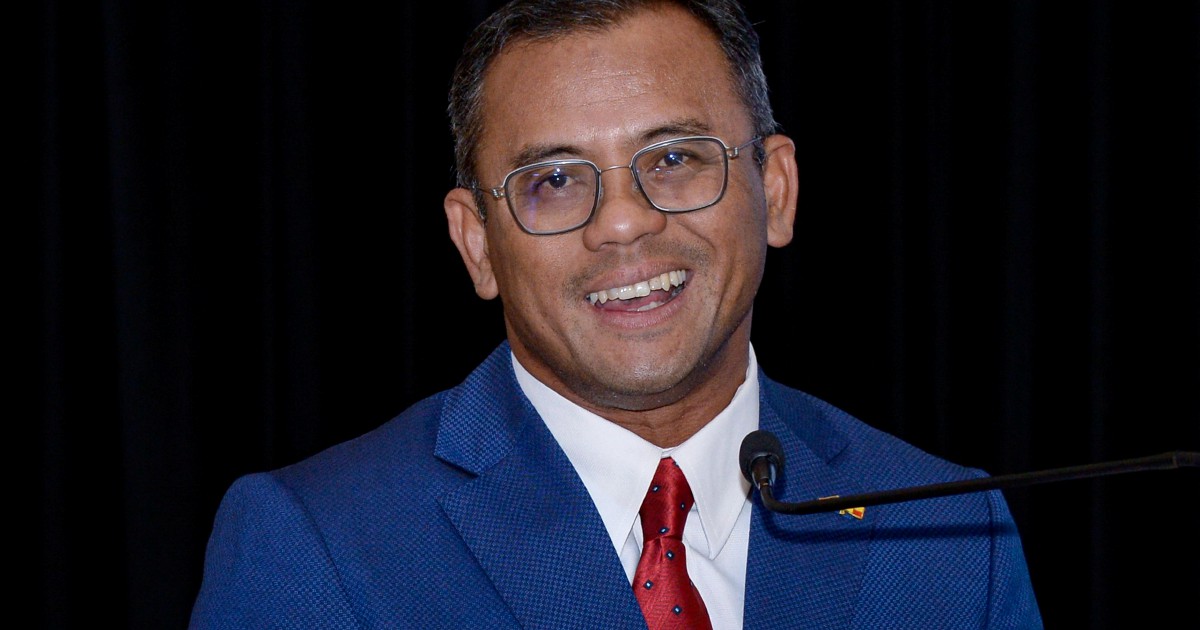
Lawmakers in the Dewan Rakyat have raised the alarm over governance failures at Lembaga Tabung Haji, calling for the establishment of a comprehensive task force involving multiple government agencies to conduct a thorough investigation into past irregularities affecting the pilgrimage savings institution. The proposal reflects growing parliamentary scrutiny of the fund's management and raises the possibility that financial misdeeds at the organisation may have overlapped with the broader 1MDB scandal that has cast a long shadow over Malaysian financial institutions and governance.
Tabung Haji, which manages savings for Malaysian Muslims preparing for their hajj pilgrimage to Mecca, has faced mounting questions about its financial stewardship over recent years. The fund serves a critical function in Malaysian Islamic finance and holds substantial assets on behalf of account holders across the nation. Irregularities at such an institution carry implications not only for individual pilgrims but for public confidence in religiously mandated financial institutions generally. The parliamentary intervention signals recognition that these issues demand coordinated investigation rather than isolated departmental scrutiny.
The nexus between potential Tabung Haji misconduct and the 1MDB affair presents particular investigative urgency. The 1MDB scandal, which implicated state investment fund assets and involved figures at the highest levels of government, demonstrated how Malaysian financial institutions can become vehicles for corruption and embezzlement. If comparable patterns emerged at Tabung Haji, the implications would extend beyond a single organisation to suggest systemic vulnerabilities in institutional oversight across Malaysia's financial architecture.
A multi-agency task force would theoretically combine expertise from the Malaysian Anti-Corruption Commission, Bank Negara Malaysia, the police commercial crime division, and potentially the attorney general's office to create integrated investigative capacity. Such coordination allows cross-referencing of financial flows, personnel movements, and transaction patterns that might reveal connections invisible to individual agencies operating within their separate jurisdictions. The pooling of intelligence and investigative resources represents standard practice when suspected fraud extends across institutional boundaries.
The investigation would need to examine historical decision-making at Tabung Haji management levels, particularly during the period when 1MDB-related activities were most active in the Malaysian financial sector. This includes scrutinising investment decisions, fund flows between institutions, related-party transactions, and any coordination with entities implicated in the 1MDB matter. Whether direct transfers of funds occurred or whether shared personnel facilitated inappropriate arrangements would constitute critical investigative pathways.
For Malaysian pilgrims, the integrity of Tabung Haji operations directly affects their financial security. Account holders have contributed savings over decades expecting protection and prudent management of their resources. Revelations of irregularities, particularly if connected to politically sensitive scandals, undermine trust in the institution's fiduciary responsibilities. A transparent investigation process and public disclosure of findings would be necessary to restore confidence among the two million-plus account holders nationwide.
Regionally, the incident reflects Southeast Asia's ongoing struggles with institutional corruption and financial crime. Malaysia has made rhetorical commitments to anti-corruption enforcement, yet investigations into major scandals often proceed glacially and face obstacles from political considerations. A genuinely independent multi-agency probe of Tabung Haji could demonstrate government willingness to pursue accountability regardless of institutional sensitivities, potentially signalling a shift toward more rigorous financial governance across the region.
The parliamentary call also raises questions about regulatory oversight mechanisms that allowed irregularities to persist undetected. Bank Negara Malaysia and the Tabung Haji board itself bore responsibility for monitoring the fund's operations. If these oversight bodies failed in their duties, the investigation should examine whether institutional failures stemmed from inadequate resources, conflicting priorities, deliberate negligence, or deliberate complicity. Such findings would inform necessary reforms to prevent recurrence.
International observers, including foreign governments and multilateral organisations, have maintained interest in Malaysia's corruption investigations. A robust inquiry into Tabung Haji would contribute to Malaysia's reputation for institutional accountability, particularly among ASEAN partners and Western allies concerned with governance standards. Conversely, a superficial investigation would further undermine Malaysia's credibility in claiming commitment to transparency and rule of law.
The broader context includes Malaysia's recovery from the 1MDB scandal itself, which damaged national reputation and cost substantial resources in legal proceedings and asset recovery efforts. Unmasking additional corruption networks linked to that episode could provide opportunities to recover misappropriated funds and prevent similar schemes from developing elsewhere in the financial system. Public disclosure of such connections might also clarify the full scope of the 1MDB-related wrongdoing that persists as an unresolved chapter in Malaysian governance history.
Successful investigation depends on adequate funding, protection for investigators from political interference, and commitment to prosecuting findings regardless of the status of individuals implicated. These conditions have historically proven challenging to maintain in high-profile Malaysian investigations. Parliamentary visibility and public attention to the task force establishment create accountability mechanisms, but vigilance will remain necessary to ensure the investigation achieves genuine accountability rather than serving as symbolic gesture.

