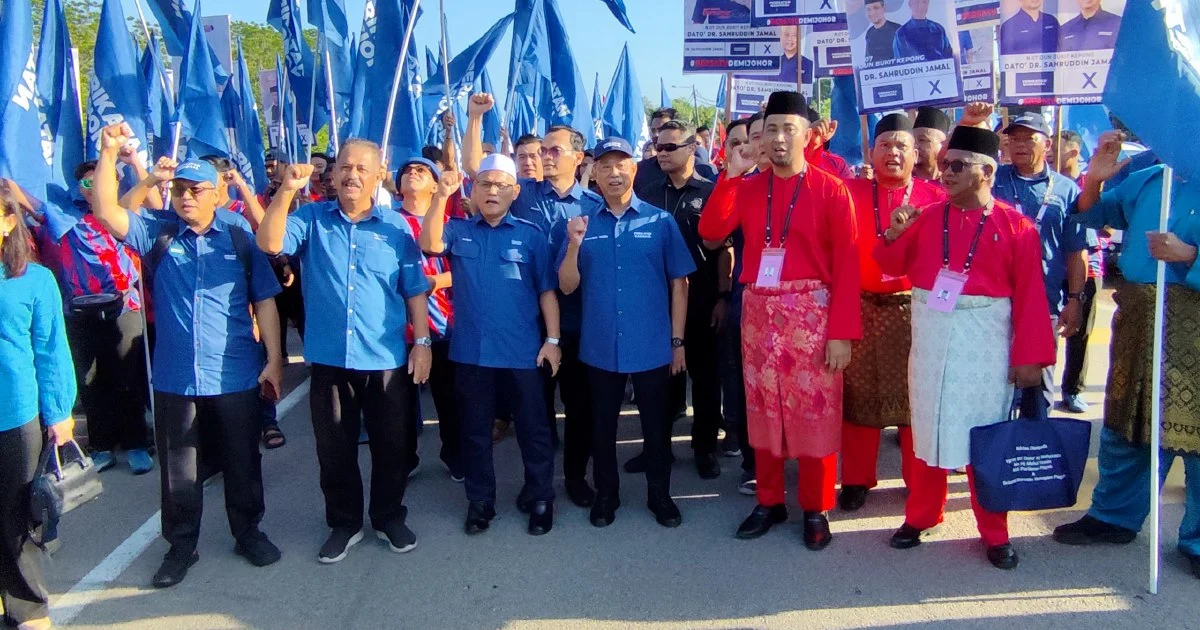
Tan Sri Muhyiddin Yassin, president of Bersatu, made a strategic appearance at the Pagoh Sports Complex Hall before 9 am on Thursday, signalling the party's commitment to its campaign in the Bukit Kepong constituency during the ongoing Johor state election. The timing and nature of his visit underscored the significance of the seat within Bersatu's broader electoral strategy in the state, as the party seeks to expand its influence in an increasingly competitive political landscape. Muhyiddin's presence at the nomination centre alongside candidate Sahruddin conveyed a clear message to party members and voters alike about the importance placed on this particular contest.
Bukit Kepong represents one of several critical battlegrounds in Johor where Bersatu is attempting to consolidate support and chip away at the dominance of established coalition partners. The constituency's electoral dynamics have shifted in recent years, reflecting broader changes in voter sentiment across Peninsular Malaysia. By positioning himself alongside Sahruddin during the formal nomination process, Muhyiddin leveraged his standing as party leader to boost the candidate's profile and demonstrate internal party unity at a moment when such cohesion is vital to electoral success.
Bersatu's performance in Johor carries implications beyond the state itself. The party, which emerged from a political reorganisation following the 2020 elections, continues to define its role within Malaysia's governing coalitions. Strong results in Johor would strengthen Muhyiddin's hand in federal political negotiations and validate the party's strategy of positioning itself as an essential component of whatever coalition forms government. Conversely, disappointing outcomes could force a reassessment of Bersatu's standing and influence within Malaysian politics.
The Bukit Kepong seat has historically been competitive, attracting candidates and resources from multiple parties who recognise its swing potential. The constituency's socioeconomic composition—encompassing both rural and semi-urban areas—makes it reflective of broader voter concerns across Johor. Issues such as cost of living, local development priorities, and economic opportunities resonate strongly with residents, and candidates addressing these concerns effectively often gain electoral traction.
Muhyiddin's active engagement in campaign activities reflects a shift in how Malaysian political parties approach elections. Rather than relying solely on traditional grassroots organisation, senior party figures now regularly accompany candidates at key campaign junctures to amplify messaging and signal confidence in their prospects. This personalised approach to campaigning has become standard practice across Malaysia's political landscape, with party presidents and prime ministers frequently appearing alongside candidates to boost morale and generate media attention.
The nomination process itself carries symbolic weight in Malaysian elections. The formal filing of candidacies represents the moment when electoral competition transitions from internal party selection to public engagement. Senior party leaders who attend these events are effectively putting their political reputations behind their candidates, which carries both risks and opportunities. Should a candidate perform poorly despite such high-profile backing, questions about leadership judgement inevitably arise.
For Sahruddin specifically, Muhyiddin's presence provided crucial validation at the outset of what will likely be an intensive campaign period. The candidate's campaign machinery would benefit from the attention generated by the party president's attendance, helping to establish momentum in a competitive environment where name recognition and perceived viability significantly influence voter decisions. Local media coverage of Muhyiddin's arrival would amplify Sahruddin's candidacy beyond what independent campaign efforts might achieve.
Johor's electoral significance in national politics cannot be overstated. As Malaysia's second-most populous state and a traditional stronghold for various political movements, Johor election results often presage shifts in federal political dynamics. The state has historically served as a barometer for voter sentiment, making Johor contests particularly important for any party seeking to strengthen its position within the national government or consolidate opposition strength. Bersatu's ambitions in this context depend substantially on competitive performances across multiple constituencies.
The broader context of Malaysian politics in recent years has created unusual coalition arrangements and shifting alliances. Bersatu's role within these structures remains somewhat fluid, dependent on election outcomes that either enhance or diminish its bargaining power. Success in Johor would provide concrete evidence of electoral viability that translates into negotiating leverage during post-election coalition-building discussions. The stakes involved in constituencies like Bukit Kepong extend far beyond local representation to encompass national political configuration.
Muhyiddin's hands-on involvement in Bersatu's campaign efforts reflects the importance he places on maintaining the party's relevance and growth. Since establishing Bersatu following his departure from the United Malays National Organisation, Muhyiddin has worked to position the party as a serious political force capable of competing effectively across Malaysia. Elections like the Johor contest provide opportunities to demonstrate progress toward that objective, while high-profile campaign appearances reinforce his leadership authority within the party structure and broader political circles.

