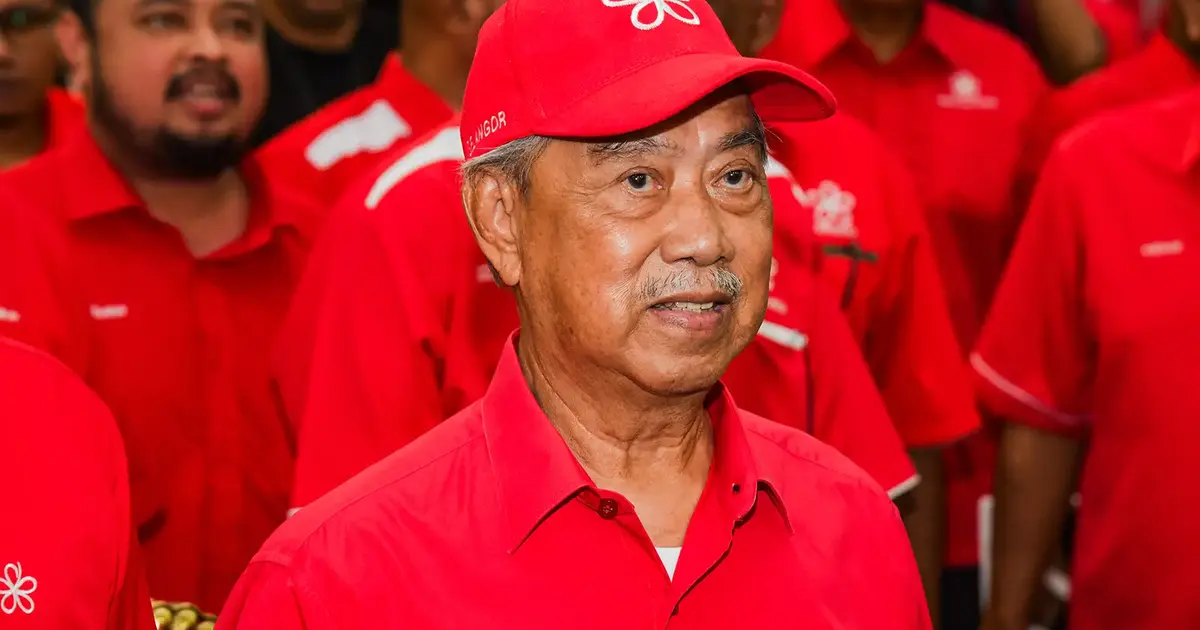
Bersatu president Muhyiddin Yassin has expressed confidence that his party can secure substantial support from non-Malay communities independently, without relying on coalition partners to bridge the gap with these voters. His statement marks a significant shift in strategic thinking within Bersatu's leadership, suggesting the party believes it can directly appeal to Chinese and Indian Malaysian voters based on its own platform and track record.
Muhyiddin attributed Bersatu's previous difficulty in penetrating non-Malay voting blocs to voter reservations about PAS's political orientation and governance philosophy. The Bersatu president argued that some non-Malay voters had been hesitant to support Bersatu when it operated within coalitions that included the Islamist party, viewing such alliances as potentially limiting to their interests and communal concerns. This perception, he suggested, was rooted in substantive policy disagreements rather than simple prejudice.
The timing of Muhyiddin's remarks carries considerable weight in Malaysia's evolving political landscape. His statement effectively signals that Bersatu—which emerged from the collapse of the Perikatan Nasional government in 2021 and subsequently contested the 2022 general election—is recalibrating its coalition strategy heading into the next electoral cycle. The party appears to be repositioning itself as capable of building broad-based multiracial support rather than remaining locked into Islamist-aligned partnerships.
For Malaysian politics more broadly, such positioning reflects the ongoing fragmentation and realignment occurring within Malay-Muslim parties and their coalition ecosystems. Bersatu's calculated distance from PAS signals confidence that the party can stand independently while simultaneously appealing to moderate voters across ethnic lines. This contrasts sharply with Bersatu's 2020–2021 partnership with PAS under the Perikatan Nasional umbrella, which proved electorally unpopular in urban and non-Malay-majority constituencies.
The non-Malay voter demographic remains crucial to Malaysia's electoral mathematics. In urban centres and mixed-race constituencies, non-Malay votes often determine parliamentary outcomes. Bersatu's leadership has evidently recognised that significant sections of the Chinese and Indian Malaysian electorate base their voting decisions on economic competence, transparency, and secular governance rather than religious or Malay-centric platforms. Muhyiddin's confidence in appealing to these voters directly suggests Bersatu will emphasise its administrative credentials and inclusive governance messaging in future campaigns.
Nevertheless, Bersatu's independent appeal to non-Malays carries inherent challenges. The party was founded primarily by Malay politicians and has historically been rooted in intra-Malay political dynamics. Building sustained non-Malay support requires more than rhetorical repositioning; it demands credible engagement, policy commitments addressing minority concerns, and demonstrated capacity to deliver benefits across ethnic lines. Previous attempts by Malay-dominated parties to capture non-Malay votes have often stumbled on implementation and trust deficits.
The relationship between Bersatu and PAS has itself been complex and strategically motivated. During Perikatan Nasional's governance period, both parties pursued a shared political project centred on Malay-Muslim dominance, though Bersatu generally positioned itself as more pragmatic and less ideologically rigid than PAS. The current divergence suggests Bersatu believes its future electoral prospects lie in differentiating itself from PAS rather than in closer alignment.
Regional observers in Southeast Asia watching Malaysian political development will note that Bersatu's strategic recalibration reflects broader patterns of coalition instability and voter dealignment affecting post-election governments across the region. When broad coalitions fracture, constituent parties often reposition themselves by emphasising aspects of their platforms that distinguish them from former partners. Muhyiddin's statements fit this pattern while also responding to Malaysia's specific multiethnic political context.
The credibility of Bersatu's appeal to non-Malay voters will ultimately depend on concrete initiatives. Economic policies benefiting small and medium-sized enterprises across all communities, transparent governance structures, and meaningful Chinese and Indian representation within Bersatu's leadership and policy-making bodies would strengthen such claims. Muhyiddin's confidence, while perhaps strategically calculated, must translate into institutional changes that genuinely open Bersatu to diverse perspectives and constituencies.
For Malaysian voters assessing their options ahead of coming electoral contests, Bersatu's repositioning offers an alternative to traditional coalitions but demands scrutiny regarding whether the party's institutional culture can actually support such ambitions. The distinction between rhetorical pluralism and substantive multiethnic governance remains central to evaluating whether Bersatu can genuinely translate Muhyiddin's confidence into sustained electoral support from non-Malay communities across Malaysia's diverse regions.

