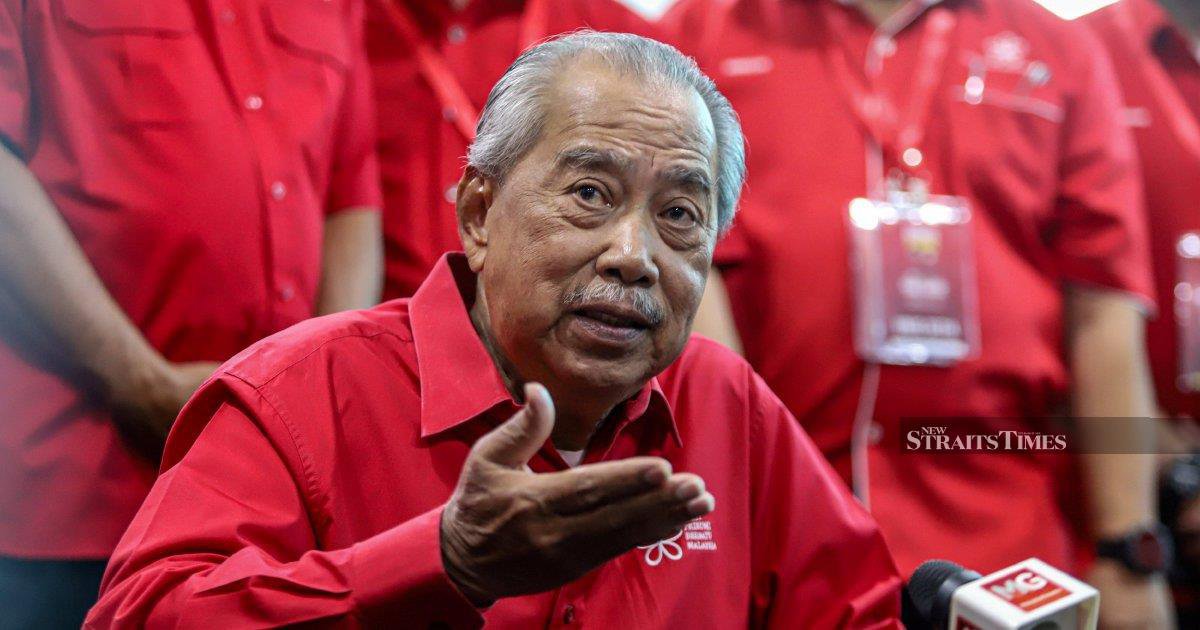
Tan Sri Muhyiddin Yassin has publicly disputed Tan Sri Annuar Musa's account of the circumstances surrounding Bersatu's separation from the Perikatan Nasional coalition, specifically challenging the narrative that his party had voluntarily decided to mufarakah, or part ways, from the alignment in connection with the Negri Sembilan electoral contest.
The exchange between the two prominent political figures underscores the fractious nature of coalition politics in Malaysia, where perceptions of how and why alliances dissolve can become contentious flashpoints. The Bersatu-PN relationship has been a significant element of the broader political landscape since Perikatan Nasional's formation, and any divergence between these entities carries implications for the competitive positioning of various blocs ahead of future electoral contests.
Muhyiddin's rebuttal suggests that the circumstances of the split were more complicated than Annuar's public characterization implied. The dispute over how the separation occurred reflects deeper disagreements about decision-making within the coalition structure and the autonomy that individual member parties exercise. Such disagreements about the narrative surrounding political alliances often matter as much for internal coalition management and external messaging as the actual mechanics of the separation.
The Negri Sembilan election appears to have been the catalyst or flashpoint for the broader tensions between Bersatu and its coalition partners. Electoral contests at state level frequently test the cohesion of larger national coalitions, particularly when member parties have divergent interests or when power-sharing arrangements within a coalition lead to conflicting candidate selections or campaign strategies. The Negri Sembilan situation seems to have exposed fissures that had perhaps been developing beneath the surface of the Bersatu-PN partnership.
For Malaysian political observers, this public disagreement carries significance beyond the immediate personalities involved. How coalitions handle internal disputes and whether they can maintain public unity even amid substantive disagreements has become increasingly important in Malaysia's competitive political environment. The willingness of senior figures to contradict each other publicly suggests that whatever mechanisms exist for managing coalition disputes may have limited effectiveness.
The terminology of mufarakah itself carries weight in Malaysian political discourse, implying a formal and mutually agreed separation. By rejecting Annuar's characterization of events as a voluntary mufarakah, Muhyiddin appears to be arguing that the separation was either forced upon Bersatu or was a far less amicable arrangement than his coalition partner's account suggests. This distinction matters because it affects how each party positions itself before their respective constituencies and coalition allies.
Bersatu's position within Malaysia's political ecosystem has been precarious since its formation under Muhyiddin's leadership, and its standing within coalitions has fluctuated considerably. The party has needed to carefully manage relationships with other opposition or coalition-aligned blocs while maintaining its own political identity. Any public discord between Bersatu and its coalition allies potentially weakens the party's negotiating position within broader alignments.
The Perikatan Nasional coalition itself has faced multiple structural challenges since its inception, attempting to bridge various ideological positions and ethnic-based political interests. When member parties clash publicly over the terms or reasons for their separation, it inevitably raises questions about the coalition's internal cohesion and decision-making processes. Other coalition members must contend with uncertainty about how disputes will be resolved and whether public disagreement could extend to other contentious issues.
For Malaysian voters and political analysts, these disputes also illuminate the often opaque nature of coalition negotiations and the considerable agency that individual party leaders exercise. The divergent accounts offered by Muhyiddin and Annuar suggest that key decisions affecting coalition alignment may not be as structured or transparent as formal coalition agreements might imply. Understanding these dynamics becomes crucial for predicting how coalitions will respond to future electoral contests or policy disagreements.
The broader implications extend to Southeast Asia's wider political environment, where coalition-building remains central to democratic practice across the region. Malaysia's experience with coalitions dissolving or reconfiguring reflects patterns seen in other democracies where multi-party systems require complex negotiations and power-sharing arrangements. The public disputes that sometimes accompany these changes offer insights into how political elites manage legitimacy and authority within systems where no single party commands overwhelming support.
Moving forward, the unresolved disagreement between Muhyiddin and Annuar over the precise nature of Bersatu's separation from Perikatan Nasional may continue to reverberate through Malaysian politics. Such disputes rarely fully dissipate; instead, they influence subsequent coalition-building efforts and become reference points for evaluating the reliability of political partnerships. The credibility of each leader's account matters for their respective standing within their parties and for their capacity to negotiate future alignments with other political forces.

