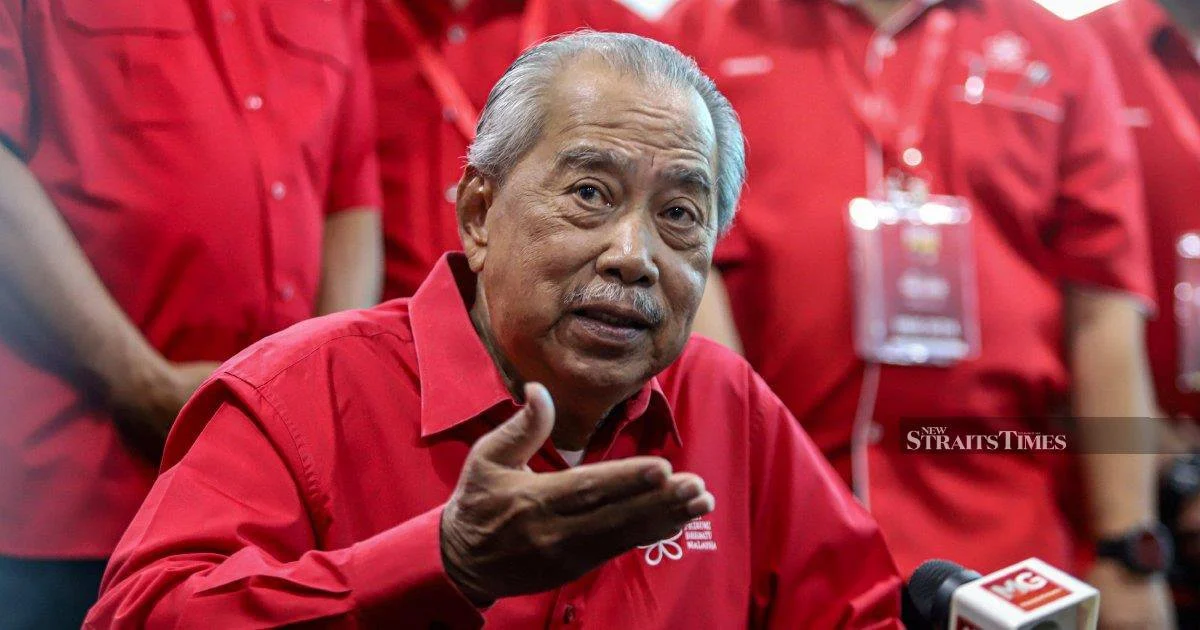
Bersatu party president Tan Sri Muhyiddin Yassin has issued a definitive statement regarding his party's future within the Perikatan Nasional coalition, declaring that the party will maintain its membership "forever" despite persistent questions about the stability of Malaysia's opposition alliance. The reassurance comes at a time when observers have continued to monitor whether factional tensions or shifting political incentives might cause realignments within the broader coalition structure.
The Perikatan Nasional bloc has served as the primary opposition force in Malaysian politics since its formation, bringing together several parties with varying regional bases and ideological orientations. Bersatu, as one of the coalition's anchor parties alongside PAS, carries particular weight in the alliance's strategic positioning, especially given its ability to draw support from urban constituencies and educated voters who might otherwise gravitate toward other political formations. Muhyiddin's explicit commitment suggests an attempt to signal stability to party members and coalition partners at a moment when Malaysian politics faces multiple pressure points.
The context for Muhyiddin's statement reflects deeper uncertainties within Malaysia's political ecosystem. Coalition arrangements that seemed durable can fracture when individual parties calculate that greater advantage lies elsewhere, a pattern evident throughout Malaysian political history. The fact that speculation about PN's cohesion has persisted enough to warrant a public clarification underscores the fragility that often characterises multi-party alliances, where competing interests must be continually managed to prevent defections or realignments.
For Bersatu specifically, remaining within PN offers several strategic advantages that likely influenced Muhyiddin's pronouncement. The coalition provides a ready-made electoral machinery and shared opposition narrative against the government, reducing the costs that would arise from operating as an independent force. Furthermore, PN's capacity to contest elections as a coordinated bloc amplifies each member party's influence in ways that solitary participation could not achieve, particularly in parliamentary negotiations where coalition discipline determines legislative power.
The broader Malaysian context adds layers to this commitment. Since the 2022 elections returned Barisan Nasional to power with a reduced majority, opposition coalitions have gained renewed relevance as potential alternatives. PN's standing as a credible opposition force depends significantly on the perception that it maintains internal cohesion and shared strategic direction. Muhyiddin's emphatic language appears designed to foreclose any suggestion that internal contradictions might soon unravel the alliance.
However, the emphatic nature of the declaration itself warrants examination. Political commitments phrased in absolute terms—such as "forever"—sometimes suggest that the opposite sentiment exists among some party members or coalition partners, prompting leadership to reassert orthodoxy. The strength of Muhyiddin's language may reflect either genuine resolve or a perceived necessity to counter alternative narratives circulating within political circles. Either interpretation suggests that questions about PN's durability persist in ways that leadership feels compelled to address.
Regional dynamics within Malaysia add another dimension to coalition stability calculations. Bersatu's performance in different states and its relationship with PAS in particular strongholds like Terengganu and Kelantan influence the party's calculus regarding coalition membership. Should Bersatu perceive that independent operations or alternative arrangements offered superior electoral outcomes in key territories, the party's commitment might be tested regardless of public pronouncements. The coalition's ability to accommodate diverse interests across Malaysia's federal structure remains an ongoing challenge.
The international and regional context also matters, as Malaysian opposition coalitions sometimes navigate pressures from external observers or neighbouring political developments. PN's ideological positioning within the broader Southeast Asian landscape affects how the coalition adapts to evolving social movements and voter preferences. Muhyiddin's commitment must be understood partly as an attempt to project consistency to international observers and domestic constituencies who value predictability in political arrangements.
For Malaysian voters considering their electoral options, such statements carry implications about which opposition formation offers stability and coherence. Voters who view the current government's direction negatively but remain uncertain which alternative promises genuine change may evaluate opposition coalitions partly on their perceived durability and internal unity. Muhyiddin's declaration addresses this concern directly, though actions will ultimately prove more persuasive than words.
The pledge also carries consequences for PAS and other PN components, as Muhyiddin's commitment effectively binds these parties together within the coalition framework. This interdependence can strengthen coordination on certain issues while simultaneously constraining each party's strategic flexibility. The trade-offs between coalition loyalty and individual party advantage will continue to shape PN's internal dynamics regardless of leadership pronouncements.
Looking forward, the stability of Perikatan Nasional depends on whether actual political circumstances continue to favour coalition membership for all constituent parties. Economic pressures, electoral performance variations, and shifts in voter sentiment could all trigger reassessments of coalition participation. Muhyiddin's statement establishes a baseline commitment, but the coalition's actual durability will be tested through the particular challenges Malaysia faces in coming months and years.
%22%2F%3E%3C%2Fpattern%3E%3C%2Fdefs%3E%3Crect%20width%3D%22100%25%22%20height%3D%22100%25%22%20fill%3D%22url(%23ph24u90g)%22%2F%3E%3Crect%20width%3D%22100%25%22%20height%3D%22100%25%22%20fill%3D%22url(%23ph24u90p)%22%2F%3E%3Ctext%20x%3D%2250%25%22%20y%3D%2250%25%22%20text-anchor%3D%22middle%22%20dominant-baseline%3D%22central%22%20fill%3D%22rgba(255%2C255%2C255%2C0.95)%22%20font-family%3D%22Georgia%2C%20'Times%20New%20Roman'%2C%20serif%22%20font-weight%3D%22700%22%20font-size%3D%22170%22%20letter-spacing%3D%22-0.02em%22%3ETambirat%3C%2Ftext%3E%3C%2Fsvg%3E)
%22%2F%3E%3C%2Fpattern%3E%3C%2Fdefs%3E%3Crect%20width%3D%22100%25%22%20height%3D%22100%25%22%20fill%3D%22url(%23ph41j3fg)%22%2F%3E%3Crect%20width%3D%22100%25%22%20height%3D%22100%25%22%20fill%3D%22url(%23ph41j3fp)%22%2F%3E%3Ctext%20x%3D%2250%25%22%20y%3D%2250%25%22%20text-anchor%3D%22middle%22%20dominant-baseline%3D%22central%22%20fill%3D%22rgba(255%2C255%2C255%2C0.95)%22%20font-family%3D%22Georgia%2C%20'Times%20New%20Roman'%2C%20serif%22%20font-weight%3D%22700%22%20font-size%3D%22194%22%20letter-spacing%3D%22-0.02em%22%3EBintulu%3C%2Ftext%3E%3C%2Fsvg%3E)