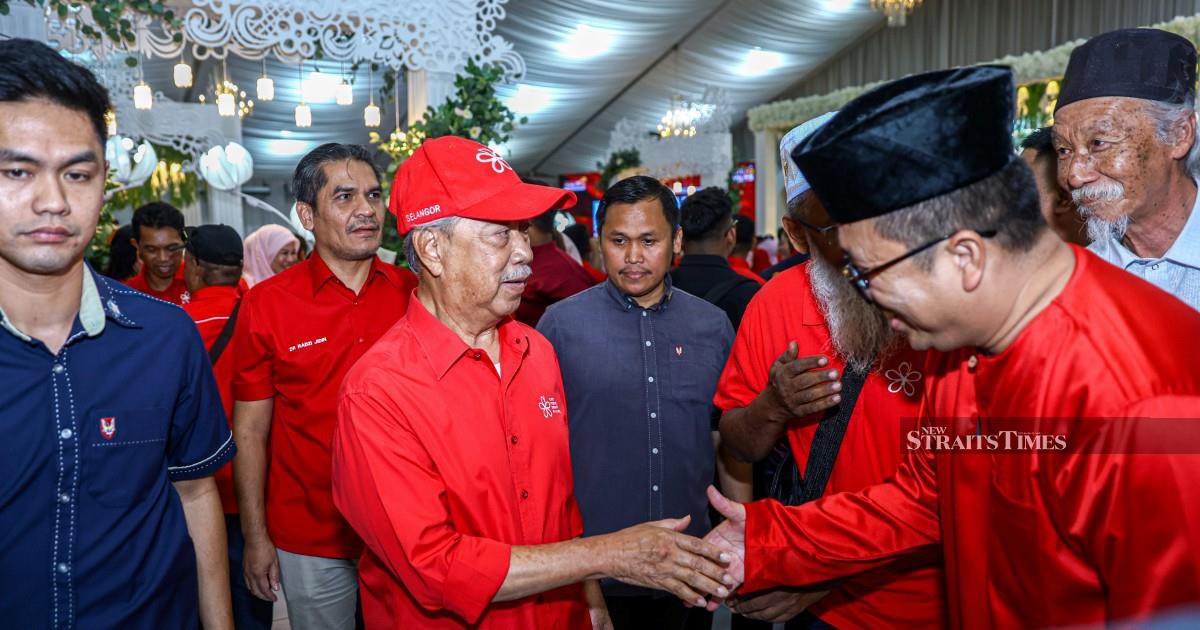
Bersatu is charting a new political course. Following the Negri Sembilan state election, the party intends to assemble a fresh coalition partnership with several other political groups ahead of the next general election, according to Tan Sri Muhyiddin Yassin, the party's president. This strategic repositioning represents a notable departure from Bersatu's existing political arrangements and suggests deepening tensions within Malaysia's broader opposition landscape.
The timing of Muhyiddin's announcement carries particular significance given the state-level political dynamics currently unfolding in Negri Sembilan. The party appears to be using the state contest as a demarcation point—a moment to assess its standing and recalibrate its approach before embarking on a new phase of coalition-building for the crucial federal-level contest ahead. This calculated sequencing suggests careful political planning rather than hasty decision-making, with Bersatu evidently seeking to consolidate its position at the state level before expanding its horizons at the national stage.
Under PAS leadership, the Perikatan Nasional alliance has become increasingly constrained by ideological and organizational friction, according to Muhyiddin's framing. The characterization of PN as "toxic" under PAS stewardship points to fundamental disagreements about the coalition's direction, messaging, and governing philosophy. This language, while stark, reflects the depth of disconnect that has emerged between Bersatu and its coalition partners, particularly the Islamist PAS, which has grown into the dominant force within the alliance structure.
Bersatu's dissatisfaction with PAS's leadership trajectory extends beyond mere tactical disagreements. The party appears concerned that PAS's ascendancy has fundamentally altered PN's character in ways that limit Bersatu's own political flexibility and appeal to moderate, urban, and non-Malay constituencies. This tension represents a clash between different political philosophies—Bersatu's broader-based, inclusive positioning versus PAS's more ideologically defined stance—that have become increasingly difficult to reconcile within a single alliance framework.
The prospective coalition that Muhyiddin envisions would presumably include parties with compatibility across demographic and ideological lines. Without specific party names disclosed, observers speculate about potential partners from the non-Islamist opposition spectrum, though Bersatu would need to carefully balance its Malay-Muslim base with any broader alliance framework. The composition of such a coalition would signal whether Bersatu intends to move toward the political centre or pursue a different competitive positioning altogether.
For Malaysian politics more broadly, Bersatu's potential departure from PN would reshape the opposition landscape significantly. The current three-bloc system comprising Pakatan Harapan, Perikatan Nasional, and BN would fracture further, potentially creating a more fragmented competitive environment. This fragmentation could paradoxically strengthen certain existing coalitions while weakening the overall opposition's ability to present a unified challenge to the ruling government, depending on how parties realign themselves.
The Negri Sembilan contest thus acquires heightened importance as a testing ground for different political configurations. How Bersatu performs in the state election, and how its relationship with PAS and other PN components plays out during the campaign, will provide crucial indicators of the party's actual commitment to breaking away and the viability of alternative coalition arrangements. The state election becomes not merely a local contest but a bellwether for national political realignments.
From a Southeast Asian perspective, Malaysia's coalition dynamics warrant attention as a case study in how regional political parties navigate ideological differences, leadership transitions, and electoral imperatives. The rise of PAS within Perikatan Nasional, and Bersatu's consequent discomfort, mirrors tensions visible across Southeast Asia where Islamist parties have gained influence within broader opposition movements, sometimes creating internal friction.
Muhyiddin's positioning as party president also merits consideration. His ability to articulate dissatisfaction with the current coalition and propose alternatives reflects his continued political relevance within Bersatu, though his own controversial political history—including his time as Prime Minister under the earlier Perikatan Nasional experiment—ensures that any new coalition proposal will face scrutiny regarding both its viability and its underlying motivations.
The practical mechanics of coalition-building in Malaysia's electoral system present substantial challenges. Any new coalition would need sufficient parliamentary seats to mount a credible challenge to the ruling government while also managing internal discipline and preventing defections. Bersatu possesses valuable parliamentary representation, but rebuilding coalition partnerships after the Negri Sembilan election would require delicate negotiation with potential partners who harbour their own reservations and ambitions.
Stakeholders across Malaysia's political spectrum will monitor the coming weeks and months closely. For civil society observers concerned with democratic health and electoral integrity, the fluidity of coalition arrangements raises questions about voter comprehension and government stability. Meanwhile, for party activists and supporters, clarity regarding coalition intentions affects campaign strategies, resource allocation, and long-term membership commitment.
Ultimately, Muhyiddin's remarks signal that Malaysia's political configuration remains in flux. The notion that current alliances represent permanent fixtures would be mistaken. As the Negri Sembilan election approaches and the timeline toward the next general election shortens, Malaysian politics appears positioned for significant realignment and repositioning among multiple contending forces seeking electoral advantage and governance legitimacy.

