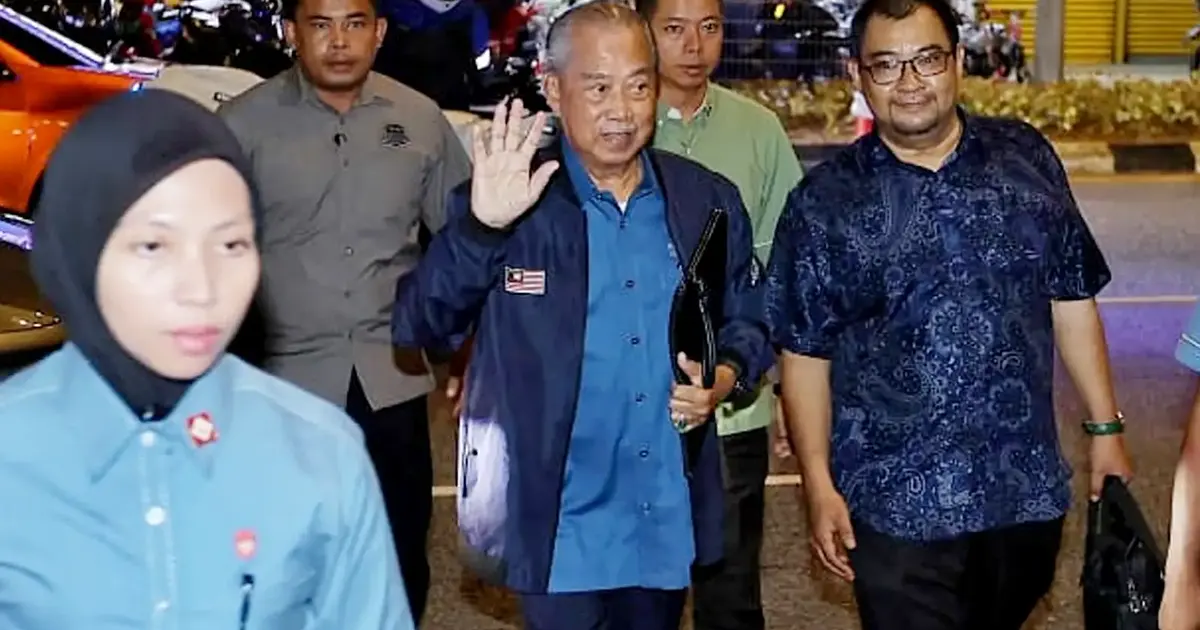
Tan Sri Muhyiddin Yassin convened an urgent gathering of Perikatan Nasional leadership on Thursday evening to deliberate on the future of Bersatu within the coalition framework, a response to mounting instability triggered by PAS's formal withdrawal from the alliance. The hastily arranged session brought together senior figures from the Perikatan Nasional bloc to assess the implications of PAS's departure and chart a course forward for a coalition that has undergone significant realignment in recent months.
PAS's decision to sever ties with Perikatan Nasional represents a watershed moment for the opposition grouping, which has served as a principal counterweight to the ruling Pakatan Harapan government. The departure of a major component party fundamentally alters the coalition's composition, parliamentary representation, and leverage in ongoing political negotiations. For Bersatu, which has positioned itself as a central coalition architect under Muhyiddin's leadership, the fracturing of the alliance presents both existential questions about its strategic viability and tactical challenges in navigating parliamentary dynamics.
The timing of this emergency convocation underscores the urgency with which Perikatan Nasional leadership views the current crisis. By moving swiftly to assemble the coalition's senior ranks, Muhyiddin signalled a determination to prevent further defections and to establish a coherent response to PAS's departure. Coalition cohesion has proven fragile in Malaysian politics, where parties frequently reassess their allegiances based on shifting electoral calculations and internal power dynamics. The loss of PAS, which commands considerable grassroots mobilisation capabilities and rural constituency strength, represents a tangible diminishment of coalition firepower.
Bersatu's own position within the remaining coalition architecture has become the focal point of strategic discussion. As the vehicle through which Muhyiddin maintains political influence following his exit from the prime minister's office, the party's continued relevance depends heavily on its perceived indispensability to broader coalitional arrangements. The departure of PAS potentially reshapes this calculus by reducing the overall coalition membership and compelling Bersatu to clarify its long-term commitments and objectives.
For Malaysian political observers, this emergency gathering illustrates the precarious nature of opposition coalitions in a multi-party system where ideological alignment frequently gives way to pragmatic interest calculations. Perikatan Nasional emerged in 2020 as an alternative political front, drawing together Bersatu, PAS, and other parties dissatisfied with either the Pakatan Harapan government or the traditional Barisan Nasional framework. Yet the coalition has struggled to maintain internal discipline and coherent messaging, with member parties frequently pursuing divergent strategies and competing for electoral advantage within the same constituencies.
The implications extend beyond Bersatu and Perikatan Nasional to the broader opposition landscape. With PAS departing, the remaining coalition must determine whether to attempt consolidation with other opposition entities, negotiate with Barisan Nasional parties for parliamentary cooperation, or pivot toward an independent operating stance. Each option carries distinct consequences for parliamentary stability, the ruling coalition's governance capacity, and the trajectory of Malaysian politics toward the next general election.
Regionally, coalition fractures within Malaysia's opposition reflect patterns visible across Southeast Asia, where multi-party systems frequently experience alliance realignments driven by leadership competition and strategic recalculation. The Perikatan Nasional experience offers instructive lessons for analysts examining opposition coalition durability in competitive democracies where institutional frameworks remain fluid and party discipline weak.
PAS's withdrawal decision appears driven by calculations regarding its own electoral fortunes and ideological positioning. The party leadership likely determined that continued association with Bersatu and the broader Perikatan Nasional framework no longer served its organisational interests or religious base mobilisation strategies. This assessment reflects broader shifts in Malaysian electoral politics, where religious discourse and institutional Islam have become increasingly prominent in party positioning and voter motivation.
For Muhyiddin and Bersatu, the emergency meeting represents an opportunity to stabilise the coalition's remaining membership and prevent cascading defections that could render Perikatan Nasional electorally marginalised. The discussions will likely encompass questions of coalition governance, the allocation of parliamentary roles, strategies for coordinating with other opposition elements, and mechanisms for preventing future schisms. The depth and effectiveness of Muhyiddin's coalition management in this critical moment may determine whether Perikatan Nasional emerges strengthened by internal consolidation or progressively weakened by continued fragmentation.

