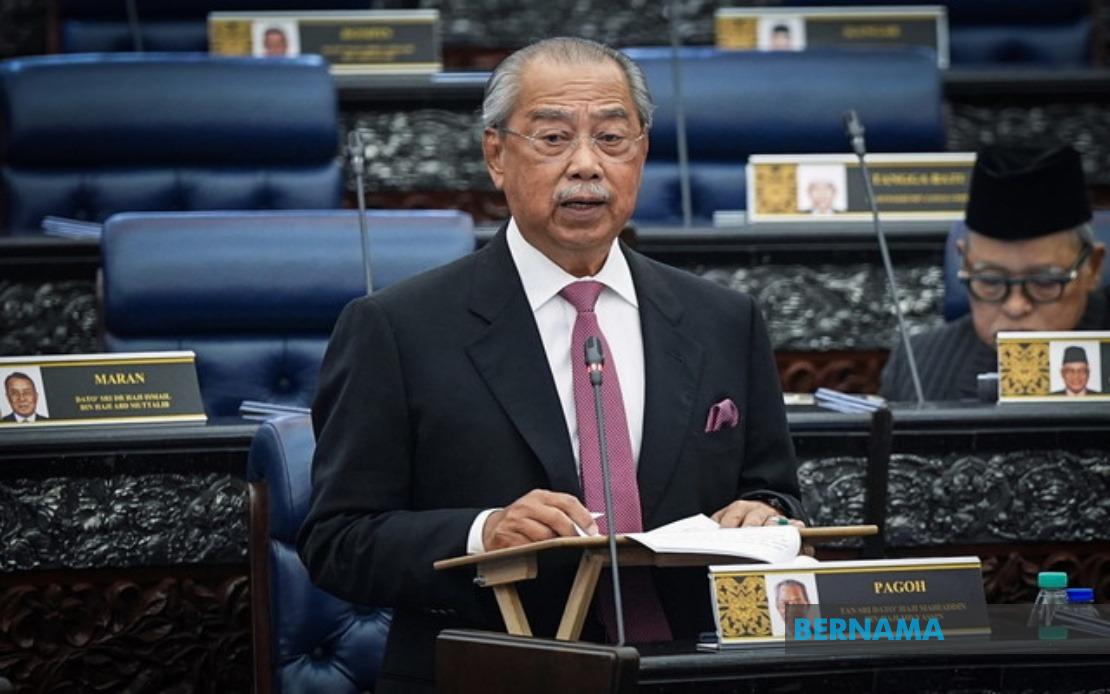
Tan Sri Muhyiddin Yassin, the Pagoh MP and Bersatu president, has made an urgent appeal for the government to initiate an independent and transparent forensic audit of Lembaga Tabung Haji, with completion targeted within twelve months. His call came during parliamentary debate on the recently public Royal Commission of Inquiry report into the institution, which documented significant mismanagement and financial irregularities spanning six years.
The RCI findings paint a troubling picture of TH's operational integrity during the 2014-2020 period. The institution accumulated estimated cumulative losses ranging from RM10 billion to RM12.6 billion across this timeframe, a figure that underscores the scale of financial deterioration at Malaysia's largest Islamic financial institution serving more than 8.8 million Hajj pilgrims and account holders. Muhyiddin stressed that these discoveries cannot be dismissed as mere administrative oversights but demand rigorous scrutiny and accountability measures.
Muhyiddin's reasoning centres on the critical necessity of tracing the complete flow of capital through TH's systems to identify where resources were misappropriated. Such an audit would be designed to uncover patterns of fraudulent activity, instances where authority was abused, and cases of culpable negligence. By establishing a comprehensive financial trail, investigators can connect specific decisions to measurable losses and determine culpability across different management levels and decision-makers.
The former premier was emphatic that individuals responsible for depleting TH's resources must face legal consequences regardless of whether their actions constituted outright fraud, abuse of official position, or gross mismanagement. This position reflects growing public and parliamentary pressure to ensure that financial malfeasance at state institutions results in prosecution rather than administrative reorganisation alone. The reputational damage to TH's standing—and by extension to Malaysian governance institutions—requires visible consequences.
Syed Saddiq Syed Abdul Rahman, the MUDA representative from Muar, extended the accountability framework by proposing a Multi-Agency Task Force specifically tasked with investigating fourteen problematic investments identified within the RCI report. His approach recognises that siloed investigations by individual agencies often fail to capture the systemic nature of institutional failure and the interconnections between questionable investment decisions. By centralising oversight through coordinated action involving the Malaysian Anti-Corruption Commission, Royal Police, and Inland Revenue Board, the task force could establish more comprehensive findings.
Syed Saddiq's proposal carries particular significance given TH's investment portfolio extended beyond the fund itself to related enterprises. He advocated for the investigative scope to encompass not only TH's problematic fourteen investments but also similar questionable allocations within Felda, FGV Holdings, and Eagle High ventures. This expansion would acknowledge that governance failures in one government-linked institution often reflect broader systemic weaknesses affecting how public wealth is managed across the institutional landscape.
Datuk Seri Hasni Mohammad of BN-Simpang Renggam introduced an oversight mechanism designed to maintain parliamentary attention on implementation. He called for enforcement agencies to submit regular progress reports on all investigations stemming from RCI recommendations, with defined timelines to prevent investigations from languishing indefinitely. Such transparency requirements help maintain public confidence that parliamentary scrutiny translates into concrete action rather than performative gestures.
Hashni further proposed that today's special parliamentary sitting represent a turning point toward sustained bipartisan oversight of TH's institutional rehabilitation. Rather than treating the RCI report as a discrete event triggering temporary attention, he advocated for establishing permanent parliamentary mechanisms to monitor implementation of all 25 RCI recommendations. This institutional approach acknowledges that meaningful reform requires sustained commitment rather than reactive responses to crisis revelations.
The RCI report's public release on July 29 followed government recognition that Malaysian citizens deserved transparency regarding institutional failures affecting their savings. The twenty-five recommendations contained within address identified governance weaknesses and operational deficiencies documented during the inquiry period. As of July 30, TH had reportedly implemented approximately 75 percent of these recommendations, suggesting some institutional responsiveness, though the source and adequacy of these measures remain subjects for scrutiny.
For Malaysian pilgrims and account holders, these developments carry immediate significance. The scale of documented losses directly reduces the financial security underpinning TH's core function—managing contributions toward the religious obligation of hajj pilgrimage and providing savings vehicles grounded in Islamic principles. Accountability measures therefore represent not merely political calculations but practical safeguards for ordinary Malaysians who have entrusted their hajj savings to an institution that failed to maintain basic governance standards.
The parliamentary response also signals potential broader implications for how Malaysia approaches institutional accountability more generally. Should the government implement comprehensive forensic auditing at TH and establish effective multi-agency task forces, such mechanisms could establish precedents applicable to other government-linked institutions facing performance questions. Conversely, if these measures prove performative without resulting prosecutions or meaningful reforms, public confidence in institutional accountability frameworks would likely deteriorate further.
The timing of these recommendations proves significant given Malaysia's ongoing efforts to strengthen governance frameworks and address perception of systemic corruption affecting institutional credibility. TH's case demonstrates how sophisticated investment structures and complex financial arrangements can obscure accountability even within government-controlled institutions. The forensic audit and task force approaches advocated by multiple MPs represent contemporary methodologies for penetrating such opacity and establishing clear causal linkages between decisions and financial outcomes.

