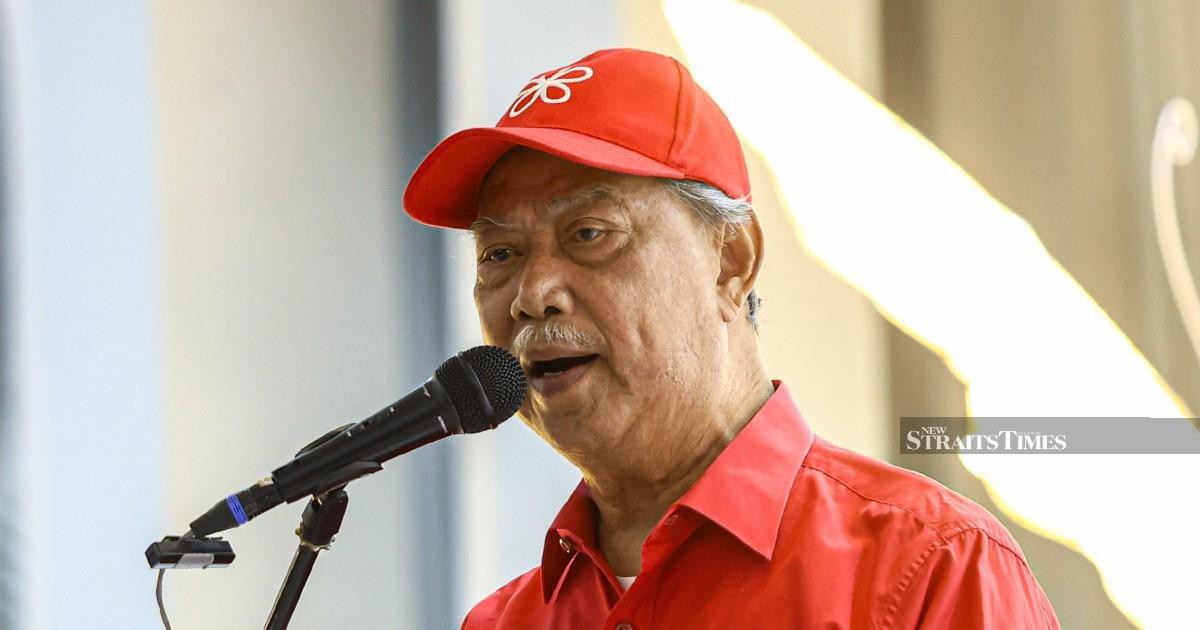
Bersatu president Tan Sri Muhyiddin Yassin has broken his public silence on the mounting leadership crisis engulfing the party, levelling allegations that former deputy president Datuk Seri Hamzah Zainudin orchestrated a deliberate campaign to remove him from his position. The disclosure marks a significant escalation in the internal power struggle that has consumed Malaysia's ruling Perikatan Nasional coalition ally in recent weeks, bringing long-simmering tensions between the party's top leadership into the open.
The Bersatu chief's decision to speak publicly comes at a critical juncture for the party, which has faced mounting instability as factions vie for control. Muhyiddin's allegations paint a picture of calculated internal maneuvering rather than spontaneous party disagreement, suggesting coordinated action aimed at destabilizing his grip on power. The nature of these alleged removal efforts has not been fully elaborated, but the explicit framing of a deliberate plot underscores the depth of personal and political animosity driving the current conflict.
Hamzah Zainudin's role as former deputy president places him in a unique position within Bersatu's hierarchy. As number two in the party structure, he would have possessed significant political capital and organizational leverage to mobilize dissenting factions. The former deputy's standing within Bersatu's rank-and-file membership, combined with potential backing from other senior figures, could have made any coordinated challenge to Muhyiddin's leadership considerably formidable. The shift from his position as deputy to the current public allegations suggests circumstances have deteriorated substantially between the two men.
For Malaysian political observers, Bersatu's internal upheaval carries broader implications for the stability of the Perikatan Nasional coalition. As a core component of Malaysia's current ruling arrangement, instability within Bersatu reverberates across the entire coalition's operations and policy coherence. Any successful coup against Muhyiddin could trigger cascading changes in ministerial portfolios, committee assignments, and strategic direction, potentially affecting governance priorities across multiple sectors. The Perikatan Nasional's slender parliamentary majority leaves it vulnerable to even modest defections or organizational paralysis.
Muhyiddin's decision to publicly accuse Hamzah represents a tactical shift from earlier attempts to manage the crisis discreetly. Previous handling of internal party disputes typically occurred behind closed doors, with public statements limited to formal acknowledgements. The move toward open confrontation suggests frustration with backroom diplomacy and a calculated belief that public pressure may strengthen his hand against potential challengers. However, such transparency also risks further polarizing party membership and entrenching factional divisions that could prove difficult to heal.
The timing of Muhyiddin's remarks deserves careful consideration. Political crises within ruling coalition partners often emerge at moments of broader vulnerability, when attention is diverted or when structural weaknesses in party organization become exposed. Whether internal antagonisms have simply reached a breaking point or whether external pressures have accelerated their emergence remains unclear. The coincidence of Bersatu turmoil with other challenges facing the Perikatan Nasional administration suggests interconnected stress points across Malaysia's political landscape.
Regional observers will be monitoring Bersatu's situation closely, as intra-party conflicts within Malaysia's governing structure can have ripple effects across Southeast Asia. Coalition stability in a major regional economy influences investor confidence, foreign policy continuity, and the credibility of Malaysian leadership in regional forums. Any extended period of internal Bersatu dysfunction could complicate Kuala Lumpur's diplomatic and economic agenda throughout the region.
The allegations against Hamzah, if substantiated through internal party proceedings, could trigger formal disciplinary mechanisms within Bersatu. Party constitutions typically contain provisions for addressing leadership challenges and unauthorized removal attempts. How Bersatu chooses to adjudicate these claims—whether through internal tribunals, special committees, or informal reconciliation—will signal the party's institutional resilience and commitment to procedural legitimacy. The chosen approach may either consolidate Muhyiddin's position or provide dissidents with grounds for escalated challenge.
For grassroots Bersatu members, the leadership crisis presents uncomfortable choices between competing factional loyalties. Party members who had previously avoided taking public positions must now navigate conflicting pressures to declare allegiance or maintain neutrality. Such polarization frequently weakens organizational cohesion and party discipline, potentially hampering electoral performance should parliamentary dissolution occur. The human cost of leadership turmoil extends beyond headline figures to affect ordinary members' engagement and confidence in party institutions.
Muhyiddin's public allegations also reflect the broader pattern of Malaysian politics where coalition relationships remain fundamentally transactional and conditional. Partners in the Perikatan Nasional, while formally aligned, maintain distinct organizational interests that sometimes diverge sharply from collective coalition objectives. The absence of deeply rooted shared ideology or programmatic consensus means coalition stability hinges substantially on personal relationships and perceived mutual advantage. When those relationships fracture, as appears to be happening within Bersatu, the entire coalition structure faces potential instability.
The path forward for Bersatu depends substantially on how the party's membership, senior leadership, and formal organizational structures respond to Muhyiddin's allegations. Rapid resolution through reconciliation efforts could limit damage and restore focus to governance priorities. Prolonged factional warfare, conversely, risks weakening Bersatu's parliamentary effectiveness and creating opportunities for rival parties to poach dissatisfied members. The coming weeks will likely determine whether these internal tensions can be managed or whether they fundamentally reshape Bersatu's political position.

