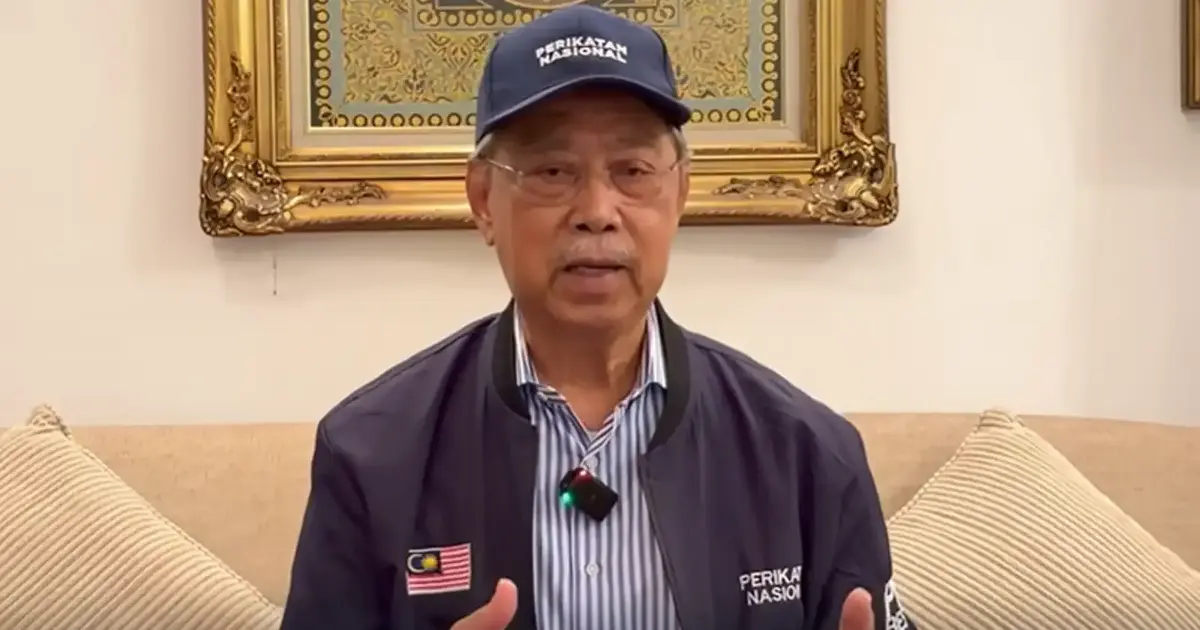
Muhyiddin Yassin, the president of Bersatu and a former menteri besar of Johor, is mounting a direct appeal to voters across the southern state by positioning himself as a native son whose political career has been anchored in the region's interests. His pitch comes as Perikatan Nasional, the coalition he leads, seeks to regain electoral ground after setbacks in recent polls and faces mounting pressure to demonstrate renewed relevance to Malaysia's largest swing state.
The appeal represents a calculated strategy to rebuild Perikatan Nasional's support base by leveraging deep personal connections and historical standing in Johor. Muhyiddin's tenure as menteri besar from 1986 to 2003 remains a defining chapter of his political identity, and he is invoking this legacy as he attempts to convince Johoreans that his coalition merits another opportunity to serve the state. The messaging underscores a common refrain in Malaysian politics: that leaders rooted in a community possess unique legitimacy and dedication that outsiders cannot replicate.
What distinguishes Muhyiddin's current positioning is the explicit framing of his political journey as fundamentally about serving ordinary citizens rather than accumulating power or personal gain. This narrative appeals to voter sentiment in Johor, where economic anxieties—ranging from employment prospects to the cost of living—loom large in electoral calculations. By presenting his decades in public office as a continuous struggle on behalf of the people, Muhyiddin is attempting to build emotional and moral authority that transcends formal party alignment.
Johor's political significance cannot be overstated for any Malaysian coalition seeking national relevance. The state is historically a bellwether, and its swing between Barisan Nasional and opposition alliances has shaped national governments. Currently, Johor stands as contested terrain, with multiple coalitions competing for dominance. For Perikatan Nasional, recovering ground in the state is essential to any pathway toward reclaiming federal influence, making Muhyiddin's personal appeal both urgent and strategically central.
The timing of this outreach also reflects internal pressures within Perikatan Nasional. The coalition has struggled to maintain unity and visibility following electoral disappointments, with constituent parties sometimes pulling in divergent directions. By personally intervening in Johor—his political stronghold—Muhyiddin is signalling his continued commitment to coalition leadership and attempting to restore momentum through a homecoming narrative that resonates emotionally with voters.
However, Muhyiddin's appeal faces considerable headwinds. His tenure as federal Prime Minister, though brief, remains controversial among some voters, particularly those concerned about governance during the pandemic and the circumstances surrounding his government's formation and collapse. Additionally, questions about Bersatu's internal cohesion and broader challenges facing Perikatan Nasional may dilute the impact of appeals based solely on personal history and local connection.
For Malaysian readers and observers, this moment illustrates how regional politics remains deeply personalised, with leaders leveraging provincial origins and historical service records as primary platforms. In Johor's context, where state identity runs deep and constituents take pride in their political traditions, Muhyiddin's strategy of emphasising his role as a son of the soil taps into powerful emotional reservoirs. This reflects a broader pattern in Southeast Asian democracies where local legitimacy often outweighs institutional or ideological considerations.
The response from Johor voters will carry significance beyond the state's borders. Success in rebuilding Perikatan Nasional's support in Johor would validate Muhyiddin's leadership within the coalition and potentially revitalise its national trajectory. Conversely, continued weakness in the region would intensify questions about the coalition's viability and Muhyiddin's ability to deliver electoral outcomes. Either outcome will shape coalition dynamics and broader coalition positioning ahead of future electoral contests.
Ultimately, Muhyiddin's plea represents a gambit: that the combination of deep roots, historical service, and a framing of political struggle as fundamentally about ordinary citizens can overcome recent electoral setbacks and restored public confidence in Perikatan Nasional. Whether this resonates depends on whether Johor voters view his appeal as a genuine invitation to participate in renewed governance or as a nostalgic exercise disconnected from contemporary challenges facing the state and nation.

