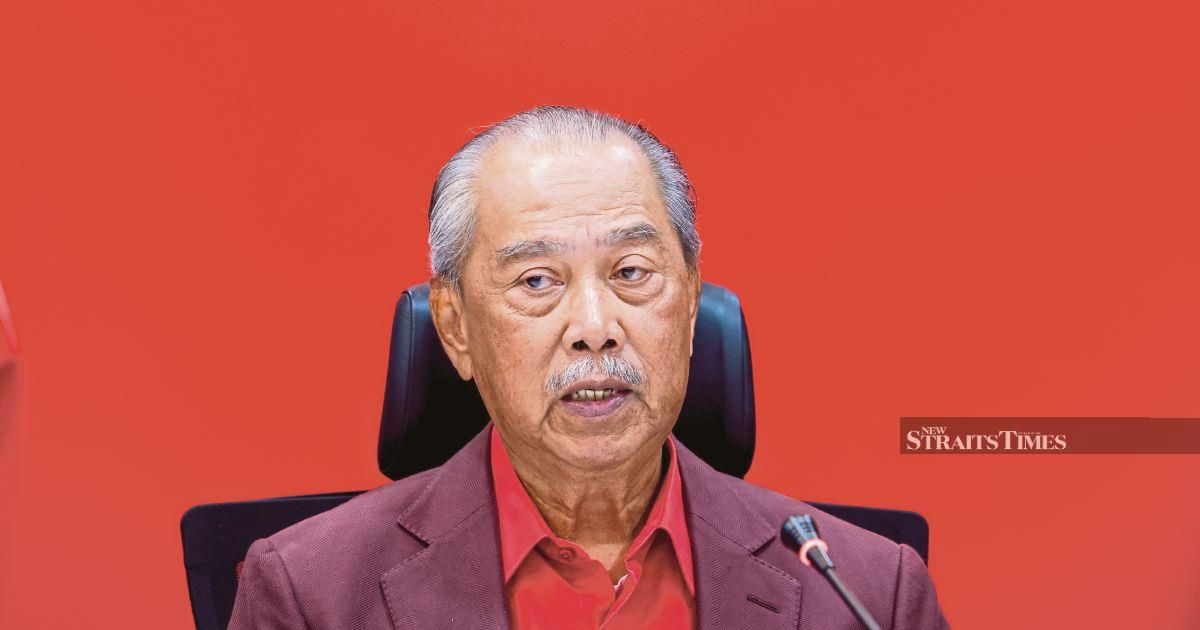
Bersatu president Tan Sri Muhyiddin Yassin has levelled fresh allegations that Umno is orchestrating a plot to dismantle the unity government framework that his party established alongside Pakatan Harapan, drawing parallels to past political manoeuvres that have destabilised Malaysian administrations.
The accusation carries significant weight given Malaysia's volatile recent political history, where coalition governments have repeatedly fractured along factional lines. Muhyiddin's assertion reflects deepening tensions within the current ruling alliance, which has sought to consolidate power across the country's political spectrum but continues to face internal strains that threaten its stability and legislative agenda.
Umno, as the dominant force in Malaysia's traditional electoral machinery and representing substantial Malay-Muslim constituencies, holds considerable leverage within any governing coalition. The party's potential withdrawal or disruptive tactics would severely jeopardise the government's parliamentary majority and ability to pass legislation, making such internal conflicts a matter of national consequence rather than merely partisan squabbling.
Muhyiddin's warnings underscore the fragility inherent in Malaysia's recent experiment with broad-based coalitions. Unlike previous single-party or narrowly-based governments, the unity framework requires sustained cooperation among parties with fundamentally divergent political philosophies and competing interests. The inclusion of both Bersatu, which broke away from Umno, and Umno itself creates an inherently unstable dynamic prone to recrimination and manoeuvring.
The former prime minister appears to be signalling that Umno may be reverting to the tactics that facilitated the collapse of his own Perikatan Nasional government, which imploded in 2021 when coalition partners withdrew support, leaving the administration severely weakened. That experience demonstrated how quickly parliamentary arithmetic can shift when major players withdraw cooperation, a vulnerability that continues to haunt Malaysian governance structures.
For Malaysian observers, this pattern has become distressingly familiar. The country has witnessed three prime ministerial transitions since 2018, each accompanied by claims of betrayal, horse-trading, and destabilisation campaigns. Each crisis has left institutions weakened and public confidence eroded, contributing to broader anxieties about the resilience of democratic institutions and the rule of law.
Umno's position within the unity government remains strategically complex. The party must balance its interest in strengthening the coalition against pressure from its internal factions, particularly those who view the partnership with Pakatan Harapan as a betrayal of traditional Umno principles. Managing these competing imperatives while maintaining the government's stability has proven exceptionally challenging.
The unity government's composition itself reflects Malaysia's search for stability following years of political turbulence. By incorporating diverse parties across the political spectrum, architects of the current arrangement hoped to dilute incentives for destabilisation and build broader legitimacy. However, this strategy has instead created multiple veto points and opportunities for tactical manoeuvring by ambitious individuals seeking to reposition themselves.
Muhyiddin's public airing of these concerns may serve multiple purposes simultaneously. The statements could constitute a genuine warning about Umno's intentions, a preemptive strike against anticipated moves, or a tactical effort to mobilise Bersatu's base and reinforce his own standing within the coalition. In Malaysian politics, such accusations frequently blur the line between description and strategy.
For Southeast Asian analysts monitoring Malaysian developments, these recurring instabilities carry broader implications. Political uncertainty constrains economic policymaking, deters foreign investment, and diverts governmental focus from pressing regional issues including trade negotiations and security cooperation. Malaysia's struggles with coalition management therefore ripple beyond domestic borders.
The sustainability of the unity government ultimately depends on whether member parties can subordinate immediate tactical advantages to the longer-term benefits of stable governance. This requires institutional maturity and cross-party discipline that Malaysian politics has struggled to achieve consistently. Absent such commitment, the cycle of allegation and counter-allegation appears likely to persist.
As Malaysian stakeholders contemplate these developments, the fundamental question remains whether the country's political system possesses the capacity to move beyond zero-sum competition toward genuine collaborative governance. The answer will significantly influence not only the government's immediate future but also public faith in democratic institutions across the region.

