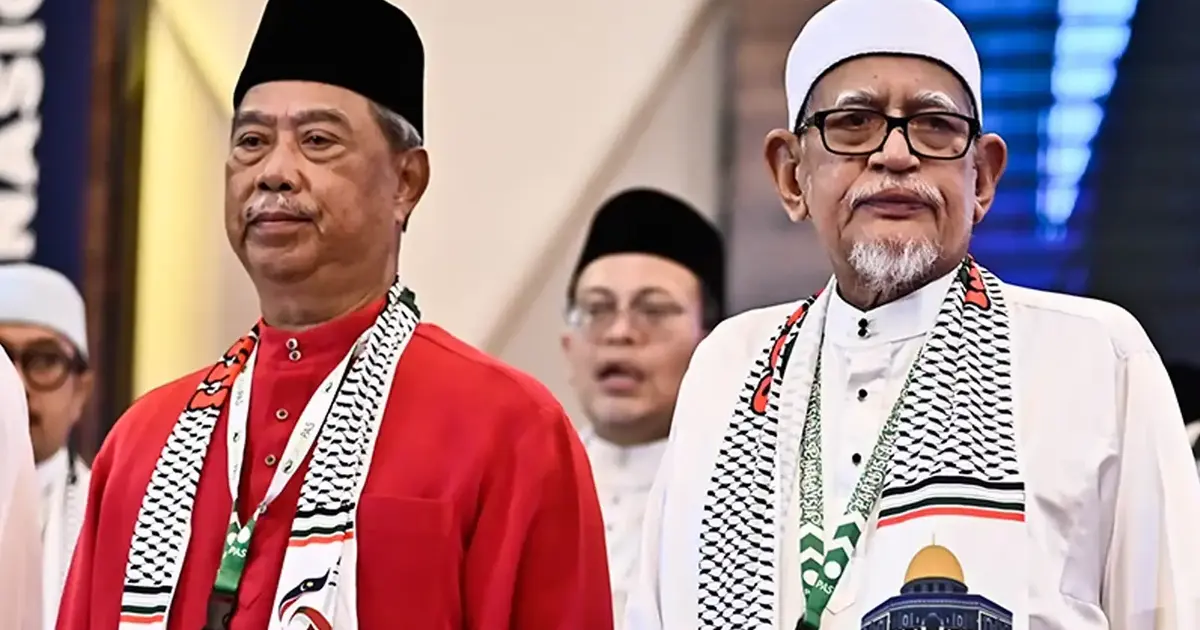
Bersatu president Muhyiddin Yassin has launched a sharp rebuke at PAS for entering into separate talks with Barisan Nasional, arguing that the Islamic party's move represents a fundamental breach of the coalition agreement underpinning Perikatan Nasional. The accusation reflects deepening tensions within the Perikatan alliance, which has served as the primary opposition force since its formation and has attempted to position itself as an alternative power bloc to the long-ruling BN coalition.
Muhyiddin's complaint centres on what he characterises as unilateral decision-making by PAS, which he contends violates the established protocols and mutual understanding that should govern inter-coalition relations. In a functioning political alliance, members are typically expected to consult with partners before pursuing significant strategic shifts or negotiations with rival blocs. The allegation that PAS has bypassed such consultations suggests a breakdown in the trust mechanisms that hold multi-party coalitions together, potentially signalling the beginning of a fundamental realignment in Malaysian politics.
The Bersatu leader's public airing of these grievances underscores the fragility of opposition coalitions in Malaysian politics. Unlike formal government arrangements where institutional safeguards and ministerial positions create binding incentives for loyalty, opposition alliances often rely primarily on ideological alignment and mutual interest. When those conditions weaken or when individual parties perceive greater advantage in alternative arrangements, the coalition structure becomes vulnerable to rapid dissolution. PAS's willingness to explore talks with BN suggests the party believes such overtures might yield better electoral prospects or policy concessions than its current Perikatan alignment.
From a Malaysian political perspective, this development carries significant implications for the opposition's capacity to mount a united challenge to incumbent powers. The Perikatan Nasional coalition has presented itself as ideologically distinct from BN, emphasising different governance principles and anti-corruption commitments. However, if major components like PAS begin seeking separate accommodations with BN, the coalition's coherence as a distinct political force becomes questionable. This fragmentation could ultimately benefit established political actors who prefer dealing with divided opposition forces rather than consolidated blocs.
PAS, as Malaysia's largest Islamic party with substantial electoral appeal in rural and semi-urban constituencies, holds considerable strategic weight within the opposition landscape. The party's decision to pursue BN negotiations likely stems from calculations about maximising its own representation and influence, potentially viewing Perikatan as offering insufficient returns. Historical patterns in Malaysian politics show that PAS has frequently shifted alignments based on perceived advantage, and the current overture to BN may reflect similar pragmatism rather than any fundamental ideological realignment.
For the Perikatan coalition, retaining PAS represents a critical strategic requirement. Without the Islamic party's electoral machinery and voter base, particularly in states like Kelantan and Terengganu, the coalition's viability as a serious contender for federal power diminishes substantially. Muhyiddin's public criticism may be designed to apply pressure on PAS to recommit to the Perikatan framework, though such open conflict often hardens positions rather than encouraging reconciliation. The risk exists that escalating rhetoric could permanently damage coalition relations beyond repair.
The underlying dynamics also reflect broader regional patterns in Southeast Asian opposition politics, where personalised leadership, ethnic and religious constituency concerns, and the fluidity of coalition arrangements create inherent instability compared to more institutionalised party systems. Malaysian parties frequently pursue multi-track diplomatic approaches, maintaining relationships with various political actors simultaneously while keeping options open. This approach serves individual party interests but complicates the formation of lasting political blocs.
BN's receptiveness to PAS overtures indicates the government coalition recognises value in peeling away opposition components. By offering PAS potentially better terms than Perikatan provides—whether through increased parliamentary seats, ministerial portfolios, or policy alignment on religious matters—BN could significantly weaken the opposition's challenge. Such developments would represent a return to the coalition-hopping that characterised Malaysian politics prior to the 2018 watershed election.
The timing of Muhyiddin's criticism also matters within the broader political calendar. Whether Malaysia approaches elections soon or operates in a longer consolidation period influences both the urgency of securing intra-coalition agreements and parties' calculations about when to shift allegiances. Coalition members typically maintain flexibility until they perceive that the electoral environment has stabilised in ways that make their current alignment either clearly advantageous or clearly disadvantageous.
Muhyiddin's confrontational stance suggests Bersatu leadership views the situation as sufficiently serious to merit public escalation, implying that behind-the-scenes communications may have failed to check PAS's ambitions. Whether this public rebuke serves to recalibrate PAS's calculations or simply formalises the beginning of the coalition's dissolution remains uncertain. The outcome will likely depend on whether PAS views negotiations with BN as exploratory or as a genuine pivot away from Perikatan.
For Malaysian voters and observers, these developments underline the continued volatility of the nation's political landscape more than a decade after the transition from the previous government. Coalition stability remains contingent on ongoing mutual benefit calculations rather than institutional strength, suggesting that major realignments remain possible whenever component parties perceive advantage in pursuing different arrangements. The Perikatan Nasional alliance now faces a critical test of whether its members can recommit to unified opposition politics or whether Malaysian politics will revert to the fragmentation that characterised earlier periods.

