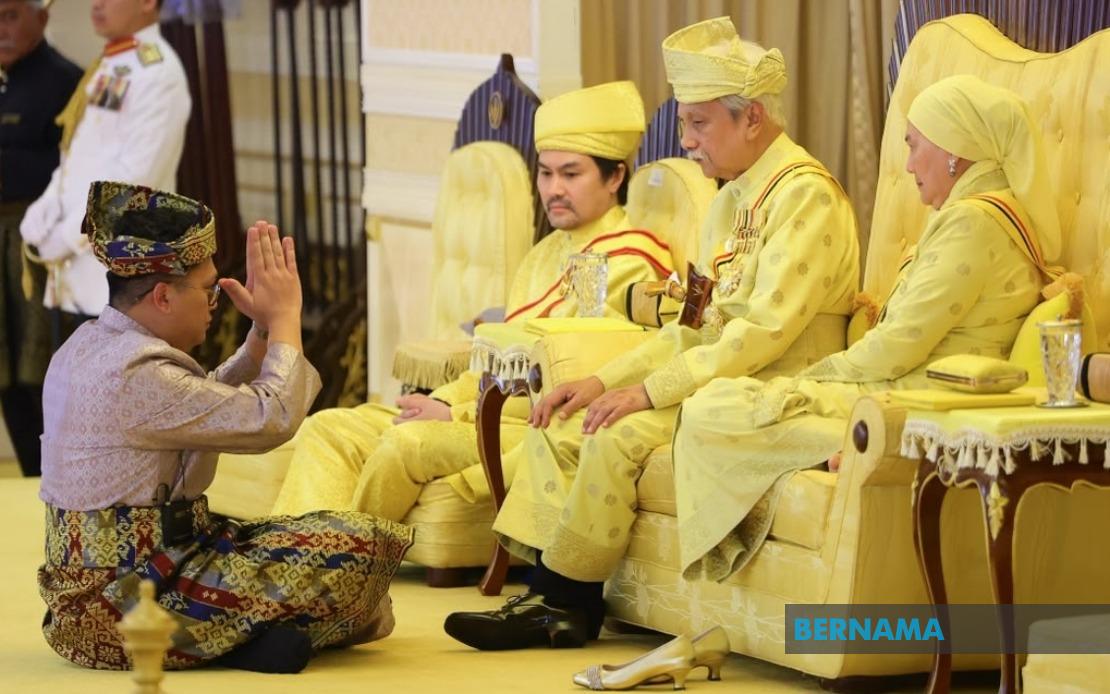
Muhammad Faris Johari has been formally invested as the 11th Undang of Luak Sungei Ujong following a traditional installation ceremony conducted by Tuanku Muhriz Tuanku Munawir, the Yang Dipertuan Besar of Negeri Sembilan, at Istana Besar Seri Menanti on June 27. The appointment, marked by the conferral of the title Datuk Klana Petra, represents a significant moment in the state's customary governance framework, where the Undang system continues to play a central role in maintaining the constitutional monarchy's relationship with Negeri Sembilan's communities.
The installation followed carefully observed protocols rooted in Negeri Sembilan's unique administrative heritage. The Orang Empat Istana, the traditional council of nobles, first sought the ruler's approval before the ceremony could proceed, demonstrating the layered approval structures that characterise the state's governance model. After securing consent, Muhammad Faris pledged his allegiance directly to Tuanku Muhriz, reaffirming the personal bond between the customary chief and the sovereign that underpins the constitutional arrangement in the state.
In his address during the proceedings, Tuanku Muhriz emphasised the importance of upholding the commitments undertaken during such ceremonies with genuine dedication and accountability. The ruler stressed that these traditional practices serve a broader constitutional purpose, reminding the Orang Kaya, or chieftains, of their dual obligation to respect both the institution of the Yang Dipertuan Besar and the Palace itself. This framing reflects the delicate balance Negeri Sembilan maintains between customary law and constitutional monarchy.
The ruler also highlighted the foundational principles that sustain institutional stability within the state's framework. He noted that relationships grounded in reciprocal respect, mutual confidence, and shared understanding remain vital to preserving the constitutional monarchy, protecting customary traditions, and guaranteeing Negeri Sembilan's ongoing prosperity and cohesion. This address carried particular resonance given contemporary debates across Malaysia about the relevance and sustainability of traditional institutions in modern governance.
A significant aspect of Tuanku Muhriz's remarks centred on the preservation of Adat Perpatih, the customary law system that has governed Negeri Sembilan for centuries. The ruler called upon both the newly installed Undang and the broader population to work collaboratively with customary leaders in fulfilling their roles while continuing to safeguard and transmit the values inherent in Adat Perpatih to future generations. This emphasis on intergenerational cultural transmission addresses concerns about the erosion of customary practices in rapidly modernising Malaysian society.
Muhammad Faris, at 28 years old, brings a professional background distinctly suited to contemporary governance demands. Holding a bachelor's degree in accountancy from Universiti Teknologi MARA (UiTM), he completed his professional qualification through the Association of Chartered Certified Accountants (ACCA) programme in 2022. This educational profile suggests a generation of customary leaders equipped with modern administrative and financial expertise, potentially enabling more effective management of traditional institutions' resources and responsibilities.
The ceremony drew attendance from the state's senior royal household, including Tunku Ampuan Besar Tuanku Aishah Rohani Tengku Besar Mahmud, Tunku Besar Seri Menanti Tunku Ali Redhauddin Tuanku Muhriz, and Tunku Panglima Besar Tunku Zain Al-'Abidin, reflecting the ceremonial significance accorded to such appointments. Menteri Besar Datuk Seri Aminuddin Harun's presence alongside heads of state government departments underscored the integration between customary governance structures and the state's modern administrative apparatus, illustrating how Negeri Sembilan continues to bridge traditional and contemporary institutions.
The installation of Muhammad Faris follows the state's distinctive administrative division into luaks, or districts, each headed by an Undang. This system, arguably more decentralised than governance arrangements in other Malaysian states, reflects Negeri Sembilan's historical development and its negotiated settlement during the Pangkor Engagement. The luak system has persisted through Malaysia's post-independence evolution, serving as a reminder that federalism within Malaysia extends not only to relations between federal and state governments but also to the incorporation of customary institutions within state-level governance.
Married to Sharifah Amirah Syed Ismail Ash-Shahab, Muhammad Faris's appointment occurs at a juncture when questions about the future vitality of customary leadership remain under discussion in Malaysian political and academic circles. The installation of a young, professionally qualified individual suggests an attempt to ensure that traditional institutions remain relevant to contemporary needs while maintaining continuity with established practices and protocols. His background indicates that future Undangs may increasingly come from cohorts with sophisticated educational credentials, potentially reshaping how customary authority interfaces with modern governance challenges.
The ceremony also set the stage for another significant installation scheduled to occur later the same day. Tuanku Muhriz was to preside over the formal investiture of the 22nd Undang of Luak Rembau, indicating that such appointments, while individually significant, form part of an ongoing cycle of customary leadership renewal within Negeri Sembilan. The proximity of these two installations suggests a period of institutional refresh within the state's traditional governance framework.
For Malaysian observers and those monitoring Southeast Asian governance evolution, Negeri Sembilan's persistent commitment to customary institutions offers an instructive case study. While many postcolonial states have marginalised or dissolved traditional leadership structures, Negeri Sembilan has maintained an unusually integrated approach, embedding customary authority within constitutional arrangements rather than treating it as merely ceremonial or heritage preservation. The installation of Muhammad Faris exemplifies this continuing institutional vitality, demonstrating that traditional systems can adapt to accommodate contemporary expertise while retaining their fundamental character and purpose within the state's governance architecture.

