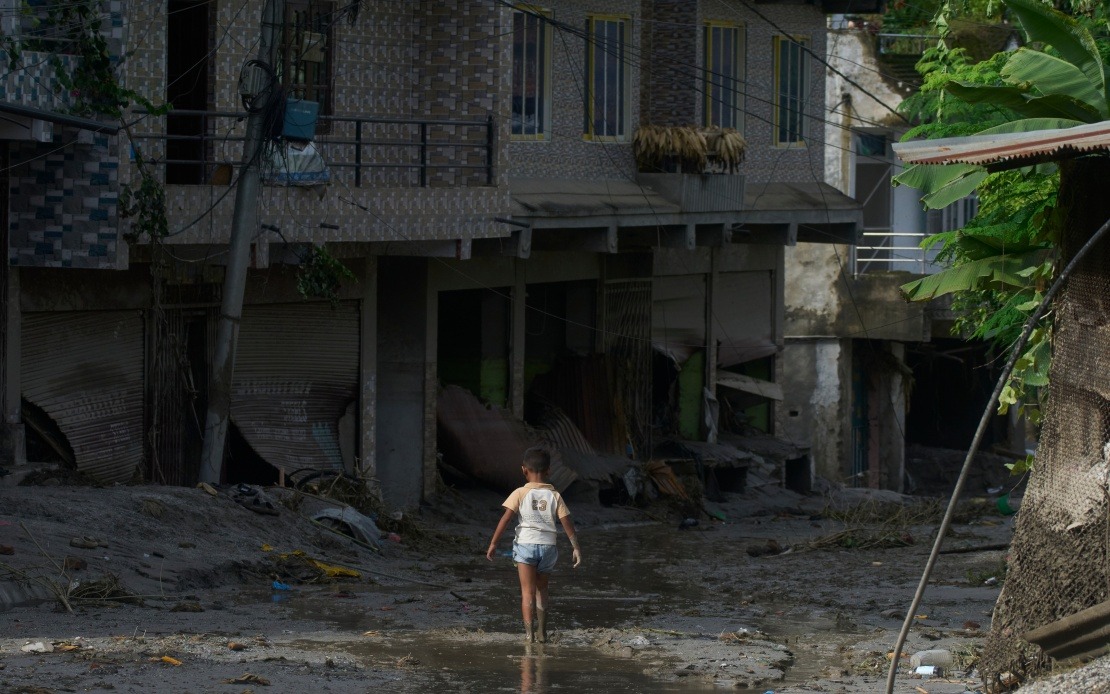
A catastrophic mudslide struck Gyirong Port at the China-Nepal frontier on Wednesday morning, leaving seven people confirmed dead and presenting an increasingly grim outlook for 554 individuals reported missing in the aftermath. The disaster occurred at this critical trade crossing in Gyirong County, Xizang Autonomous Region, triggering an emergency response that continues to unfold with rescue teams racing against time to locate survivors in the mountainous terrain.
The initial rescue operation saved two villagers from the affected area by Saturday morning, according to statements from the regional emergency management department. However, the sheer scale of the missing persons list underscores the magnitude of the catastrophe and has prompted regional authorities to acknowledge that recovery efforts may extend well beyond immediate search operations.
China has mobilised substantial resources to address the emergency, deploying a combined force of 2,141 rescue workers alongside 86 specialists trained in natural resources assessment and disaster management. This coordinated response reflects the complexity of operations in a geographically challenging border region where mountainous topography and weather conditions routinely complicate rescue missions. The deployment of such significant manpower demonstrates authorities' commitment to exhausting all possibilities in locating survivors.
Beyond search and rescue operations, teams have focused considerable attention on preventing secondary disasters that frequently accompany major mudslides. Technicians have established a dedicated five-member monitoring post to maintain continuous surveillance of a barrier lake that formed following the initial mudslide. Such formations pose substantial hazards, as accumulated water can destabilise remaining slopes or breach suddenly, triggering additional slides. This preventative approach reflects lessons learned from previous disasters in ecologically sensitive border regions.
Geological inspection teams have systematically examined surrounding slopes, roadways, and other infrastructure zones that might be vulnerable to additional instability. Using specialised detection equipment, they aim to identify weaknesses in terrain that could generate follow-up hazards affecting rescue personnel or inhabitants attempting to return to communities. This painstaking examination work remains critical to ensuring that relief operations do not inadvertently place workers or civilians at risk from unstable ground conditions.
The restoration of transportation links has also begun, with crews reopening approximately 1.02 kilometres of damaged roadway to facilitate movement of rescue equipment and personnel. Maintaining access routes proves essential in border areas where alternative paths are limited and supply lines depend entirely on functional infrastructure. The reopening represents tangible progress in restoring basic connectivity to the affected zone, though much of the surrounding region likely remains compromised.
The mudslide originated on the Nepalese side of the international boundary but caused devastating damage at Gyirong Port itself, highlighting how natural disasters recognise no borders and how tightly interconnected these frontier communities remain despite political boundaries. Cross-border incidents create complex coordination challenges, as rescue operations must account for bilateral relationships and potential involvement of Nepalese authorities or affected Nepalese nationals.
For Malaysia and other Southeast Asian nations, this incident carries particular relevance as a sobering reminder of the environmental risks facing mountainous regions throughout Asia. Similar geological vulnerabilities exist across the Himalayan foothills and high-altitude zones throughout the continent, where intensive development, climate variability, and steep topography create persistent hazard conditions. The scale of this emergency illustrates how rapidly natural disasters can overwhelm local emergency capacities, even in regions with established response frameworks.
The incident also underscores broader questions about development in disaster-prone areas and the adequacy of early warning systems in remote frontier zones. Gyirong Port represents economically vital infrastructure connecting two nations, yet its location in an inherently unstable geological zone means operators and users accept considerable risk. Similar calculations shape infrastructure development decisions throughout Asia's border regions, where economic imperatives often outweigh purely safety-focused site selection criteria.
As rescue operations continue, the relatively modest number of confirmed survivors recovered so far suggests that many of the missing may not be located alive. Authorities have not released information about the composition of those unaccounted for—whether they represent local residents, migrant workers, traders crossing the border, or transport personnel—information that would provide context for understanding how the community has been affected. Extended search operations in harsh mountainous terrain frequently produce tragic outcomes, particularly when substantial time has elapsed since initial contact with survivors.

