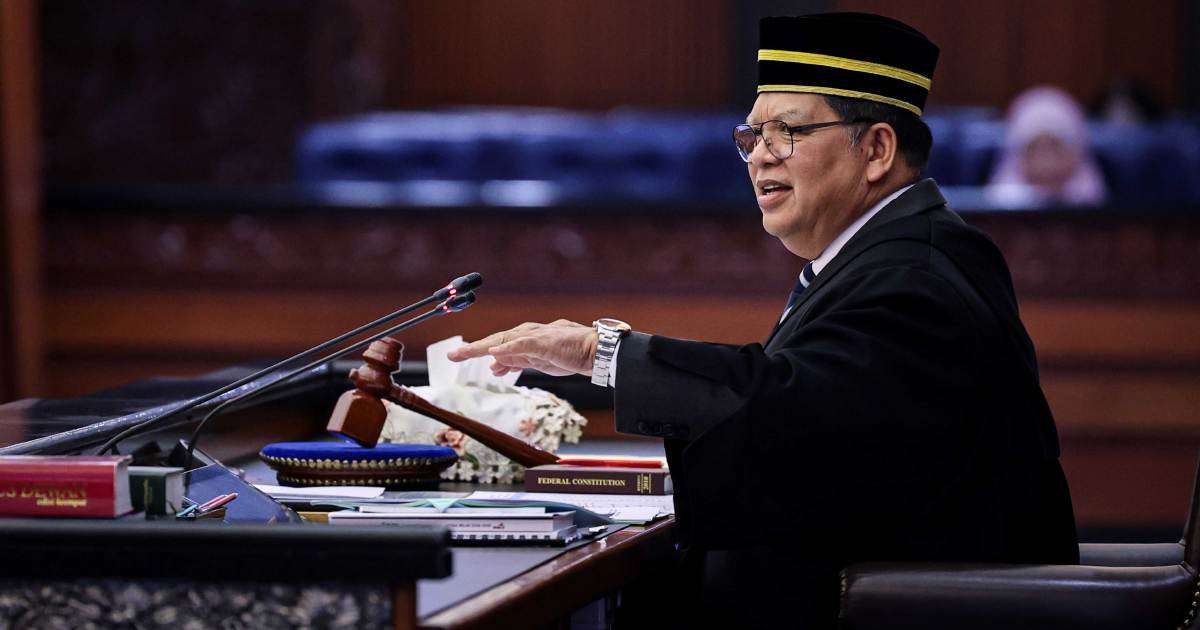
Dewan Rakyat Speaker Tan Sri Johari Abdul has issued a fresh directive to members of parliament, emphasising the importance of regular attendance during parliamentary sittings and cautioning against absence without acceptable justification. The reminder comes as part of an ongoing effort to maintain procedural discipline within the lower house and ensure members meet their constitutional responsibilities to constituents and the legislative process.
Parliamentary attendance forms the cornerstone of democratic accountability in Malaysia's Westminster-influenced system. When lawmakers fail to show up for sittings without legitimate cause, it undermines the credibility of the institution and reduces the number of elected representatives available to scrutinise government actions, debate policy, and represent their constituents' interests. The Speaker's intervention signals concern that casual absenteeism has become a persistent issue requiring formal reiteration of established rules.
In Malaysia's political landscape, where coalition governments often navigate narrow majorities or depend on crossbench support, the presence and voting capability of all members becomes strategically significant. Absences can affect the outcome of crucial votes, weaken government legislative agendas, or strengthen opposition capacity to challenge proposals. Beyond numerical implications, systematic non-attendance also sends a troubling message to voters about the commitment level of their representatives, potentially eroding public confidence in the legislative branch.
The Dewan Rakyat's standing orders contain provisions permitting members to seek permission for absence under specified circumstances. These recognised grounds typically include illness, official duties, or personal emergencies of significant gravity. However, the Speaker's recent statement suggests that not all members requesting exemption provide sufficiently compelling explanations, or worse, simply absent themselves without advance notification or justification. Such conduct violates parliamentary convention and potentially breaches the regulations governing member conduct.
Enforcement of attendance standards has become increasingly complex in contemporary Malaysian politics, where the calendar of parliamentary sittings remains compressed compared to legislatures in other Commonwealth democracies. Members often juggle state assembly duties, ministerial portfolios, constituency casework, and party organisational responsibilities. Yet these competing demands do not absolve lawmakers from their primary obligation to attend the national parliament when called upon, particularly during critical legislative sessions affecting governance and public policy.
Historically, persistent absenteeism has occasionally become visible during specific types of business. Some members have demonstrated selective attendance patterns, appearing for important votes on government confidence while skipping routine sittings. Others have encountered genuine scheduling conflicts between federal and state legislative calendars, particularly those serving as state assemblymen. However, instances of unexplained or under-explained absence remain problematic and require correction through stronger adherence to published procedures.
The Speaker's authority to enforce attendance rules provides one mechanism for addressing non-compliance, though Malaysian parliamentary practice has traditionally treated such matters with considerable flexibility and informality. Colleagues occasionally cover for absent members through pairing arrangements, and the Speaker generally exercises discretion in cases where explanations appear reasonable. Nevertheless, allowing this flexibility to metastasise into systematic indulgence of unjustified absences ultimately weakens parliamentary efficacy.
For Malaysian constituents, their representatives' parliamentary attendance directly correlates with the quality of scrutiny applied to government conduct and policy proposals. When members fail to show up, particularly during debate on legislation affecting their constituencies, they forfeit opportunities to advocate for local interests and raise grievances with ministers. This particularly impacts rural and underserved areas where MPs may struggle to secure ministerial attention on infrastructure, development, or service delivery issues.
The Speaker's reminder also carries implications for how Malaysia's parliament maintains standards relative to regional and international peers. Legislatures across Southeast Asia face varying attendance challenges, but those sustaining higher compliance rates generally command greater public respect and demonstrate stronger institutional integrity. As Malaysia endeavours to strengthen democratic institutions and rebuild public trust following periods of political turbulence, visible commitment to operational discipline becomes symbolically important.
Moving forward, the Speaker's office may need to consider whether existing enforcement mechanisms prove sufficiently robust to ensure genuine compliance. This could involve more transparent publication of attendance records, systematic follow-up on unexcused absences, or clearer articulation of what constitutes acceptable justification. Enhanced accountability measures might also encourage greater compliance without requiring draconian sanctions.
Ultimately, regular parliamentary attendance remains non-negotiable for elected representatives in a functioning democracy. Members voluntarily sought election and accepted consequential responsibilities including consistent presence during legislative sessions. The Speaker's intervention represents a timely reinforcement that these obligations cannot be treated as suggestions or casually disregarded in favour of other pursuits. For parliament to command legitimacy and effectively discharge its constitutional functions, every member must recognise that showing up represents a fundamental duty, not a voluntary aspiration.