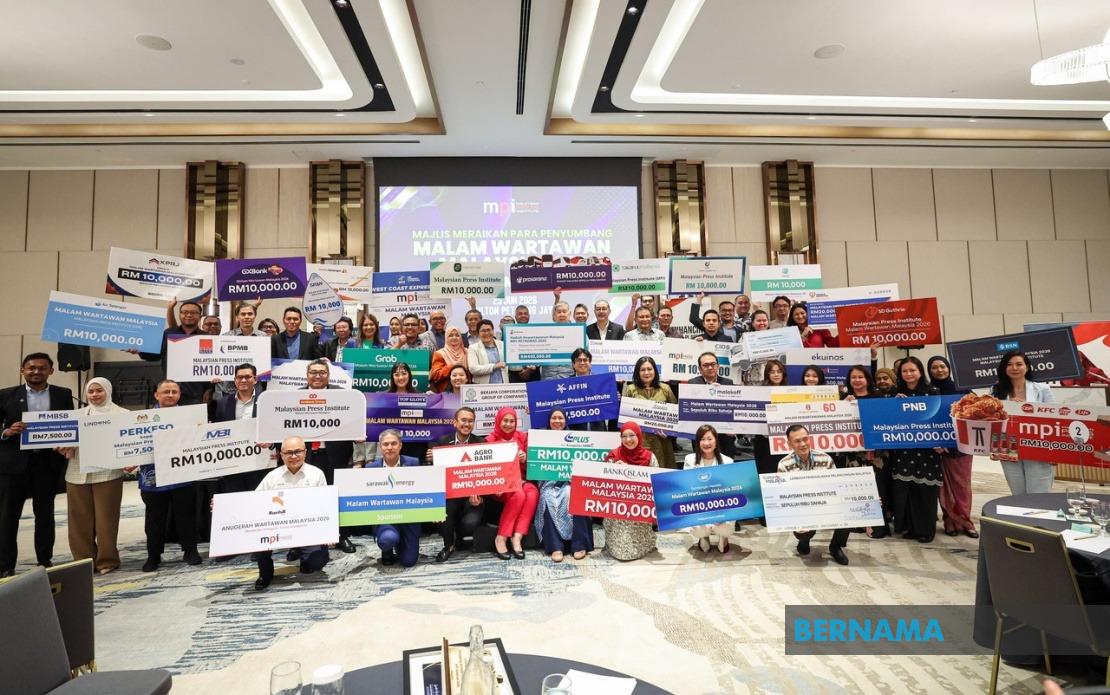
The Malaysian Press Institute has successfully mobilised RM1.037 million in financial support for the upcoming Malaysia Press Night 2026, demonstrating robust backing from both the corporate sector and industry partners for an event that has become the cornerstone of recognition within the nation's media landscape. The fundraising milestone, unveiled at the Contributors' Appreciation Ceremony held in Kuala Lumpur today, reflects the strong commitment of Malaysian organisations to bolster professional journalism standards at a time when the media industry faces mounting pressures and shifting consumption patterns across the region.
The funding package comprises two distinct revenue streams that together underscore the event's institutional significance. Contributions totalling RM587,000 have been pledged by 60 different organisations, ranging from media houses to corporate entities with vested interests in supporting quality journalism. Complementing this is a substantial RM450,000 sponsorship commitment from PETRONAS, the national petroleum corporation, which has maintained its backing of the journalism awards programme since 1994. This enduring partnership between the energy giant and the media institute illustrates how anchor sponsors can provide stability and legitimacy to industry recognition schemes over the long term.
According to Dr Ainol Amriz Ismail, chief executive officer of the Malaysian Press Institute, the contributions transcend mere financial transactions and represent a deeper alignment of values around journalistic integrity and public service. Speaking at today's ceremony, he framed the support as evidence of a collective determination to preserve and strengthen the professional standards that underpin ethical journalism throughout Malaysia. His remarks captured a broader narrative about the news industry's role in an increasingly complex information environment, where verification, accuracy and factual rigour remain essential public goods even as digital disruption reshapes media business models.
The Malaysia Press Night event carries particular weight this year with the confirmed attendance of Prime Minister Datuk Seri Anwar Ibrahim, who is scheduled to participate in the July 17 ceremony. The prime ministerial presence elevates the symbolic importance of the gathering, signalling governmental recognition of journalism's institutional role in the nation's democratic and developmental infrastructure. For media practitioners, such high-level acknowledgment validates their work and reinforces messages about the profession's centrality to informed citizenship and transparent governance.
The MPI-PETRONAS Malaysian Journalism Awards, which form a cornerstone of the Malaysia Press Night proceedings, have operated continuously for three decades, making them among Southeast Asia's longest-running and most established journalism recognition programmes. The consistency of PETRONAS's sponsorship across this extended timeline provides the awards with credibility and resources that have allowed the scheme to evolve and expand its coverage of different media categories and journalistic disciplines. This institutional longevity matters considerably in a region where many industry initiatives struggle with funding volatility and limited corporate commitment.
MPI president Datuk Yong Soo Heong and other senior institute officials, including Bernama chief executive officer Datin Paduka Nur-ul Afida Kamaludin, attended today's appreciation ceremony alongside representatives from PETRONAS and the broader media fraternity. The gathering brought together stakeholders whose interests converge around sustaining professional journalism ecosystems. For Malaysian media organisations and individual journalists, such events serve as platforms for networking, recognition and dialogue about industry challenges and opportunities.
Beyond the awards ceremony itself, the Malaysian Press Institute leverages the Malaysia Press Night platform to conduct substantive industry discussions that examine contemporary media issues. The third edition of a featured forum programme brought together a distinguished panel including Malaysian Journalism Icon Datuk A. Kadir Jasin, whose decades-long career embodies journalistic standards and editorial independence. The panel also included Firdaus Hussamuddin from Karangkraf Group, Namanzee Harris from TV AlHijrah and Thiaga Rajan Muthusamy of Vanakkam Malaysia, representing print, broadcast and community media sectors respectively. Such cross-media representation ensures that discussions remain relevant to diverse publishing formats and audience segments.
The funding secured by the institute supports not only the awards ceremony itself but also the broader ecosystem of professional development initiatives that the MPI operates for Malaysia's media community. These programmes encompass training, capacity building and industry guidance that help journalists navigate evolving editorial challenges and technological disruption. In Southeast Asia, where media development institutions often struggle with resource constraints, the MPI's ability to sustain such programming through consistent sponsorship relationships represents a meaningful achievement in institutional sustainability.
Dr Ainol Amriz's public acknowledgment of contributor and sponsor support underscores an important reality about institutional fundraising in the media development sector. Corporate entities that back journalism awards and professional development programmes are making bets on the long-term health of media ecosystems that serve their communication and advocacy interests. Yet the relationship remains mutually beneficial when sponsorship preserves journalistic independence and awards credibility depends on maintaining rigorous editorial standards in selection processes. This balance has proven manageable for the MPI-PETRONAS partnership across three decades.
For Malaysian news organisations and individual journalists, the Malaysia Press Night remains a significant professional milestone and networking opportunity within a competitive and resource-constrained industry. Recognition through formal awards validates editorial choices and reinforces professional identity among practitioners often working under tight deadlines and commercial pressures that can complicate adherence to journalistic standards. The event's elevation by prime ministerial attendance adds further prestige and signals that journalism's role in national development remains valued at the highest political levels.
The Malaysian Press Institute's success in mobilising RM1.037 million for the 2026 event comes at a moment when media industries throughout Southeast Asia face structural transformation driven by digital distribution, advertising migration and fragmenting audience attention. Within this context, investments in professional recognition schemes and journalist training represent deliberate efforts to sustain quality standards and institutional credibility. The breadth of organisational support underlying this year's funding package suggests sustained confidence in the institute's leadership role and in the journalism awards' continued relevance as benchmarks for professional excellence within Malaysia's diverse media landscape.

