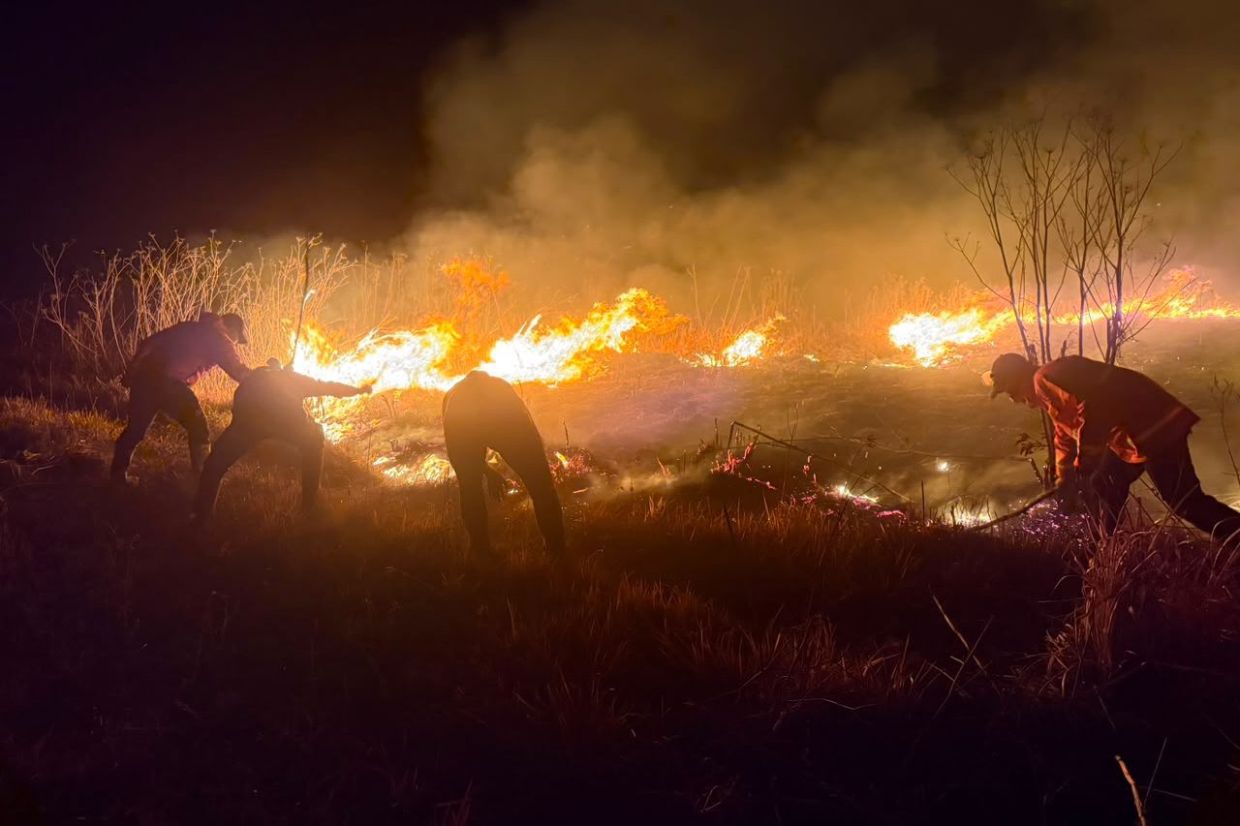
Indonesia's Mount Bromo is facing an escalating environmental crisis as wildfires continue their relentless advance across the iconic volcano's landscape in East Java. Authorities confirmed on Sunday that the conflagration has now consumed approximately 520 hectares of terrain, representing a significant expansion from earlier assessments. The deteriorating situation underscores mounting challenges in managing natural disasters across Indonesia's volcanic regions, where seasonal dry conditions and human activity continue to compound fire risks.
The rapid expansion of the blaze stems directly from meteorological conditions unfavourable for containment efforts. Rudijanta Tjahja Nugraha, head of the Bromo Tengger Semeru National Park (TNBTS) Authority, explained that fairly strong winds have persisted since Saturday afternoon, driving flames progressively downslope from higher elevations into lower-lying areas. This directional spread pattern reflects how topography and wind interact on volcanic slopes, creating corridors for rapid fire propagation. The fire's revival on Saturday night, following earlier suppression attempts, indicates the volatile nature of conditions within the park.
Environmental factors have rendered the landscape exceptionally vulnerable to fire's advance. The savanna and grasslands blanketing Mount Bromo's slopes are currently in severely desiccated condition, having endured prolonged dry weather that has stripped away protective moisture from vegetation. This abundance of tinder-dry biomass, combined with wind-driven flames, creates ideal conditions for widespread combustion. Officials noted that the fire now affects not merely the slopes themselves but has penetrated deeply into the savanna ecosystem, suggesting that suppression efforts face challenges across multiple terrain types with varying accessibility and fire behaviour.
Management of the disaster has prompted immediate operational responses from the national park administration. The TNBTS Authority imposed a comprehensive closure of Mount Bromo to all visitor access from 10 p.m. on Saturday, with this restriction remaining in force indefinitely pending improvement in conditions. The decision reflects dual imperatives: protecting human life and clearing operational space for firefighting personnel to conduct suppression operations without managing tourist safety simultaneously. Officials have offered affected visitors flexibility in rescheduling bookings or obtaining refunds, a measure designed to mitigate economic disruption whilst prioritizing emergency management.
The tourism implications of the Mount Bromo closure extend beyond immediate visitor inconvenience. Mount Bromo constitutes one of Indonesia's premier tourist attractions, drawing international visitors who travel specifically to experience the dramatic volcanic landscape. The sustained closure represents potentially significant economic losses for local communities dependent on park-related tourism revenue, guides, accommodation services, and hospitality businesses. For Malaysia and regional neighbours, the closure may influence travel planning and route decisions, as visitors reconsider itineraries affected by Indonesian natural disaster disruptions.
Investigation into the fire's origins has become a priority for national authorities as environmental and criminal accountability frameworks come into play. The TNBTS Authority indicated on Friday that human activity represents the suspected cause, directing suspicion toward either careless behaviour or intentional ignition. Forestry Minister Raja Juli Antoni underscored that legal consequences would be applied proportionate to findings, warning that individuals engaged in forest and land burning would face appropriate punishment under Indonesian law. This declaratory stance reflects governmental commitment to deterrence, though establishing culpability requires forensic investigation by law enforcement agencies assigned investigative responsibility.
The Mount Bromo incident exemplifies broader patterns of wildfire risk across Indonesia's extensive forested regions and protected areas. Seasonal transitions and climatic variability create recurring windows of elevated fire danger, particularly across eastern Indonesian regions experiencing pronounced dry seasons. The convergence of natural vulnerability with human-initiated ignition sources has produced multiple major fire events across Indonesia in recent years, generating environmental, economic, and health consequences. Mount Bromo's prominence as a national park means its crisis receives immediate official attention and resources, yet less visible fires across remote or less-protected areas may progress unchecked.
The incident carries implications for regional air quality and transboundary environmental impacts. Large-scale volcanic region fires produce substantial smoke emissions affecting not merely the immediate locality but potentially propagating across regional wind patterns into neighbouring jurisdictions. Malaysian readers should recognize that Indonesian natural disasters, particularly those affecting air quality, can generate transboundary haze affecting Malaysia and Singapore, creating health concerns and environmental monitoring requirements. The regional interconnection of atmospheric and environmental systems means Mount Bromo's crisis extends beyond Indonesia's borders in tangible ways.
Response coordination across multiple governmental agencies reflects the institutional complexity of disaster management in Indonesia's decentralized governance structure. While the TNBTS Authority manages immediate park operations, the Forestry Ministry addresses legal and policy dimensions, and law enforcement pursues investigation of suspected culpability. This distributed responsibility model requires effective inter-agency communication to ensure coherent response strategies. The assignment of investigative authority to law enforcement rather than environmental agencies reflects Indonesian legal frameworks that treat forest burning as potentially criminal activity warranting prosecution.
The situation at Mount Bromo remains fluid, with continued monitoring essential as authorities assess whether suppression efforts contain further expansion. The combination of strong winds, desiccated vegetation, and vast terrain coverage suggests firefighting operations face technical challenges requiring sustained effort and resources. Regional observers should monitor official updates from Indonesian environmental authorities, as developments may influence regional travel advisories and transboundary environmental conditions affecting Southeast Asia more broadly. The incident demonstrates how natural hazards intersect with human activity and governance capacity to generate cascading consequences across environmental, economic, and social dimensions.

