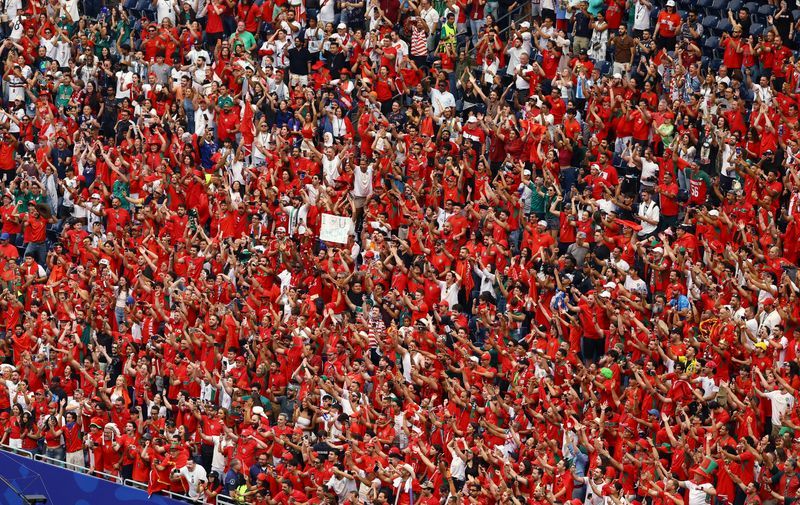
Morocco produced a commanding second-half display to eliminate Canada 3-0 in the World Cup round of 16 clash held in Houston on Saturday, advancing to the quarter-finals and extending their impressive run in the tournament. Azzedine Ounahi's brace, combined with Soufiane Rahimi's late strike, sent the North African side through to face either Paraguay or France in the last eight, reinforcing Morocco's status as one of the competition's surprise packages.
The scoreline, however, obscured a dramatically different story in the opening 45 minutes. Canada emerged from the tunnel with clear tactical intent, pressing high and creating genuine problems for a Morocco side that struggled to establish any meaningful rhythm. The co-hosts, playing their first World Cup as joint organizers alongside the United States and Mexico, exhibited the kind of intensity befitting a team fighting for their tournament survival. Had Canada's early pressure translated into goals rather than squandered opportunities, the narrative could have shifted entirely.
The complexion of the match darkened for Morocco in the 22nd minute when Ismael Saibari, a pivotal attacking force who had netted three goals during the group stage, was withdrawn with a hamstring injury. This setback forced manager Walid Regragui into an unscheduled substitution, introducing Soufiane Rahimi in place of the injury-plagued midfielder. For Morocco, already struggling to impose their rhythm, losing a goal-scoring threat represented a significant blow to their offensive ambitions during a period when Canada held the upper hand.
Canada's inability to convert their first-half chances proved decisive. Despite monopolizing possession and launching several incisive attacking movements, the North Americans failed to breach the Moroccan goal when opportunities presented themselves. This is an increasingly familiar pattern at elite international football competitions—teams that fail to capitalize on early dominance often find themselves punished when their opponents eventually find their feet. Morocco's lack of incisiveness in the opening period masked the tactical vulnerability that Canada's aggressive approach had exposed, a vulnerability that would prove fatal once the African side adjusted at the interval.
The momentum shifted dramatically five minutes into the second half when Morocco broke the deadlock through a well-orchestrated free kick routine. Achraf Hakimi's low delivery from the right flank found the unmarked Ounahi, who executed a clinical side-footed finish from 25 yards, placing the ball into the bottom corner with the precision of a player rediscovering confidence. This breakthrough proved psychologically devastating for Canada, who had invested so much energy into their attacking gambits without reward.
Canada's task became considerably more daunting without their influential left-back Alphonso Davies, absent due to ongoing fitness concerns that had plagued his participation throughout the tournament. Davies's unavailability represented more than a defensive loss; it removed a dynamic offensive weapon that could have shifted the match's momentum during crucial moments. For a Canadian squad making history as a nation finally achieving both a World Cup point and victory at the finals, the absence of such a talismanic figure underscored the precariousness of their tournament experience.
Ounahi's second goal, arriving in the 82nd minute, effectively sealed Canada's elimination and dampened any remaining hopes of a improbable comeback. A devastating four-versus-two break down the flank allowed Brahim Diaz to thread the ball through for Ounahi, whose finish into the top corner demonstrated composure under pressure. By this point, Canada's desperation to retrieve the match had created the very spaces that punished their aggressive forward movements.
Substitute Rahimi capped Morocco's professional performance with a third goal during the closing stages, emerging from the bench to add gloss to a dominant second-half showing. The late addition underscored Morocco's ability to control the game's tempo once they had established their advantage. This was a team that had absorbed early pressure, weathered injury disruption, and emerged with a comprehensive victory that will resonate through Southeast Asia's football communities as evidence of North African pedigree at the World Cup.
Morocco now turns attention to their quarter-final appointment on July 9, facing either Paraguay or France depending on the outcome of Saturday's competing knockout tie. The North Africans' progression represents the latest chapter in their remarkable tournament arc, having already captured regional imagination through their path to the semi-finals in 2022. For Malaysian and regional football followers, Morocco's clinical elimination of Canada demonstrates the gulf between tournament experience and World Cup ambition—a lesson that resonates particularly for Southeast Asian nations still seeking sustained presence in football's premier competition.

