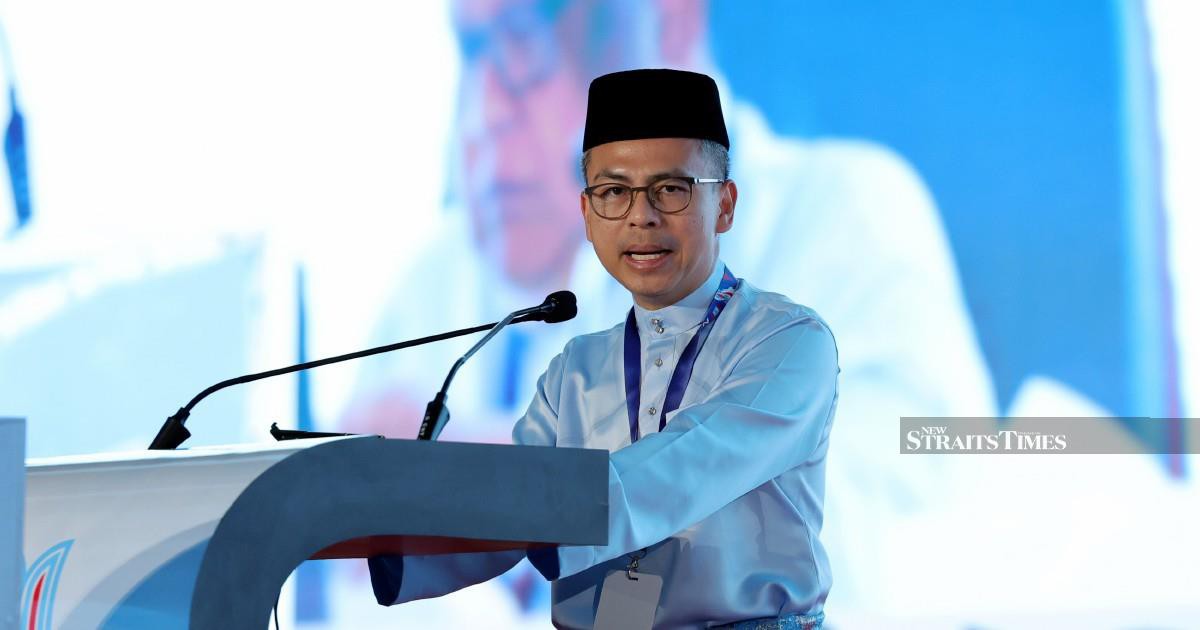
Prime Minister Datuk Seri Anwar Ibrahim is poised to announce significant new initiatives within the coming days, according to senior party officials, marking what appears to be a new phase of government communications after weeks of relative quiet on major policy fronts.
The indication came from Datuk Seri Fahmi Fadzil, who serves as information chief for the People's Justice Party (PKR), during remarks made at Ayer Keroh. Fahmi's comments suggest the government is preparing to unveil multiple announcements rather than a single policy shift, implying a coordinated rollout of decisions that have likely been under development across various ministries and government bodies.
While Fahmi did not specify the nature or scope of the anticipated announcements, the timing is significant given Malaysia's current political and economic landscape. The government has faced mounting pressure on several fronts, from persistent inflation concerns to demands for clearer policy direction on infrastructure spending and social programmes. Any announcement from Anwar's administration is likely to be scrutinised closely by both opposition parties and civil society organisations monitoring executive action.
The Malaysian political context adds particular weight to such signals from government officials. In a coalition government where the Prime Minister must navigate complex alliances between PKR, Amanah, and other parties under the Pakatan Harapan banner, alongside support arrangements with other blocs, the coordination required to deliver "several announcements" suggests an attempt to demonstrate substantive progress and unified governmental purpose.
Fahmi's role as information chief places him in a position to gauge both party sentiment and broader communications strategy. His willingness to preview forthcoming announcements indicates confidence within PKR's leadership that what is about to be unveiled will be favourably received, or at least that pre-announcement positioning is strategically valuable. This approach contrasts with surprise announcements and suggests calculated messaging management.
For Malaysian businesses and investors, such signals often carry weight. Market reaction to government announcements typically depends on their content regarding regulatory changes, spending priorities, or fiscal policy adjustments. The fact that multiple announcements are planned simultaneously may indicate a comprehensive policy package designed to address several concurrent concerns, from economic stimulus to structural reforms.
Regional observers, particularly in other Southeast Asian nations, often monitor Malaysian government announcements for insights into regional economic trends and policy directions. Malaysia's approach to emerging challenges frequently influences or parallels strategies adopted elsewhere in the ASEAN region, making Kuala Lumpur's policy announcements relevant beyond national borders.
The timing of Fahmi's comments at Ayer Keroh also carries geographical significance, as this area has particular importance in Melaka state politics and PKR's regional standing. Statements made in such locations typically serve dual purposes: communicating with immediate local audiences while simultaneously sending signals through the wider political ecosystem via media coverage.
Anwar Ibrahim's leadership style has generally favoured controlled communication and strategic announcement schedules rather than ad-hoc policy pronouncements. This has allowed his administration to shape narratives and manage expectations around implementation timelines. The preview offered by Fahmi appears consistent with this approach, establishing anticipation while maintaining flexibility regarding specific timing and content details.
The broader implication of expecting multiple announcements involves questions about the government's overall strategic direction. Whether these announcements address economic concerns, social policy, administrative reforms, or combinations thereof will provide crucial insight into whether the administration is consolidating its early-term focus or pivoting toward new priorities based on changed circumstances or shifting political calculations.
For ordinary Malaysians awaiting clarity on matters ranging from cost-of-living pressures to infrastructure development timelines, Fahmi's indication that substantive announcements are imminent may provide some reassurance that the government apparatus continues functioning, even if specific details remain under wraps pending formal unveiling.
The maintenance of such careful communications sequencing reflects the complexities of modern Malaysian governance, where multiple stakeholder groups—from financial markets to civil society to political competitors—scrutinise official statements for implications affecting their respective interests and constituencies.
As attention focuses on the coming days, observers across Malaysia's political, business, and civil society spheres will be monitoring both the substance of Anwar's announcements and the manner of their presentation, as both elements shape public perception and market confidence in government direction.

