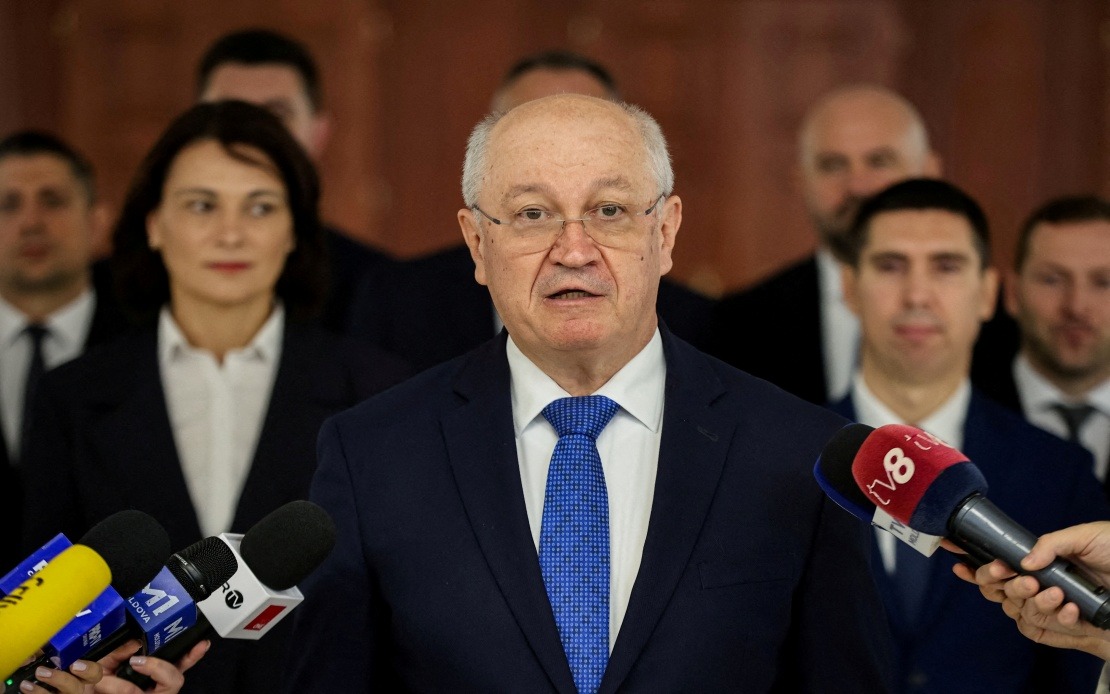
Moldova's government faced an unexpected shake-up on Friday when Prime Minister Alexandru Munteanu announced his resignation through social media, citing fundamental disagreements between his personal values and the practical demands of his position. The abrupt departure marks the end of his tenure, which began in November 2025, leaving the Eastern European nation to navigate a transition in leadership at a potentially sensitive time for the region.
Munteanu disclosed his decision via a post on the social platform X, where he declared that his term as prime minister had concluded. In his statement, the outgoing leader offered limited detail regarding the circumstances that prompted his departure, instead framing the decision as a personal choice rooted in ethical considerations. This vague positioning suggests deeper internal tensions within Moldova's government or possibly between Munteanu and other senior officials, though the specific nature of these conflicts remains unexplained.
The timing of the resignation carries significance for Moldova, a nation navigating complex geopolitical pressures between Western and Russian spheres of influence. The country has been attempting to consolidate its democratic institutions and pursue European Union integration, efforts that often create friction within government circles when competing visions for reform and governance clash. Munteanu's departure could indicate that reformist or pro-Western elements within the administration have encountered resistance from other political forces.
For Malaysian readers and Southeast Asian observers, the resignation illustrates a pattern seen across smaller nations in contested regions: the personal cost of political office when leaders attempt to balance institutional demands against their own ethical boundaries. Moldova's situation mirrors challenges faced by governments in the region that grapple with balancing national interests against international pressures and internal political divisions.
The lack of detailed explanation in Munteanu's announcement may reflect the delicate political landscape he navigated. Eastern European prime ministers frequently operate within coalitions or face significant parliamentary constraints, situations where compromises become necessary to maintain governance. When such compromises conflict too severely with a leader's core convictions, resignation becomes an option rather than continued political contortion.
Munteanu's eight-month tenure was relatively brief, raising questions about what specific events or decisions triggered the crisis of conscience. In this region, prime ministers often encounter pressure to implement policies that serve factional interests rather than broader public good, or to accommodate demands from coalition partners that contradict the government's stated reform agenda. The compressed timeline suggests the contradictions emerged relatively quickly once Munteanu took office.
The resignation also comes at a moment when Moldova continues stabilising its institutions following earlier political turbulence. The country has worked to strengthen democratic norms, combat corruption, and reorient its foreign policy toward Europe. Leadership changes, particularly when they occur without clear explanation, can create uncertainty about the government's direction and its commitment to established reform trajectories.
For regional watchers, Munteanu's departure underscores how smaller nations can struggle to retain leaders committed to principled governance. The announcement suggests that he prioritised his personal integrity over remaining in office, a choice that reflects either admirable conviction or, potentially, an inability to navigate the necessary compromises that executive leadership demands. The context will likely emerge through subsequent developments in Moldovan politics.
The immediate consequence of this resignation involves constitutional succession procedures and likely negotiations among parliamentary factions to determine his replacement. Moldova's political system will need to identify a new prime minister capable of commanding parliamentary support, a process that could either stabilise the government or deepen existing divisions depending on the configuration of competing political forces.
Looking forward, observers should monitor whether the incoming prime minister clarifies what circumstances prompted Munteanu's departure. Such clarification would illuminate whether the resignation stemmed from failures of reform implementation, pressure to pursue policies contrary to democratic principles, or conflicts with other senior officials. The explanation, once offered, will significantly shape perceptions of Moldova's governance trajectory and its prospects for continued European integration.

