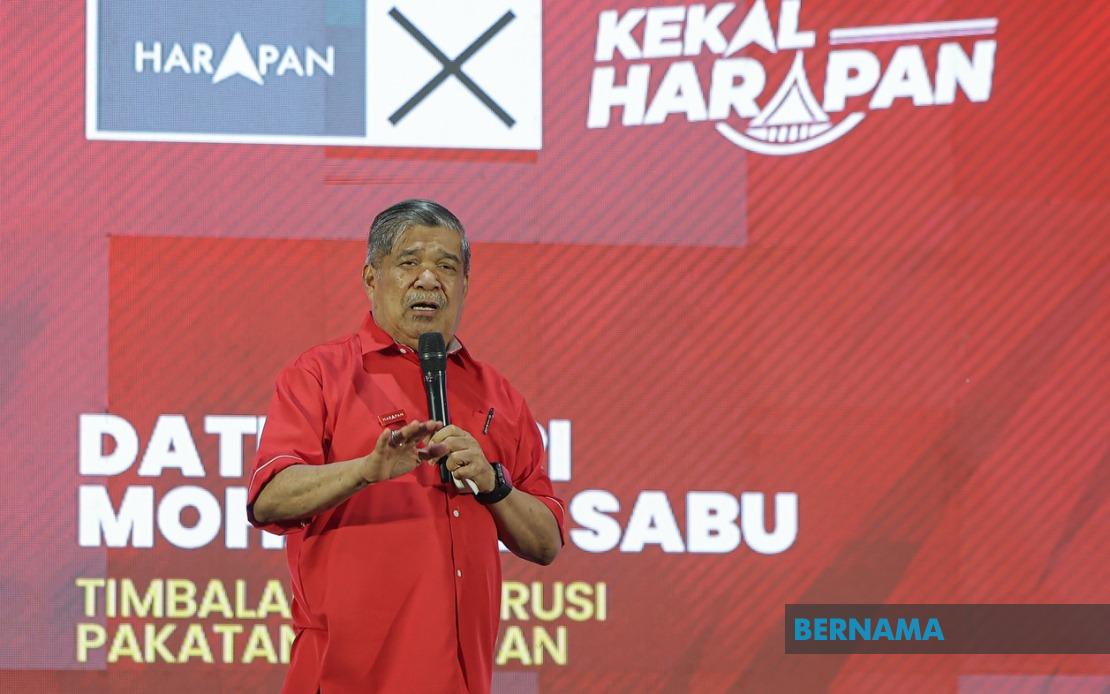
Amanah president Datuk Seri Mohamad Sabu has issued a direct appeal to voters in Negeri Sembilan, urging them to actively resist what he characterises as 'marriage-divorce' politics—a pattern of political behaviour where parties abandon their coalition partners in pursuit of power whenever circumstances favour a more advantageous arrangement. Speaking in Seremban on July 22, Mohamad Sabu framed this phenomenon as a fundamental threat to Malaysia's long-term political health and institutional credibility.
The core of Mohamad Sabu's criticism centres on the instability that emerges when political parties prioritise short-term electoral gains over principled governance and consistent ideological positioning. He argues that voters should view such opportunism with considerable scepticism, as parties that repeatedly shift their political allegiances demonstrate a troubling flexibility regarding their core values and commitments. This lack of consistency, he contends, makes such parties fundamentally untrustworthy partners in coalitional arrangements and unreliable representatives of constituent interests.
The Amanah leader illustrates his point through a detailed chronology of one party's coalition movements, presenting a pattern that exemplifies the 'marriage-divorce' model he criticises. According to his account, this party first allied with Barisan Nasional, subsequently departed that coalition, then joined Pakatan Rakyat before breaking away again in 2015. The party subsequently returned to partnership with UMNO and Barisan Nasional, but abandoned this arrangement after slightly more than a year. Following this, it allied with Bersatu, only to leave that coalition as well. Mohamad Sabu characterises these repeated shifts as evidence of a party driven primarily by opportunism rather than principle.
What makes Mohamad Sabu's critique particularly pointed is his metaphorical language suggesting that such parties now attempt to court Barisan Nasional anew—described as trying to 'woo our wife'—despite their demonstrated history of abandoning previous partnerships. This rhetorical device underscores his fundamental argument: that such parties have shown themselves incapable of maintaining stable, principled political relationships, raising serious questions about their suitability as coalition partners for any bloc seeking to form a stable government.
The broader political context underlying this criticism involves Malaysia's experience with coalition instability since 2018. The dramatic political realignments of the past six years have unsettled established patterns of governance and introduced uncertainty into electoral calculations. Voters increasingly struggle to predict which parties might coalesce after elections, and whether elected representatives might subsequently switch allegiances, destabilising sitting governments. Mohamad Sabu's intervention reflects concerns shared across Malaysia's political spectrum regarding the corrosive effects of constant coalition reshuffling.
From a governance perspective, frequent coalition changes produce tangible harms to policy continuity and institutional effectiveness. When political parties prioritise coalition mathematics over programmatic consistency, government ministries face sudden leadership changes, policy reversals, and budgetary uncertainties. Development projects may be halted or redirected based on new coalition priorities rather than developmental logic. Civil servants experience confusion regarding strategic direction. The public loses confidence in government's ability to deliver on stated objectives. These practical consequences extend well beyond abstract questions of political principle.
The Malaysian electorate has demonstrated increasing frustration with such volatility. Regional elections and by-elections over recent years have shown voters responding negatively to parties perceived as politically unreliable or self-serving. Mohamad Sabu's appeal to Negeri Sembilan voters taps into this sentiment, positioning Amanah as representing a principled alternative to parties motivated primarily by power-seeking calculations. Whether this message resonates depends partly on whether voters view Amanah itself as sufficiently free from similar accusations of coalition flexibility.
Negeri Sembilan holds particular significance in Malaysian political calculations, occupying a middle position between urban and rural constituencies and representing a genuine bellwether of electoral sentiment. The state has experienced its own recent coalition turbulence, making residents potentially receptive to messages emphasising political stability and principled governance. Mohamad Sabu's decision to deliver this critique in the state suggests Amanah views Negeri Sembilan as a jurisdiction where concerns regarding political instability carry particular weight.
The deeper challenge underlying Mohamad Sabu's critique involves structural features of Malaysia's political system. Parliamentary systems inherently involve coalition-building, and parties sometimes discover that previous partnerships no longer serve their interests or those of their constituents. Distinguishing between principled coalition adjustment and opportunistic party-hopping remains subjective. However, Mohamad Sabu's point carries merit: there exists a meaningful difference between occasional coalition recalibration driven by genuine policy disagreement and chronic pattern-switching driven purely by pursuit of ministerial positions and governmental resources.
Sustaining political stability requires both institutional mechanisms and a political culture emphasising consistency and principled behaviour. Malaysia possesses various constitutional and parliamentary procedures designed to constrain destructive coalition volatility. However, these formal structures function effectively only when complemented by political actors who internalise norms favouring stability and consistency over short-term advantage. Mohamad Sabu's appeal to voters represents an attempt to mobilise public opinion in favour of such norms, pressuring political parties to face electoral consequences for demonstrated opportunism.
Looking forward, whether Malaysian voters embrace the stability message that Mohamad Sabu articulates will significantly shape the country's political trajectory. Should electorates increasingly penalise parties perceived as chronically unreliable coalition partners, Malaysian politics might gradually shift toward greater stability, with coalition arrangements reflecting genuine policy alignment rather than purely tactical considerations. Conversely, if voters prove indifferent to such concerns, Malaysia risks entrenching a political culture where coalition volatility becomes normalised and expected, further eroding public confidence in political institutions and governance effectiveness across the entire system.

