Foreign Minister Datuk Seri Mohamad Hasan will represent Malaysia at an extraordinary gathering of the Organisation of Islamic Cooperation's Council of Foreign Ministers in Jeddah tomorrow, where senior diplomats from member states will examine the evolving situation affecting Palestinians and chart a unified course of action. The single-day forum represents a significant opportunity for Malaysia to place its concerns squarely before the Islamic world's diplomatic machinery and to ensure that regional voices remain prominent in international discussions on a matter of deep consequence to Muslim-majority nations.
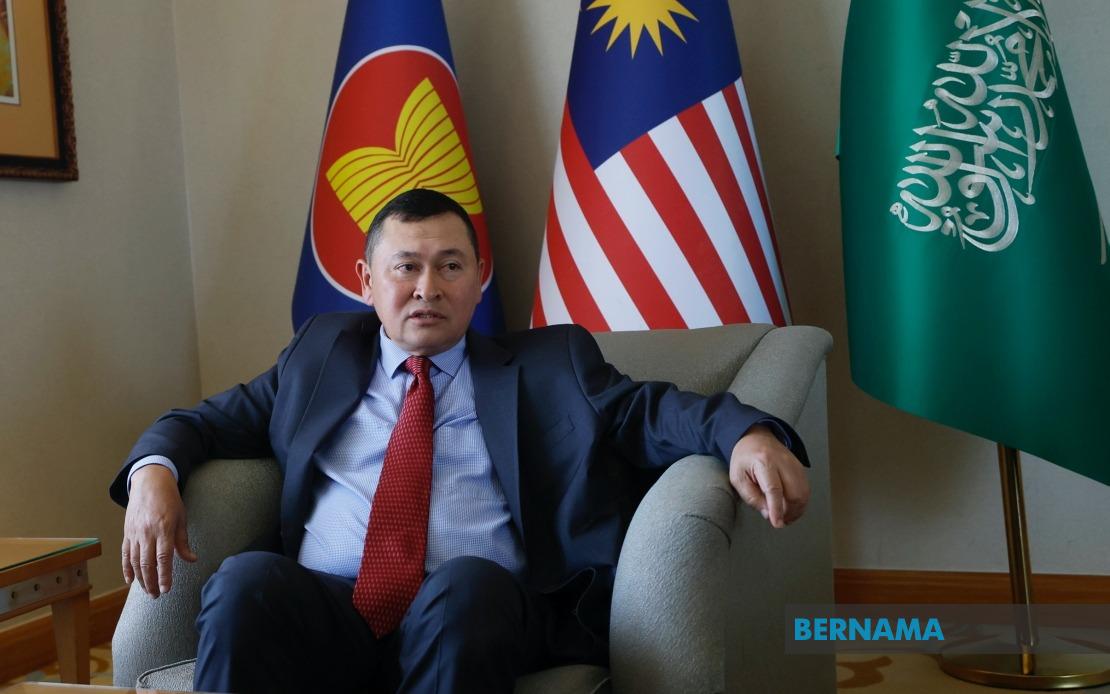
According to Datuk Syed Bakri Syed Abdul Rahman, Malaysia's ambassador to Saudi Arabia and permanent representative to the OIC, the gathering builds on earlier discussions in which member states have worked to establish common ground regarding Palestine. This layered diplomatic engagement reflects the complexity of balancing diverse national interests whilst presenting a coherent regional perspective on a conflict that continues to dominate headlines and shape geopolitical alignments across Asia and beyond.
During his address, Mohamad will present Malaysia's formal National Statement to the assembly, underscoring Kuala Lumpur's principled stance that the Palestinian people possess an inalienable right to self-determination and to establish their own independent and sovereign nation. Critically, Malaysia's position anchors Palestinian statehood to the pre-1967 borders, a formulation that represents the international consensus and distinguishes legitimate territorial claims from subsequent territorial modifications that remain contested under international law.
The agenda encompasses several dimensions of the ongoing Israeli-Palestinian dispute, with Mohamad expected to address what Malaysia characterises as Israel's military aggression against Palestinian territories, the catastrophic humanitarian emergency unfolding in Gaza, the volatile conditions across the West Bank, and the systematic expansion of Jewish settlements beyond the 1967 ceasefire lines. Each of these elements carries profound implications for civilians on the ground and remains central to Malaysia's diplomatic position, reflecting both humanitarian concerns and principled opposition to territorial conquest through military means.
Malaysia's participation carries particular weight given the nation's historical activism on Palestinian issues and its standing as a significant voice within the Muslim world. By sending its top diplomat, Kuala Lumpur signals that Palestine remains a cornerstone of its foreign policy and that the Malaysian government intends to push for concrete, measurable responses from the international community rather than mere rhetorical gestures. Ambassador Syed Bakri emphasised that Malaysia seeks to mobilise OIC member states toward substantive and effective action, moving beyond general statements of solidarity toward coordinated diplomatic and humanitarian initiatives.
A cornerstone of Malaysia's engagement concerns the continuation of humanitarian assistance reaching Palestinians in distress. The country has committed itself to ensuring that aid flows reliably to affected populations, reflecting Malaysia's view that diplomatic positions must translate into tangible relief for civilians caught in conflict zones. This humanitarian dimension connects Malaysia's foreign policy to its self-image as a responsible Muslim nation capable of translating religious solidarity into practical assistance.
The extraordinary meeting itself carries significance as a convening space for OIC members to synchronise their diplomatic positions and to deliberate joint strategies in response to developments on the ground. By bringing together foreign ministers from across the Islamic world, the gathering creates space for smaller nations like Malaysia to amplify their voices and for leading regional powers to coordinate their approaches. The assembly is expected to adopt formal resolutions addressing both the Palestinian question and the status of Al-Quds Al-Sharif, documents that typically condemn what member states view as Israeli aggression and call for coordinated responses.
Beyond the Palestinian agenda, the meeting will also address the election of the OIC secretary-general, a position of considerable importance for setting the organisation's priorities and diplomatic tone. The selection of new leadership offers an opportunity to reshape how the OIC engages with major geopolitical questions and to potentially elevate certain issues or regions within the organisation's hierarchy of concerns. Malaysia's stance on this matter could influence which candidates gain traction and what policy emphases the next secretary-general might pursue.
On the sidelines of the formal proceedings, Mohamad will conduct bilateral meetings with foreign ministers from several other nations, conversations that extend Malaysia's diplomatic reach beyond the Palestinian question into broader regional relationship-building. These encounters typically explore opportunities to deepen bilateral cooperation across multiple sectors, including commerce, trade, and investment. For Malaysia, such meetings represent chances to strengthen economic partnerships whilst advancing its political objectives, demonstrating that foreign policy engagement simultaneously serves security, diplomatic, and commercial interests.
Malaysia's approach to the Palestinian issue reflects the country's broader positioning within the Muslim world and Southeast Asia. As a significant Muslim-majority nation with considerable economic dynamism and diplomatic influence, Malaysia seeks to maintain its role as a bridge between the Islamic world and the broader international community. By actively participating in OIC forums and placing Palestinian concerns at the forefront of its diplomatic agenda, Malaysia reinforces its identity as a state committed to Islamic solidarity whilst also positioning itself as a responsible actor capable of constructive engagement on contentious international questions.
The timing of this extraordinary meeting underscores the urgency with which member states view recent developments in Palestine, signalling that routine mechanisms have proven insufficient and that more intensive diplomatic coordination has become necessary. For Malaysia and other regional players, the gathering represents both a venue for amplifying concerns and a forum for exploring whether collective action through international organisations can generate meaningful pressure on parties to the conflict to alter their behaviour.

