Indian Prime Minister Narendra Modi and Indonesian President Prabowo Subianto convened on Tuesday at Jakarta's Merdeka Palace to chart an expanded course for cooperation between Asia's two most populous democracies. The three-day visit underscores India's strategic pivot toward Southeast Asia and the Indo-Pacific region, particularly as traditional economic partnerships face mounting pressures from geopolitical fragmentation. Modi's arrival in Jakarta—his second visit to Indonesia as prime minister since 2018—signals renewed momentum in a relationship that has oscillated between periods of robust engagement and relative dormancy, now reinvigorated by both nations' recognition of shared regional interests.
The ceremonial dimensions of the visit conveyed the significance New Delhi places on the relationship. Modi's aircraft received an escort of three Indonesian fighter jets into national airspace, a rarely deployed honour reserved for state visits of paramount importance. His reception at Halim Perdanakusuma Air Force Base by President Prabowo personally, rather than through a delegation, communicated Jakarta's commitment to elevating the partnership. This choreography matters in diplomatic signalling, particularly in Asia where symbolic gestures carry substantive weight in conveying the depth of bilateral regard.
The agenda encompasses eight formal agreements and multiple memorandums of understanding spanning domains critical to both nations' prosperity and security posture. Defence and security arrangements form the cornerstone of discussions, with particular attention to Indonesia's advanced procurement interests. Indonesia has signalled serious intent regarding the acquisition of India's BrahMos supersonic cruise missile system, a technology transfer arrangement that would represent one of India's most significant defence exports to Southeast Asia. Negotiations have progressed to mature stages, suggesting concrete announcements may materialise during this visit. Beyond hardware acquisitions, the two nations intend to broaden maritime security cooperation, a natural outgrowth of their shared strategic geography along crucial sea lanes connecting the Indian and Pacific oceans—waterways through which trillions of dollars in global commerce transit annually.
Economic and trade dimensions reflect pragmatic recognition that neither nation can afford isolation in an increasingly fractious global marketplace. Discussions will address mechanisms for expanding bilateral investment, enhancing trade flows, and coordinating approaches to food and energy security—vulnerabilities acutely felt by both countries as supply chains remain volatile and energy markets unstable following geopolitical upheavals. The planned launch of the Indonesia Open Network, a digital commerce platform modelled on India's successful digital public infrastructure architecture, signals technological cooperation that could benefit broader Southeast Asian digital integration efforts. This initiative holds particular relevance for Malaysia and the region, as it demonstrates how open, interoperable digital ecosystems can facilitate commerce without requiring participants to surrender sovereignty or data autonomy.
The visit arrives at an inflection point in South Asian and Southeast Asian geopolitics. Both nations are Group of 20 members and BRICS participants, positioning them at the intersection of multiple competing international frameworks. Indian Ambassador to Indonesia Sandeep Chakravorty articulated the broader context, noting that coordinated action between Global South leadership demonstrates to international audiences that substantial powers beyond traditional Western blocs operate with strategic coherence. This messaging carries implications for Malaysia and ASEAN more broadly, as Jakarta and New Delhi's demonstrated unity potentially influences regional balancing dynamics and ASEAN's capacity to maintain strategic autonomy.
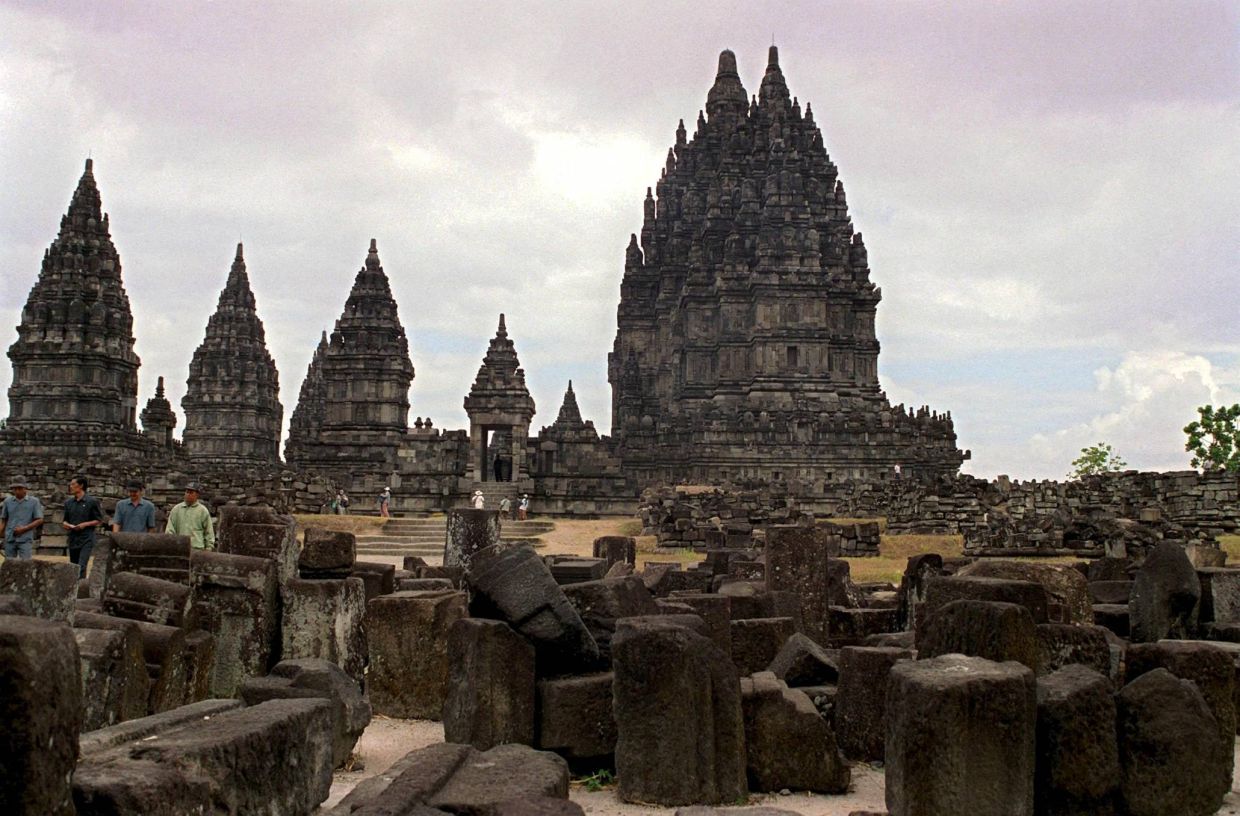
Cultural diplomacy intersperses the substantive negotiations. Modi's scheduled visit to Yogyakarta on Wednesday includes anticipated announcements regarding Indian-supported restoration of the Prambanan temple complex, one of Indonesia's most venerated Hindu heritage sites. This project, emerging from agreements established during Prabowo's attendance at India's Republic Day celebrations as chief guest the previous year, symbolises the civilisational dimensions of the India-Indonesia relationship extending beyond contemporary state interests. For Malaysia's multicultural society, this restoration initiative carries resonance as a reminder of historical Hindu-Buddhist civilisational presence across Southeast Asia, predating the Islamic sultanates that subsequently shaped the region's religious geography.
Modi's parliamentary address to the Indonesian legislature amplifies the visit's political messaging. Speaking directly to elected representatives allows the Indian Prime Minister to articulate India's vision for regional cooperation to influential constituencies within Indonesia's democratic system. Such interventions help establish public narratives that extend beyond governmental circles and embed the bilateral relationship within broader civil society consciousness, potentially generating durable political support for controversial or technically complex cooperation initiatives requiring sustained commitment.
The timing of Modi's visit, launching a broader Indo-Pacific tour encompassing Australia and New Zealand, reveals India's intentional repositioning as a Pacific as well as Indian Ocean power. This geographical expansion of diplomatic engagement reflects New Delhi's strategy to diversify partnerships and reduce dependence on any single regional alignment. For Malaysia, India's enhanced engagement across the wider Indo-Pacific carries implications for regional security architecture and the feasibility of maintaining ASEAN centrality in managing great power competition.
Both nations confront shared developmental challenges that bilateral cooperation addresses imperfectly yet necessarily. Capacity building in health and education represents pragmatic recognition that prosperity requires not merely physical infrastructure but human capital development. India's experience in scaling digital payment systems, tele-medicine networks, and online education platforms offers transferable lessons for Indonesia's archipelagic context, where geographic dispersion complicates service delivery. Collaborative research and educational exchange programmes could accelerate Indonesia's development trajectory while providing Indian institutions expanded regional footprints.
The partnership's trajectory suggests sustained strategic elevation rather than episodic engagement. Prabowo's presidency has already prioritised India relations through his Republic Day attendance, and Modi's reciprocal visit signals genuine mutual investment in the relationship. The multiplication of agreements and institutional mechanisms creates structural incentives for continued engagement even as political leaderships change, embedding cooperation into bureaucratic routines and institutional relationships that prove resilient to leadership transitions. For regional observers including Malaysia, this institutionalisation of India-Indonesia cooperation represents a significant structural development in Asian geopolitics.

