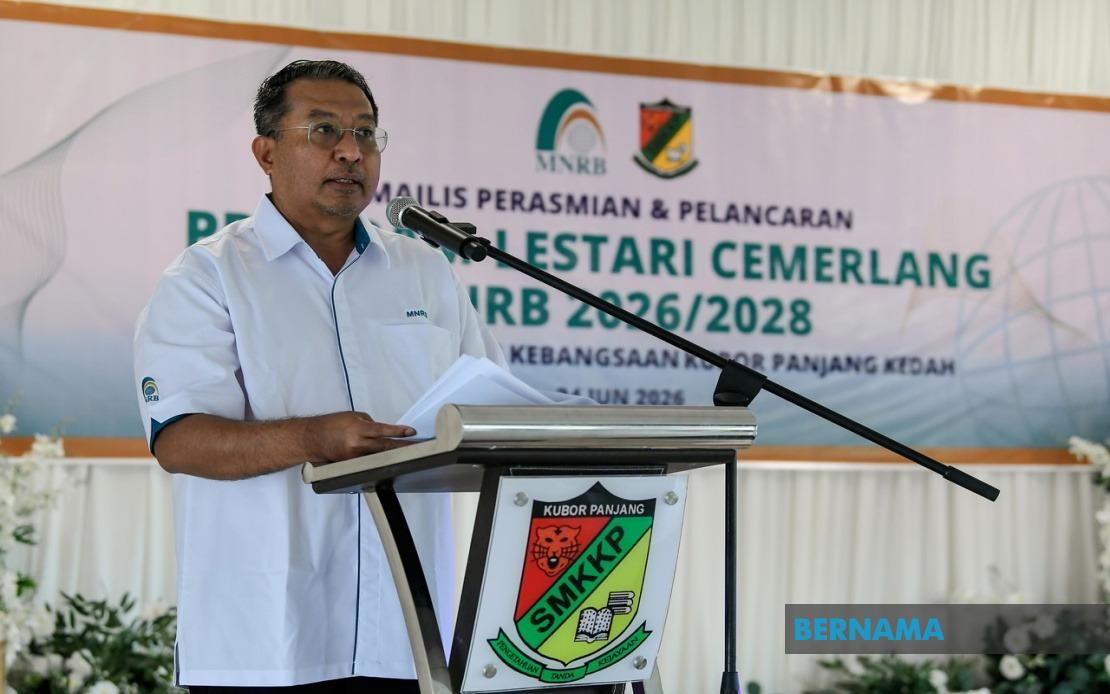
MNRB Holdings Berhad, a major investment holding company, has deployed nearly RM600,000 in funding to support six schools nationwide as part of its Lestari Cemerlang Programme, a comprehensive corporate social responsibility initiative now spanning multiple states. The latest beneficiary, Sekolah Menengah Kebangsaan Kubor Panjang in Pendang, Kedah, was formally inducted into the programme during a launch ceremony attended by state education officials and company leadership, marking a significant expansion of MNRB's educational outreach across the nation.
Datuk Rudy Rodzila Che Lamin, interim president and group chief executive officer of MNRB, underscored the company's long-term commitment to educational excellence during the event. The adopted school programme originated over a decade ago in 2011, establishing itself as a cornerstone of MNRB's corporate strategy to give back to communities. Rather than adopting a one-size-fits-all approach, the initiative deliberately emphasises improving academic performance while simultaneously nurturing character development in students, with particular emphasis directed toward schools in underserved rural regions where resources are often limited.
The programme reflects a holistic understanding of what constitutes educational success in contemporary Malaysia. Beyond traditional classroom metrics, MNRB recognises that students require comprehensive support encompassing both their intellectual growth and their broader personal development. The company's vision extends to creating pathways for disadvantaged students to access higher education and establish stable careers, thereby breaking cycles of limited opportunity in rural communities. This comprehensive approach positions MNRB's initiative as distinct from purely philanthropic efforts, instead functioning as a catalyst for systemic improvement within participating schools.
Geographic reach has progressively expanded since the programme's inception. Prior to SMK Kubor Panjang's selection, the initiative had already taken root in schools across Perak, Pahang, Negeri Sembilan, Melaka, and Selangor, demonstrating MNRB's commitment to spreading its impact across diverse regions. This deliberate geographic distribution ensures that benefits reach beyond concentrations in developed urban areas, addressing educational disparities that have long characterised Malaysia's school system.
The support structures implemented within participating schools reveal the depth of MNRB's engagement. Beyond financial contributions, the programme delivers tangible interventions including supplementary coaching sessions targeting Form Five students preparing for critical examinations, motivational camps designed to inspire academic and personal ambition, and structured student development programmes addressing leadership and life skills. Infrastructure improvements form another pillar, with schools receiving enhancements to their learning facilities alongside practical support such as sponsorship of sports equipment and athletic jerseys that enable broader student participation in co-curricular activities.
Digital transformation represents a particularly significant dimension of MNRB's educational investment. The company has established MNRB Smart e-Learning Rooms equipped with advanced teaching technology, interactive smart televisions, and reliable internet connectivity within partner schools. These facilities address a critical gap for rural schools that frequently lack modern digital infrastructure, enabling teachers to employ contemporary pedagogical methods and students to access online educational resources previously unavailable to them. This technological dimension acknowledges that educational equity in the twenty-first century requires bridging digital divides.
Environmental consciousness infuses the programme through dedicated school greening initiatives, reflecting MNRB's broader sustainability commitments. These efforts instil environmental stewardship in younger generations whilst simultaneously improving the physical environments where students learn. Such integration of environmental education into the programme demonstrates how corporate initiatives can advance multiple social objectives simultaneously.
Scholastic achievement receives targeted support through the complementary Tabung Biasiswa MNRB initiative, which offers scholarships to exceptional students from MNRB-adopted schools. According to Hazlina Hazani, group chief people officer, the scholarship programme supports high-performing students through diploma, bachelor's and master's level tertiary education. This multi-tiered support acknowledges that securing admission to higher education represents only the first hurdle; sustained financial backing proves essential for students from economically disadvantaged backgrounds to complete advanced qualifications.
The scholarship programme demonstrates strategic alignment between corporate development and education outcomes. Currently, five top-performing students from SMK Kubor Panjang have been selected for support, joining fourteen previous scholarship recipients from earlier partner schools. Notably, eight former scholarship recipients have subsequently secured employment within MNRB Group itself, suggesting that the initiative generates mutual benefit by developing a pipeline of skilled talent from diverse backgrounds whilst providing disadvantaged students transformative educational opportunities.
Scholars receive targeted support in disciplines directly relevant to MNRB's business operations, including insurance, takaful finance, and related professional fields. This targeted approach ensures scholarship recipients develop expertise aligned with employment market demands whilst building capacity in sectors critical to Malaysia's financial services industry. The programme thereby transforms educational investment into workforce development, creating measurable economic returns alongside social impact.
The Lestari Cemerlang Programme exemplifies how Malaysian corporations can leverage their resources to address systemic educational challenges. For schools in Pendang and other rural areas where government funding remains insufficient for comprehensive facility upgrades and student support services, MNRB's partnership provides transformative resources. The programme's focus on both academic and non-academic dimensions acknowledges that student success depends upon comprehensive development extending far beyond examination performance.
Looking forward, MNRB's expansion to six schools indicates the initiative's sustainability and scalability. Each new school added to the programme potentially influences hundreds of students directly whilst establishing institutional improvements benefiting future generations. Kedah State Education Department's involvement in the SMK Kubor Panjang launch underscores government recognition of the programme's value in supplementing public educational provision, suggesting potential for deeper collaboration between the public sector and corporate partners in addressing Malaysia's educational development priorities.
The initiative carries broader implications for how Malaysia approaches educational equity in rural regions. Corporate partnerships anchored in sustainable commitment and comprehensive support demonstrate that private sector engagement can meaningfully narrow disparities between urban and rural school quality. As Malaysia progresses toward Vision 2050 aspirations requiring a sophisticated, globally competitive workforce, programmes like Lestari Cemerlang become increasingly crucial for ensuring opportunity reaches beyond privileged urban populations.