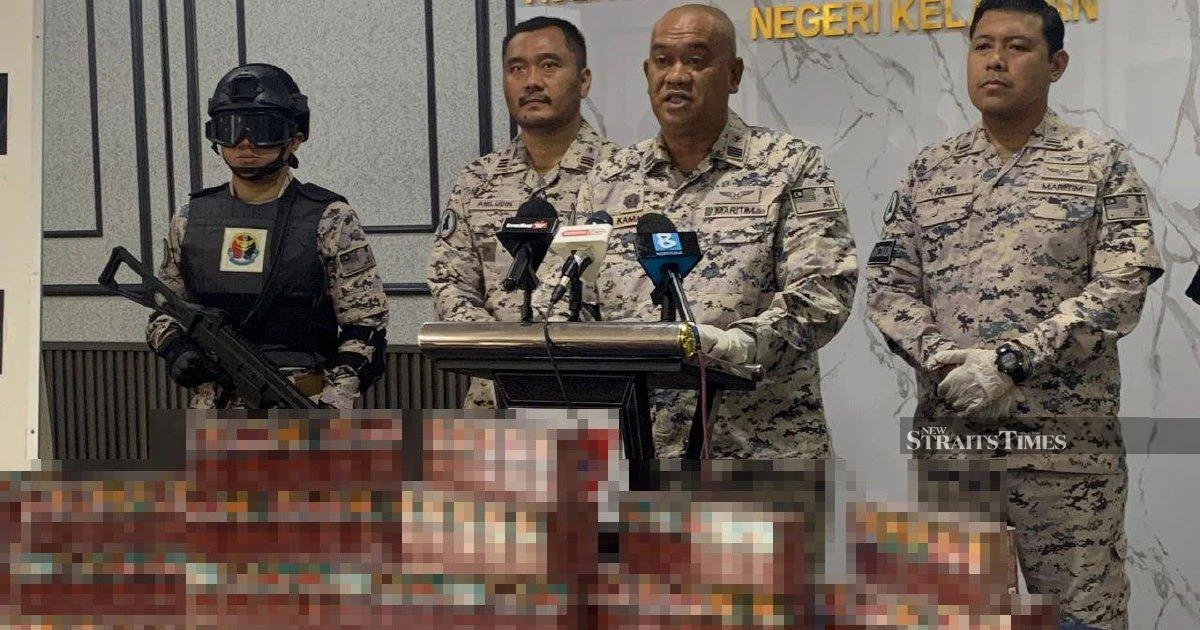
The Malaysian Maritime Enforcement Agency (MMEA) has intercepted a significant consignment of illicit cigarettes in a recent operation along a Kelantan waterway. The bust, which took place at Kampung Penambang, resulted in the confiscation of 24 boxes of contraband cigarettes estimated to be worth around RM212,000, according to enforcement officials.
This seizure underscores the continued vigilance required to combat tobacco smuggling, a persistent problem across Malaysia's maritime boundaries. The operation reflects the MMEA's strategic deployment in waterway corridors where smugglers frequently attempt to move contraband goods into the country. Kelantan's river systems have traditionally served as vulnerable entry points for illicit commerce, given their proximity to international waters and complex network of tributaries that create enforcement challenges.
Cigarette smuggling represents a significant revenue loss for the Malaysian government through excise duties and taxes. When contraband tobacco products bypass legitimate import channels, they undercut the pricing of legally imported and domestically produced cigarettes. This illicit trade not only deprives state coffers of substantial revenue but also undermines legitimate businesses operating within the formal economy, creating an uneven competitive landscape that penalises law-abiding enterprises.
The detection of such substantial quantities suggests organised networks remain actively engaged in moving cigarettes through Malaysian waters. The 24-box seizure indicates a coordinated smuggling operation rather than petty trafficking, implying the involvement of criminal syndicates with established supply chains and distribution networks. These organisations typically have resources to acquire contraband from source countries and deploy sophisticated methods to evade detection, making them a consistent concern for maritime law enforcement agencies.
The MMEA's operational success in this instance demonstrates the agency's capability to conduct targeted enforcement in inland waterways, an area requiring specialised expertise and local knowledge. River and estuarine operations demand different tactics than open-water patrols, involving shallow-draft vessels and intimate familiarity with natural waterway features that smugglers exploit. The agency's presence in locations like Kampung Penambang indicates deployment patterns designed to intercept contraband at points where water-based routes intersect with overland distribution networks.
Kelantan's geographic position makes it a strategic location for enforcement operations. The state's maritime boundaries and river systems provide multiple potential corridors for illegal goods movement, particularly from Thailand and other neighbouring jurisdictions. The prevalence of smuggling attempts in this region has necessitated enhanced MMEA presence and coordinated patrols to maintain control over these vulnerable maritime zones. Success in individual operations builds cumulative pressure on smuggling networks, gradually raising operational costs and risks for criminal enterprises.
The valuation of RM212,000 reflects the substantial profit margins that drive cigarette smuggling. Contraband tobacco avoids legitimate taxation and regulatory costs, allowing smugglers to offer dramatically undercut prices while still realising enormous returns. This economic incentive has proven remarkably resilient despite repeated enforcement actions, suggesting that sporadic seizures, while valuable, must be accompanied by more comprehensive strategies addressing supply chain vulnerabilities and source-country cooperation.
Successful interdiction operations carry broader implications for Malaysia's maritime security and customs enforcement ecosystem. They demonstrate the MMEA's role extending beyond traditional maritime boundaries into the interconnected systems of waterway commerce and trafficking. This integrated approach recognises that contraband movement often combines maritime and terrestrial elements, requiring agencies to coordinate across jurisdictional lines and enforcement methodologies. The Kampung Penambang operation reflects this holistic perspective on maritime law enforcement.
The seizure also highlights the importance of intelligence-led policing in anti-smuggling operations. Enforcement agencies must prioritise intelligence gathering and analysis to identify high-risk trafficking corridors and timing patterns. The successful interception at Kampung Penambang suggests either actionable intelligence or effective positioning based on historical smuggling patterns. Building such intelligence networks requires sustained investment in information systems, inter-agency cooperation, and community reporting mechanisms.
Looking forward, the persistence of large-scale cigarette smuggling indicates ongoing demand within Malaysia's illicit market. Consumer demand for cheaper tobacco products, whether driven by price sensitivity or organised criminal distribution networks, continues to support smuggling operations. Addressing this challenge requires not only enforcement improvements but also complementary strategies including taxation policy review, public awareness campaigns about illicit product dangers, and international cooperation with source countries to disrupt supply chains at their origin.
The MMEA's continued effectiveness in coastal and riverine enforcement remains critical to Malaysia's broader security framework. These agencies operate at the frontline of protecting national economic interests and maintaining regulatory integrity. Each successful seizure generates valuable operational experience and intelligence that informs future enforcement planning. As smuggling networks evolve their tactics and routes, maritime enforcement agencies must similarly adapt their strategies, intelligence capabilities, and inter-agency coordination mechanisms to maintain effectiveness against an adaptive criminal threat.

