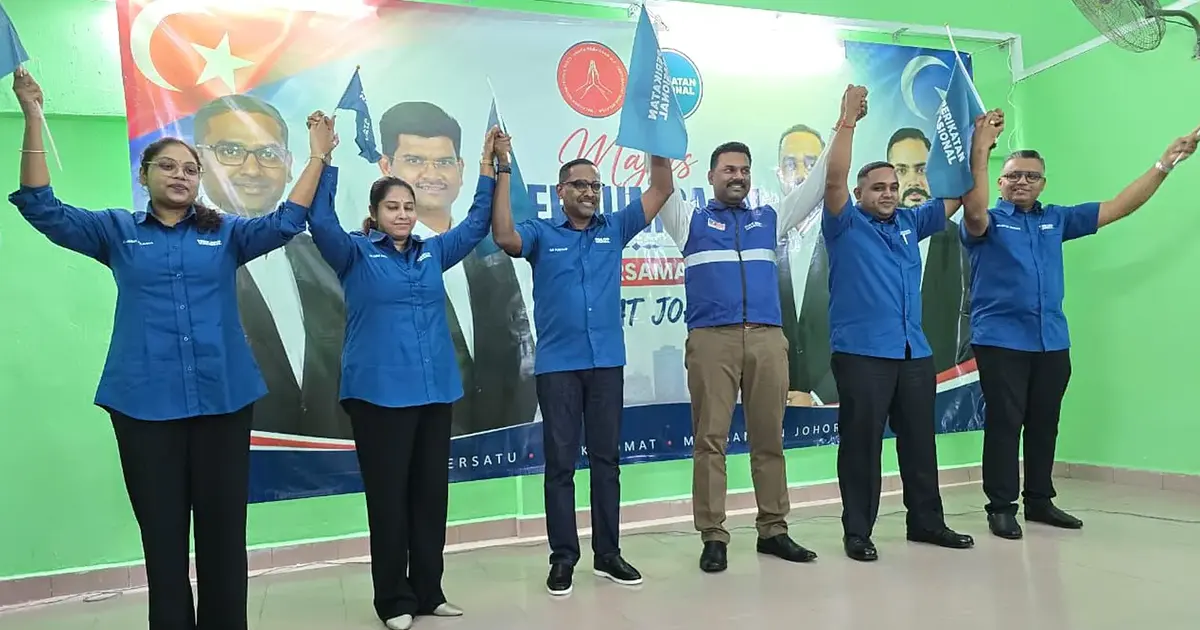
The Malaysian Indian Peoples Party has formally entered electoral politics, fielding candidates in five Johor state constituencies as part of the Perikatan Nasional coalition. Party President P Punithan characterized the move as a landmark moment for the organization, emphasizing that the foray into competitive elections represents a significant step in the party's evolution and influence within the broader political landscape of Malaysia.
The timing of MIPP's electoral entry reflects broader shifts within Malaysia's political ecosystem. The decision to contest under the Perikatan Nasional banner positions the party within a coalition that has gained considerable ground in recent elections, particularly in several east coast and Johor-based constituencies. This alignment suggests strategic calculations about where MIPP's support base can most effectively translate into representation and legislative influence.
Punithan's public statements underscore three pillars that will guide the party's campaign strategy and legislative agenda should candidates win office. The emphasis on opportunity, education, and economic empowerment reflects concerns that resonate within the Indian Malaysian community, which has historically advocated for greater access to quality education and meaningful employment pathways. These issues have remained consistent pressure points in national discourse, with several civil society organizations noting persistent gaps in educational outcomes and economic participation among Indian Malaysians relative to other demographic groups.
The selection of five Johor constituencies for MIPP's debut campaign is strategically significant. Johor represents Malaysia's second-largest state by population and has emerged as a political battleground where coalition control can shift substantially from one election cycle to the next. The state's diverse demographic composition, including a substantial Indian Malaysian population concentrated in urban centres and plantation areas, provides MIPP with potential voter bases where community-specific messaging about education and economic opportunity could gain traction.
This development carries implications for how Malaysia's political coalitions are structured and how they compete for votes. Perikatan Nasional's incorporation of MIPP reflects the coalition's strategy to broaden its appeal beyond its traditional core constituencies. By offering electoral tickets to a community-focused party, Perikatan Nasional signals willingness to address concerns specific to Indian Malaysian voters, an electorate that has sometimes felt neglected in broader coalition politics. For MIPP, the arrangement provides immediate access to electoral machinery, campaign infrastructure, and coalition-level visibility that would be difficult for a newly electoral entity to establish independently.
The party's focus on economic empowerment speaks to deeper structural concerns within the Indian Malaysian community. Despite comprising approximately eight percent of Malaysia's population, Indian Malaysians have historically experienced lower average household incomes and higher unemployment rates compared to other groups. Educational disparities, including lower university enrollment rates among Indian Malaysian youth, have compounded these economic challenges across generations. MIPP's prioritization of these themes suggests the party intends to leverage its electoral presence to advocate for specific policy interventions addressing these systemic inequalities.
For Southeast Asian political observers, MIPP's electoral entry illustrates how regional political coalitions continually reconfigure to incorporate diverse community interests. Malaysia's political system has long functioned through coalition-based arrangements where multiple parties representing different ethnic and religious communities negotiate seats and influence. MIPP's integration into Perikatan Nasional follows this established pattern, though the party's specific emphasis on Indian Malaysian concerns may attract heightened attention from analysts tracking how coalitions balance internal diversity with unified campaign messaging.
Education policy will likely feature prominently in MIPP's campaign platform given the party's explicit commitment to this portfolio. The Indian Malaysian community has raised persistent concerns about quality of schooling in Tamil-medium institutions, university admission quotas and mechanisms, and vocational training opportunities. If elected, MIPP representatives could potentially advocate for increased funding allocations, curriculum improvements, and expanded access to quality education in constituencies where they secure office. These positions could influence broader state-level education policy discussions, particularly if multiple MIPP candidates win seats.
The party's formation and subsequent electoral debut reflect longer-term patterns in Malaysian politics where community-based organizations progressively transition into formal electoral competition. MIPP's existence prior to this electoral campaign suggests organizational infrastructure and membership mobilization capabilities that extend beyond conventional party structures. The decision to contest elections represents a deliberate strategic choice to convert grassroots activism and community advocacy into legislative representation, enabling the party to influence policy formulation at both state and potentially federal levels through its elected representatives.
Looking forward, MIPP's performance in these five Johor constituencies will significantly shape the party's trajectory and viability as a long-term political force. Strong electoral returns could position the party for expansion into additional constituencies in future elections, while modest results might necessitate reassessment of campaign strategy or coalition partnerships. Regardless of immediate electoral outcomes, MIPP's entry into formal politics represents a meaningful development in how Indian Malaysian interests are articulated and pursued within Malaysia's competitive political framework, potentially creating new spaces for community-specific policy advocacy at state legislative level.

