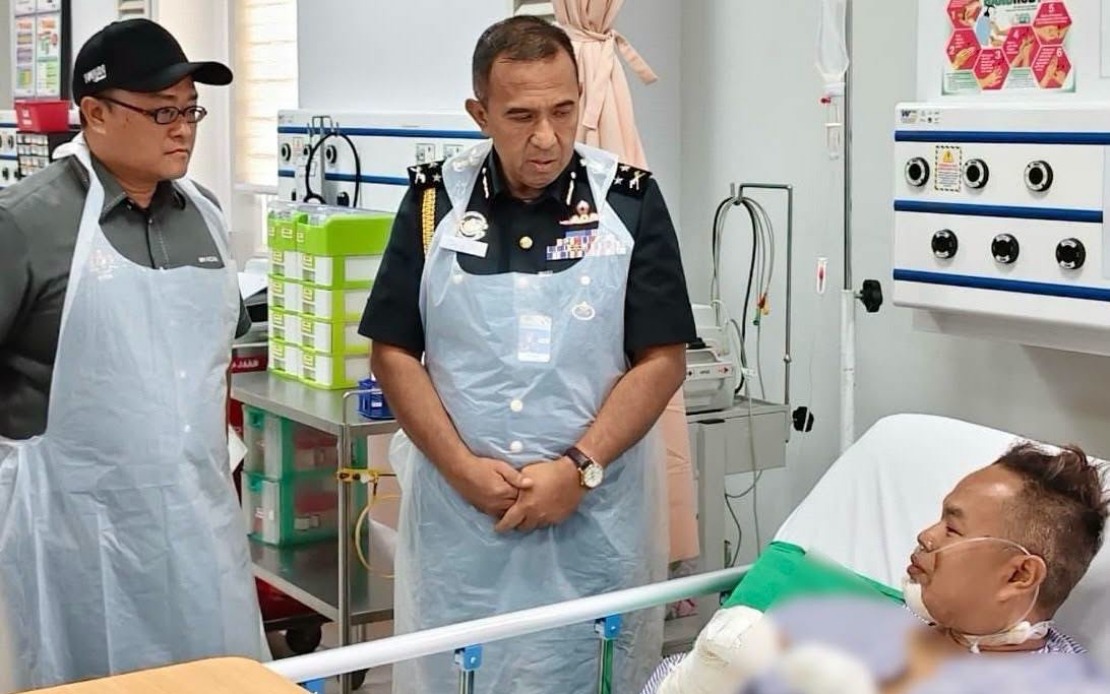
Two enforcement officers from the Domestic Trade and Cost of Living Ministry (KPDN) sustained injuries while participating in Ops Tiris 4.0, a targeted operation designed to prevent the illegal decanting and misappropriation of subsidised liquefied petroleum gas (LPG). The incident occurred in Selangor as officers carried out their assigned enforcement duties.
Minister Datuk Armizan Mohd Ali disclosed that Assistant Enforcement Officer Mohammad Fauzi Baharuddin was left with fairly serious injuries and continues to receive medical treatment. The minister noted that Enforcement Assistant R. Yoghanath suffered only minor injuries and was discharged to recover at home following initial treatment at a medical facility. The varying severity of their conditions reflects the unpredictable nature of field operations, particularly in enforcement activities that often involve confrontations with those engaged in illegal activities.
Armizan took to social media to express his personal well-wishes and prayers for both officers, demonstrating ministerial acknowledgement of the personal toll that such incidents exact on enforcement personnel and their families. His message to Mohammad Fauzi emphasised a focus on complete recovery and resilience through the treatment process, while also extending compassionate remarks to the officer's family members, recognising the emotional burden placed upon loved ones during medical emergencies. For Yoghanath, the minister wished continued good health and full recuperation.
The minister's statement transcended mere expression of sympathy, instead using the incident as an opportunity to illuminate the substantial occupational hazards routinely encountered by KPDN enforcement staff. He underscored that each raid and field operation involves personnel who sacrifice time away from their families, navigating unpredictable and potentially dangerous situations to safeguard public welfare and national interests. This framing positions enforcement work not as routine bureaucratic activity but as an essential public service demanding considerable personal courage and commitment.
Ops Tiris 4.0 represents a sustained government effort to combat the diversion of subsidised LPG, an economically sensitive issue in Malaysia where fuel and energy costs directly impact household budgets and business competitiveness. The decanting of subsidised gas for resale at uncontrolled prices constitutes a direct loss to the national subsidy framework and artificially inflates consumer prices in the grey market. Enforcement operations targeting such activities are therefore integral to protecting consumers and ensuring the integrity of subsidy programmes.
The risks faced by enforcement personnel during these operations extend beyond physical injury; officers must navigate complex situations involving uncooperative subjects, potentially hostile environments, and the possibility of violent resistance. Unlike desk-based government work, field enforcement demands real-time decision-making under stressful circumstances where personal safety cannot be guaranteed. The incident involving the two KPDN officers serves as a tangible reminder of these workplace hazards.
Armizan's extended message to all KPDN enforcement personnel, thanking them for their courage and sacrifice, signals ministerial recognition of morale considerations within the enforcement community. Personnel facing occupational risks require institutional acknowledgement of their contributions, particularly when incidents occur that validate the dangers inherent in their work. Such recognition can reinforce organisational culture and emphasise that sacrifices made in service are valued at the highest levels of leadership.
The operation's continuation despite the incident reflects the government's commitment to maintaining subsidy programme integrity. LPG subsidy leakages represent a substantial fiscal burden, and the illegal decanting mechanism directly undermines policy objectives. By sustaining enforcement efforts, the government demonstrates resolve to protect consumer access to affordable energy while maintaining the financial sustainability of subsidy mechanisms that benefit lower-income households.
For Malaysian citizens and businesses dependent on subsidised LPG, such enforcement operations carry indirect benefits through reduced black-market diversion and more stable supply chains. The enforcement approach also sends deterrent signals to potential violators that operating outside regulatory frameworks carries real consequences. This contributes to broader market stabilisation and consumer price predictability in the energy sector.
The incident also highlights broader questions about occupational safety frameworks within government enforcement agencies. While physical courage and commitment are essential qualities for enforcement work, institutional support mechanisms—including adequate training, equipment, medical coverage, and psychological support—are equally critical. The recovery of both officers provides an opportunity to review and strengthen workplace safety protocols across KPDN enforcement divisions.
Armizan's prayers for the safety of all KPDN personnel underscore the statistical reality that enforcement work involves cumulative risk exposure. Each operation conducted across Selangor and other regions represents potential exposure points, and the wellbeing of the entire enforcement workforce depends on comprehensive safety management, not merely individual bravery. This perspective shifts focus from isolated incidents to systemic occupational safety considerations.
The incident serves as a reminder to Malaysian citizens that subsidies and consumer protections depend on the often-unheralded work of enforcement personnel operating in challenging conditions. Public awareness of these occupational realities can foster greater appreciation for government workers whose contributions to national priorities remain largely invisible to consumers who benefit from lower fuel costs. Recognition of this dynamic contributes to more comprehensive understanding of government operations.

