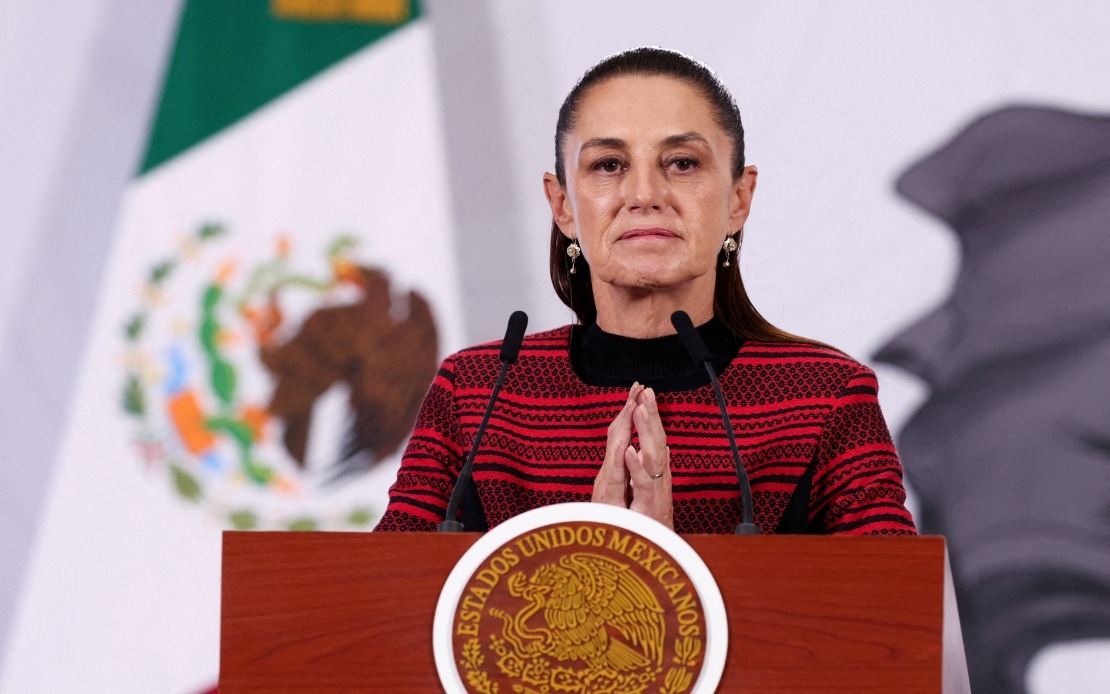
Mexican President Claudia Sheinbaum has accepted an unexpected invitation from United States President Donald Trump to attend the World Cup final, a move that carries considerable diplomatic weight given the current strain between the neighbouring nations. The Mexican leader confirmed on Friday that she received the invitation directly from Trump and will be present at the championship match, breaking with her earlier decision to skip the tournament's opening ceremony in her own country. This development adds an intriguing layer to the trilateral hosting arrangement, as Canadian Prime Minister Mark Carney is also expected to attend the final.
The shift in Sheinbaum's participation underscores the complex nature of Mexico-US relations at a critical juncture. Trade disputes and security concerns have created considerable friction between the two governments, making personal diplomatic interactions particularly significant. The Mexican president's willingness to accept Trump's invitation suggests both leaders recognise the value of maintaining personal rapport despite their policy disagreements. Such gestures, though symbolic, can establish crucial channels of communication between administrations wrestling with substantive bilateral issues that affect millions of citizens on both sides of the border.
Sheinbaum's original stance toward the World Cup reflected her administration's priorities and values. In declining to attend the opening ceremony at Azteca Stadium in Mexico City, she forwent her place in favour of an indigenous woman passionate about football, a decision that resonated with her government's emphasis on social inclusion and representation. This act of symbolic deference demonstrated her commitment to grassroots engagement and highlighted indigenous perspectives within Mexico's national narrative. However, the opportunity to meet Trump at the final presents a different calculus, one where personal diplomacy might yield tangible benefits for addressing bilateral challenges.
The pair have limited personal history despite leading neighbouring nations with deeply interconnected economies. Their single prior meeting occurred in December during the World Cup draw ceremony in Washington, providing only a brief window for direct dialogue. Building a functional working relationship between the two leaders is essential given the magnitude of issues requiring cooperation, from immigration enforcement to cross-border commerce and organised crime. The World Cup final, while ostensibly a sporting event, offers an informal setting where leaders can engage beyond the constraints of formal state visits and structured diplomatic protocols.
Mexico's participation as a co-host nation alongside the United States and Canada represents a historic opportunity for the region. The tournament underscores North American integration and shared commitment to international sporting excellence. However, the complexity of trilateral dynamics cannot be overlooked. Each nation brings distinct interests, domestic pressures, and foreign policy objectives to the arrangement. Sheinbaum's attendance at the final becomes a statement about Mexico's commitment to the hosting partnership and its willingness to engage constructively with Washington despite disagreements.
The logistical adjustments required to accommodate Sheinbaum's participation reveal the spontaneous nature of Trump's invitation. Mexican media reported that her schedule in Quintana Roo was modified to enable her attendance at the final in East Rutherford, New Jersey. This rearrangement demonstrates the flexibility required in presidential scheduling and suggests the invitation was communicated with sufficient advance notice to permit meaningful adjustments. Such operational coordination itself becomes a form of diplomatic engagement, signalling responsiveness and mutual respect between the administrations.
The World Cup final itself carries significant symbolic weight for the participating nations. Spain's royal family will be well represented, with King Felipe VI, Queen Letizia, Crown Princess Leonor, and Infanta Sofía attending to support their national team against Argentina. The presence of Spain's entire senior royal cohort underscores the tournament's importance in European political and cultural spheres. In contrast, Argentina's President Javier Milei has chosen not to attend, citing superstitious concerns prevalent in Argentine culture around major sporting events. This divergence in approaches illustrates how different political leaders navigate the intersection of ceremonial duty and personal belief systems.
For Malaysian and Southeast Asian observers, this episode offers insights into how major regional powers manage diplomatic relationships under pressure. The ability of Sheinbaum and Trump to find common ground through sporting diplomacy demonstrates that bilateral tensions, however significant, need not prevent cooperation on symbolic or substantive matters. Southeast Asian nations frequently navigate complex relationships with neighbouring powers and major international actors, making the Mexico-US dynamic relevant to understanding broader patterns of state interaction. The willingness to engage despite disagreement represents a pragmatic approach that regional policymakers often employ.
The World Cup as a diplomatic stage reflects broader trends in twenty-first-century statecraft. Sporting events increasingly serve functions beyond entertainment, becoming venues for leaders to project national identity, demonstrate commitment to international cooperation, and engage in relationship-building. Sheinbaum's attendance signals that Mexico views this tournament as more than a hosting obligation but as an opportunity to advance its diplomatic agenda. For Trump, extending the invitation appears designed to demonstrate cooperative engagement with Mexico and perhaps to frame the bilateral relationship in positive terms despite underlying tensions.
Looking forward, the significance of this moment may extend beyond the final whistle. The precedent of Sheinbaum accepting Trump's invitation could facilitate future high-level meetings and dialogue. In an era of heightened political polarisation and international uncertainty, instances of cross-border cooperation among major leaders deserve recognition. The World Cup final represents an occasion where sporting competition and diplomatic engagement converge, allowing statesmen and stateswomen to demonstrate commitment to both national pride and international collaboration. For Mexico, attending the final reaffirms its role as a responsible co-host nation and maintains channels of communication with its most important neighbour.

