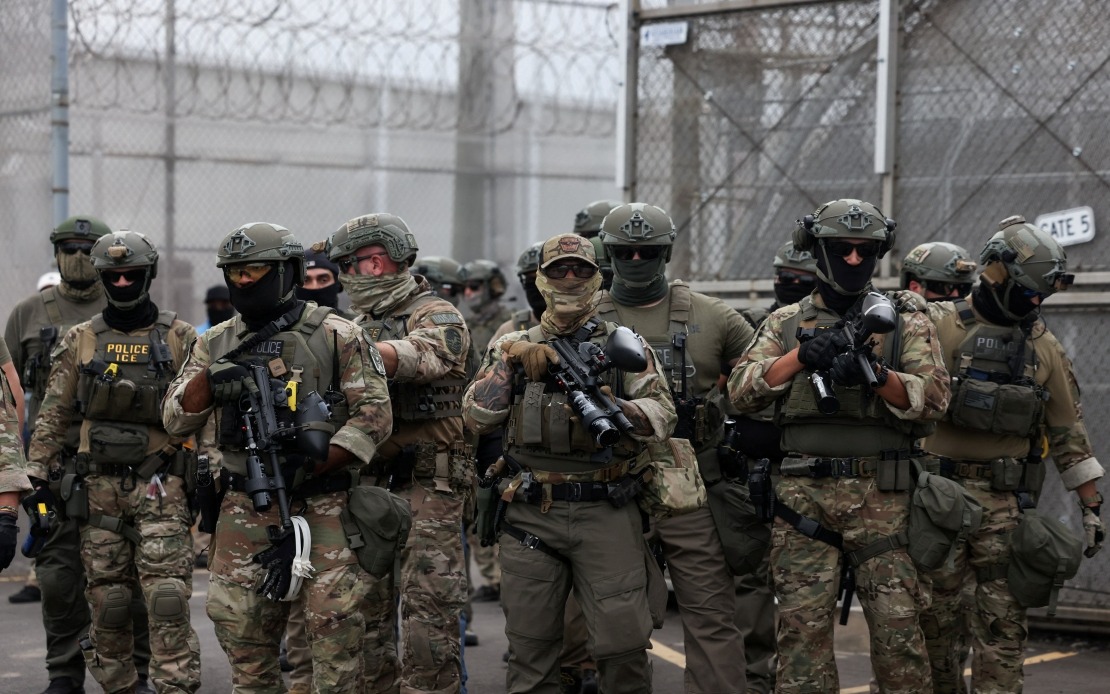
A Mexican national has been fatally shot by a United States Immigration and Customs Enforcement officer during a confrontation that federal authorities characterise as a dangerous vehicle assault. The incident, which unfolded in the early hours of the morning, has triggered concurrent investigations by both the Department of Homeland Security and the Federal Bureau of Investigation, underscoring the serious nature of the encounter and the protocols that follow such deadly force deployments.
According to the Department of Homeland Security's account, the driver initially refused to comply with officers' commands while seated in his vehicle. The situation escalated dramatically when he allegedly rammed a vehicle occupied by federal agents, then manoeuvred his own car in what authorities describe as an attempt to strike one of the officers. Facing what officials characterise as an imminent threat, the officer discharged his firearm. The man was transported to hospital for treatment but succumbed to his injuries, marking another fatal encounter in what has become an increasingly scrutinised aspect of federal law enforcement operations at the border.
The circumstances surrounding the individual's presence in the country—identified as Lorenzo Salgado Araujo—remain unclear from official statements. Homeland Security indicated he was allegedly residing in the United States without legal authorisation, though specifics regarding how his immigration status was determined during the operation have not been disclosed. This detail is significant for regional observers, as it underscores the interconnected nature of immigration enforcement and law enforcement protocols along North America's southern border, issues that reverberate throughout Central America and Mexico, affecting migration flows and bilateral relations.
The internal review mechanisms activated in response to this shooting reflect growing institutional attention to officer-involved fatalities. The Department of Homeland Security has initiated its own investigation, a routine but nonetheless substantial procedural step that examines the decision-making and tactical choices made during the encounter. Simultaneously, the FBI's Houston office is conducting a parallel investigation specifically focused on the alleged assault against federal personnel, suggesting that prosecutors may be considering whether charges could be filed had the individual survived.
A critical dimension of this incident lies in the availability of independent documentation. Multiple witnesses captured photographic and video evidence of the confrontation, according to reports from major news outlets. This proliferation of civilian-recorded footage has become transformative in shaping public understanding of such incidents, particularly given historical precedent. In previous high-profile cases, video evidence has fundamentally contradicted official narratives provided by authorities, prompting public scepticism regarding the veracity of government accounts.
The January shooting deaths of American citizens Renée Good and Alex Pretti exemplify the contentious nature of these encounters. Those fatalities ignited substantial public backlash across the United States, demonstrating that controversy surrounding enforcement operations transcends citizenship status and immigration-related contexts. The deaths sparked sustained criticism regarding officer training, use-of-force protocols, and the broader appropriateness of enforcement tactics employed by federal agencies in border regions and beyond.
For Malaysian and Southeast Asian observers, these incidents possess relevance extending beyond mere interest in American domestic affairs. Immigration enforcement practices in developed nations inform regional approaches to border security and migrant management. Malaysia, as a significant destination for regional migrants and a transit hub for irregular movement, maintains careful attention to best practices and pitfalls associated with enforcement operations. How the United States calibrates its approach to immigration law enforcement—balancing officer safety against civilian protection—carries implications for policy discussions throughout Asia.
The investigation process itself warrants examination. Dual concurrent investigations by different federal agencies create potential procedural complexities and, in some circumstances, have been perceived as lacking sufficient independence from political considerations. The transparency and conclusions reached by these investigations will inevitably shape broader debates regarding accountability in federal law enforcement. Whether findings are made public expeditiously, the scope of their disclosure, and the institutional responses that follow will influence both domestic American discourse and international perceptions of the nation's approach to governance and accountability.
The incident also reflects broader tensions within immigration enforcement frameworks. Officers must navigate genuinely hazardous situations where vehicles become weapons and compliance cannot be assumed. Simultaneously, citizens and observers increasingly expect that training, technology, and tactical alternatives should enable officers to de-escalate and neutralise threats without resorting immediately to lethal force. This tension remains unresolved across multiple jurisdictions, and each fatal encounter reignites debates that appear increasingly intractable without fundamental policy reconsideration.
The availability of witness footage will likely prove consequential in shaping public assessment of the officer's actions. Previous cases demonstrate that video evidence can substantiate, complicate, or directly contradict official accounts. The eyewitness materials gathered during this incident may therefore become decisive in determining whether the shooting receives vindication or criticism in the court of public opinion, which often proves as influential as formal legal proceedings in contemporary governance contexts.

