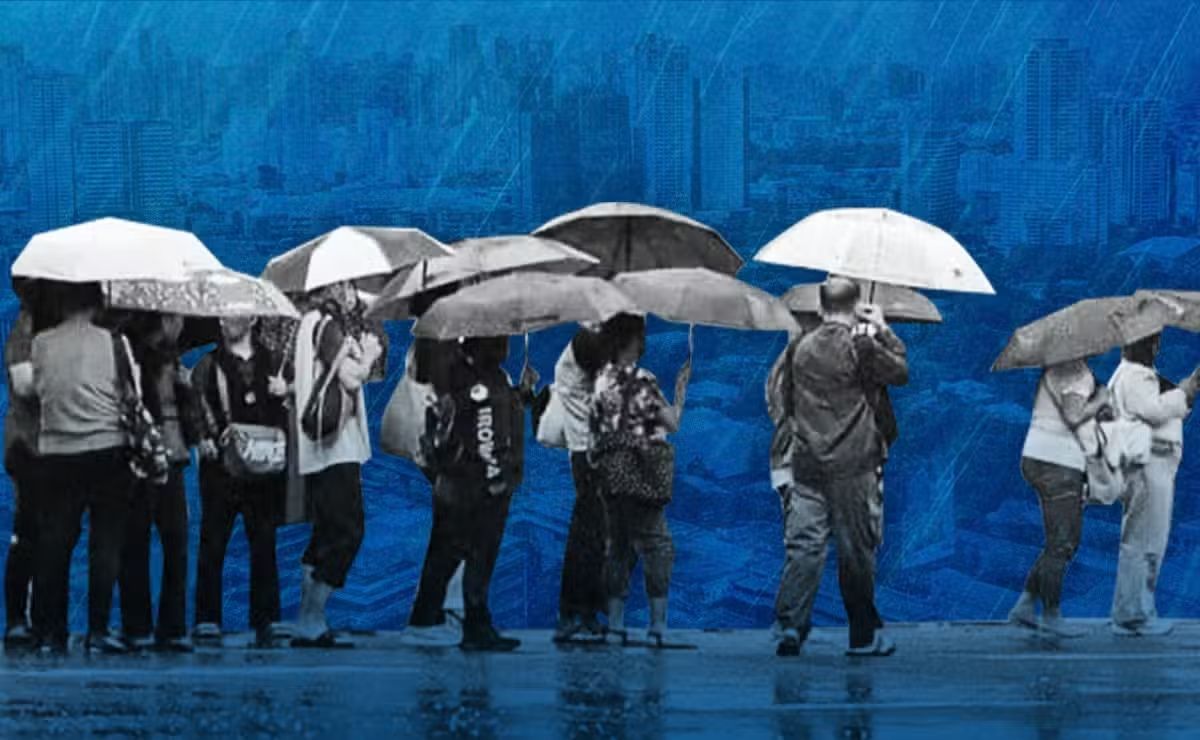
Metro Manila received an extraordinary volume of rainfall over a 10-day period from August 5 to 14, with meteorological data revealing an average of 483.4 millimeters across monitoring stations. This deluge, driven by the southwest monsoon known as Habagat combined with successive tropical cyclones battering Luzon, has prompted critical examination of the metropolitan region's readiness to handle intense precipitation events. Data scientist Dr Alicor Panao from the University of the Philippines analysed observations from 23 Philippine Atmospheric, Geophysical and Astronomical Services Administration stations to quantify the scale of rainfall experienced across the capital.
The intensity of the precipitation became evident when examining daily accumulations during the 10-day period. Nearly half of all recorded rainfall compressed into just two days—August 9 and 10—with the Pagasa Airport station registering a remarkable 226.5 millimeters on August 9 alone. This concentration of moisture delivery over such a brief window created acute stress on drainage networks and flood management systems already operating at or near capacity. For context, the daily figure at the airport station approached levels that have historically triggered significant urban flooding across the metropolitan region.
While the recent episode was severe, it remained below the catastrophic single-day record established during Tropical Storm Ondoy in 2009, when the Science Garden station recorded 455 millimeters in 24 hours. That September 2009 event had previously surpassed a June 1967 record of 334 millimeters, making it the benchmark for extreme precipitation in Metro Manila's modern climate record. Understanding these historical comparisons helps contextualize the current situation within broader patterns of climatic variability affecting the Philippines' capital region.
What distinguishes the August 2024 rainfall event is not necessarily its peak intensity but rather the cumulative volume delivered over the extended 10-day period. Converting the average 483.4 millimeters into practical volumetric terms illustrates the challenge facing urban water management. If this quantity of rain fell uniformly across a single square kilometre, it would equate to approximately 483.4 million litres of water—an almost incomprehensible volume for conventional drainage infrastructure to process within such a compressed timeframe. Extended across Metro Manila's approximately 620 square kilometres, the total water volume precipitated would theoretically fill roughly 120,000 Olympic-size swimming pools.
Certain areas within and around Metro Manila received substantially higher rainfall amounts than the metropolitan average. Sitio Wawa recorded 708 millimetres of cumulative rainfall during the 10-day span, whilst San Mateo-2 measured 701 millimetres and La Mesa Dam captured 645.5 millimetres. These concentrations in specific localities created localized flooding catastrophes even where other nearby areas experienced less severe impacts. The geographic variation underscores how monsoon systems and cyclone precipitation patterns do not distribute uniformly, creating cascading challenges across multiple municipalities simultaneously.
Dr Panao emphasised that the real infrastructure challenge extends beyond the statistical magnitude of individual events. Successive heavy rainfall episodes prevent natural drainage systems, rivers, and watershed areas from recovering to normal operating conditions between precipitation events. When tropical cyclones follow in rapid succession, or when monsoon rains persist for extended periods, the cumulative stress on hydrological systems exceeds design tolerances. Urban drainage networks designed for standard seasonal patterns struggle when compressed timeframes prevent adequate water dispersal and infiltration.
The data scientist highlighted that flood mitigation cannot be addressed through construction of additional structures alone. Effective flood protection requires that existing infrastructure be properly designed according to current hydrological understanding, constructed to genuine specifications rather than cost-cutting modifications, and consistently maintained throughout its operational lifetime. The engineering approach must align with climatic realities while accountability must attach to every stage of project implementation from conception through completion.
Recent investigations have revealed troubling patterns within flood-control project portfolios. Documented cases include infrastructure designated as completed despite remaining non-functional, projects built to substandard specifications that compromise protective capacity, and instances where budgeted costs dramatically exceeded reasonable expense estimates. Some of these investigations have apparently progressed beyond preliminary stages into criminal cases, suggesting intentional malfeasance rather than simple administrative oversight or technical error.
For Malaysian observers, the Metro Manila flood situation carries regional relevance. Southeast Asia's urban centres face similar challenges of intensifying monsoon precipitation and increasing cyclone frequency. Kuala Lumpur and other Malaysian cities have experienced their own severe flooding episodes, particularly during monsoon seasons when drainage systems prove inadequate. The underlying principle that infrastructure must be both properly engineered and genuinely completed to specification applies equally across the region's major metropolitan areas.
The broader implication concerns the relationship between public expenditure on infrastructure and actual protective outcomes. Flood-control budgets represent substantial government investments, yet those allocations deliver protection only when resources actually translate into functional systems. Political commitment to completion differs meaningfully from political commitment to funding announcements. Citizens and regional observers increasingly demand that declared flood-mitigation strategies produce measurable improvements in community safety rather than simply consuming budgets.
As climate patterns continue evolving and precipitation intensity increases in many parts of Southeast Asia, flood management capacity becomes a defining measure of government effectiveness. Metro Manila's recent experience demonstrates that even developed urban regions with sophisticated monitoring networks remain vulnerable when infrastructure does not meet contemporary demands. The challenge extends beyond Philippines borders to affect every major metropolitan region in the broader region.

