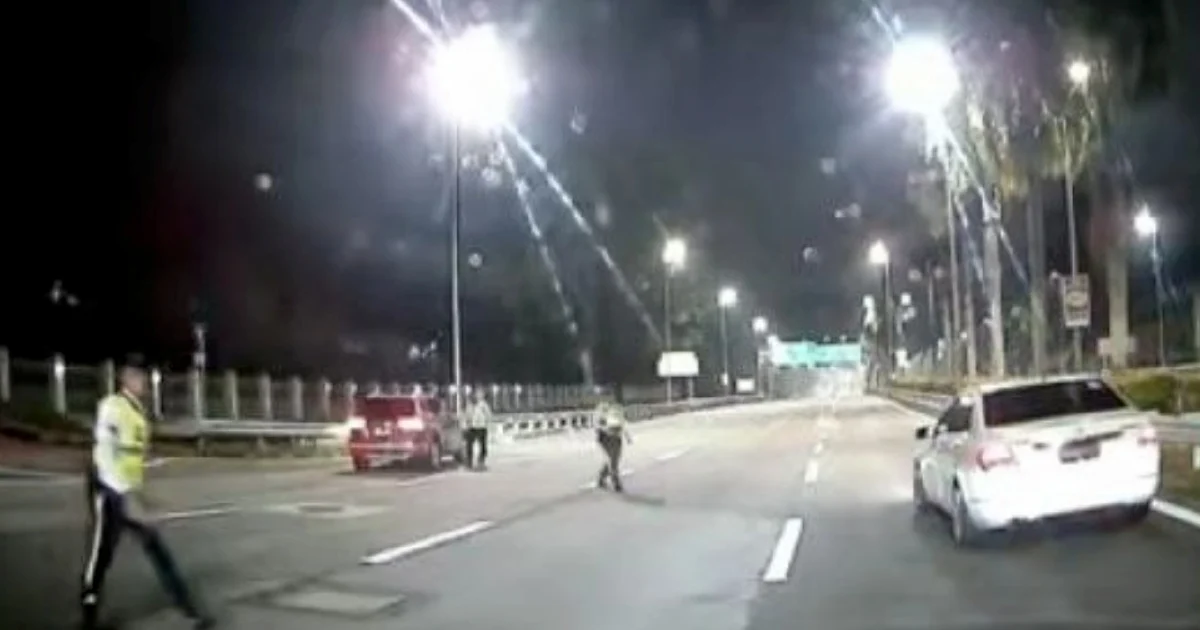
A 20-year-old man driving a white Mercedes has been detained by police following a dramatic roadblock breach on the Sprint Expressway near the National Institute of Public Administration (Intan) in Kuala Lumpur. The incident, which drew viral attention on social media, saw the driver accelerate through an active police checkpoint before fleeing the scene along the busy expressway corridor.
The unauthorized passage through a law enforcement roadblock represents a serious breach of traffic regulations and raises significant concerns about road safety in the capital region. Roadblocks are typically established by authorities to conduct routine checks for vehicle documentation, driver licensing, and safety compliance. When motorists deliberately circumvent these checkpoints, they create dangerous situations that endanger both themselves and other road users sharing the expressway.
The Sprint Expressway, which connects various parts of Kuala Lumpur and the surrounding Selangor region, serves as a critical traffic artery for thousands of daily commuters. An incident of this nature on such a major transportation route underscores ongoing challenges faced by enforcement agencies in maintaining traffic discipline and deterring reckless driving behaviour across Malaysian highways and expressways.
The vehicle's white colouring and distinctive appearance may have contributed to its identification during the incident. The deliberate breach of a police checkpoint demonstrates either a concerning lack of compliance with lawful directives or circumstances that prompted the driver to attempt evasion. Either scenario presents troubling implications for road safety and public order.
Police have taken the detainee into custody for further questioning and investigation. The process will seek to establish the motivations behind the roadblock breach, examine the driver's licencing status and vehicle documentation, and determine whether any additional traffic violations or criminal offences occurred during the incident. The investigation will also examine whether the vehicle was involved in any prior incidents or carried any illegal items or substances.
The incident highlights the vulnerability of police personnel operating roadblocks, who face inherent risks when motorists choose non-compliance. Roadblock operations, though routine, expose officers to potential danger from vehicles driven by individuals unwilling to submit to inspection. This case reinforces the importance of adequate safety measures and support systems for enforcement personnel across the country.
For Malaysian motorists, the incident serves as a reminder that deliberately evading police roadblocks carries severe legal consequences including potential charges related to dangerous driving, failure to obey lawful instructions, and potentially other offences depending on the circumstances. Conviction can result in substantial fines, driving license suspension, and imprisonment. Beyond the legal ramifications, such behaviour undermines public safety and diverts police resources away from genuine security priorities.
The viral nature of the incident on social media reflects public interest in traffic enforcement and compliance issues. Such online amplification often accelerates police response and can lead to swifter identification and apprehension of offenders. However, it also underscores broader societal concerns about whether enforcement efforts adequately deter dangerous driving across Malaysian roads.
Authorities in Kuala Lumpur and the broader Federal Territories region maintain an ongoing commitment to traffic safety and law enforcement. Incidents such as this inform operational planning and policy considerations regarding roadblock procedures, officer safety protocols, and the allocation of enforcement resources along major expressway corridors serving high-traffic volume areas.
As investigations proceed, this case will likely inform public discourse around traffic discipline, the effectiveness of current enforcement mechanisms, and the broader question of compliance culture on Malaysian roads. For safety-conscious drivers, the message remains consistent: cooperation with legitimate police checkpoints remains the safest and legally prudent course of action, serving both individual welfare and collective road safety objectives.

