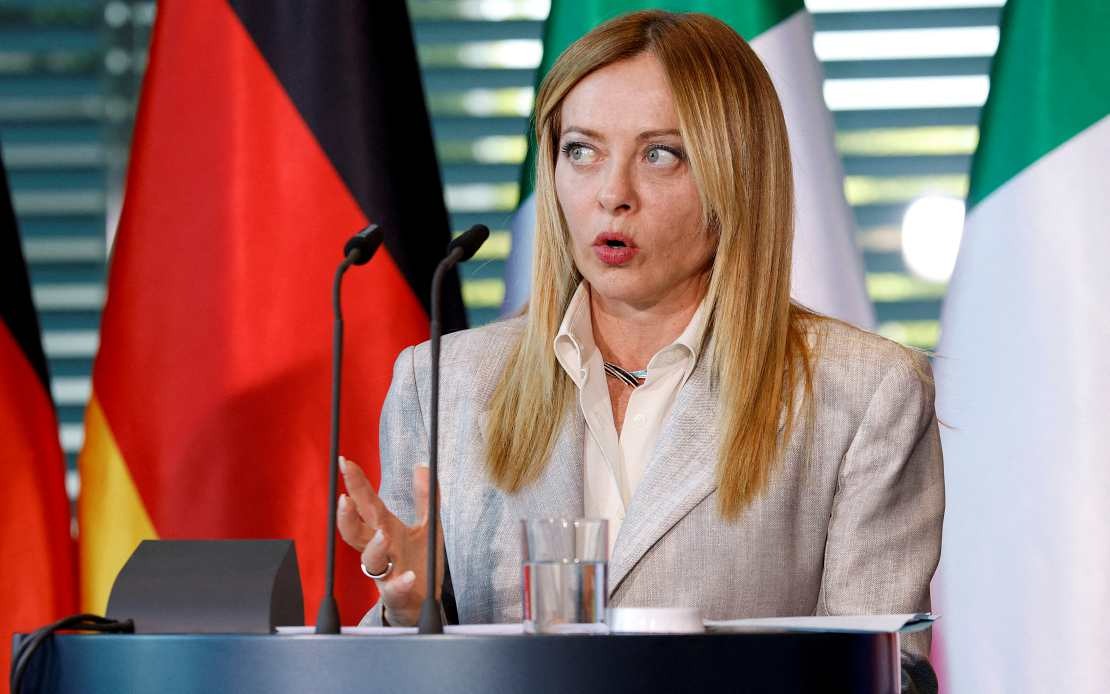
Italy's Prime Minister Giorgia Meloni has launched a fresh diplomatic initiative to establish migrant processing and return centres in third countries outside the European Union, signalling an escalation of Rome's hardline stance on irregular migration. The proposal, to be discussed at an informal gathering of EU home affairs ministers on Tuesday, aims to have the first facilities operational by 2027, with Interior Minister Matteo Piantedosi representing Italy at the meeting. The timing underscores how migration continues to dominate Europe's political agenda, particularly after the Spanish city of Ceuta faced an extraordinary surge of arrivals in late July.
Meloni's strategy involves negotiating bilateral agreements with willing partner nations, following the Italian model already established with Albania. European Union funding is earmarked to support these centres, though the operational details remain subject to ongoing negotiations. Rome intends to conclude initial agreements by year-end, positioning the initiative as a comprehensive solution to the asylum and irregular migration challenge that has defined her administration's priorities. The approach reflects a broader European shift toward externalising migration processing, moving assessment and deportation functions beyond the continent's borders.
The initiative has gained substantial political traction within the bloc. Twenty-two EU member states have formally written to European Commission President Ursula von der Leyen and European Council President Antonio Costa, requesting consideration of enhanced protection mechanisms against undocumented migration. Danish Prime Minister Mette Frederiksen has publicly endorsed Italy's proposal, lending credibility to an approach that some within the EU still view with caution. Austria, the Netherlands, Germany, and Denmark are actively leading negotiations, with Greece also championing the scheme and targeting a 2027 launch date for its own participation.
For Malaysian policymakers and regional observers, Italy's push reflects a hardening stance across developed democracies toward managing migration flows—a dynamic with implications for Southeast Asia's own transit and destination countries. The externalisation model represents an attempt to shift the burden of processing and detention beyond sovereign territory, a strategy that carries both operational advantages and potential human rights complications. As nations increasingly seek burden-sharing mechanisms, the success or failure of Italy's approach could influence how other regions structure migration governance.
The Ceuta crisis of late July provided a stark illustration of why European governments are pursuing such initiatives with renewed urgency. Spain reported that approximately 60,000 people entered the autonomous North African city within a single 24-hour period, overwhelming a municipality with a resident population of roughly 85,000. The Spanish government responded by deploying additional police units, Civil Guard forces, and military personnel to contain further crossings from neighbouring Morocco. The sheer scale of arrivals demonstrated the vulnerability of Europe's maritime and land borders to sudden mass movements, galvanising political support for more assertive external mechanisms.
Italy's existing experience with migrant processing abroad reveals both the promise and the persistent challenges of externalisation. Rome currently operates reception centres outside the EU at its own cost and under Italian legal jurisdiction, managing asylum applications, detention, and deportation procedures. However, this model has encountered significant obstacles within Italy's own legal system. The Italian judiciary has repeatedly intervened to prohibit detention of migrants, ordering their transfer back to Italian territory and challenging expedited processing procedures for nationals from designated safe countries. These judicial constraints have repeatedly frustrated executive intentions, creating tensions between administrative immigration policy and constitutional protections.
The Albania agreement, Meloni's flagship bilateral arrangement, offers a cautionary case study. Between May 2025 and mid-July 2026, approximately 685 migrants were transferred to Albanian facilities during the second phase of operations. However, fewer than 15 per cent of those transferred were ultimately repatriated, raising questions about the efficiency and cost-effectiveness of the model. Operating the Gjader centre alone consumed an estimated €50 million in 2025, an investment that yielded relatively modest deportation outcomes. These figures suggest that externalisation, while politically appealing, may prove economically burdensome without demonstrable success in reducing irregular settlement.
For Southeast Asia, particularly Malaysia, the European debate carries strategic relevance. As a key transit point for Rohingya, Pakistani, Bangladeshi, and other migrant populations heading toward developed nations, Malaysia has long absorbed disproportionate costs of global migration imbalances. The Italian and European approach, though focused on Africa and the Mediterranean, signals a broader trend among wealthy nations to resist accepting asylum responsibility and instead invest in prevention and external processing. Malaysia's government has consistently advocated for burden-sharing and international support for host countries, arguments that gain resonance as developed democracies pursue strategies explicitly designed to minimise their own absorption of migrants.
The proposal also highlights evolving patterns of transregional migration politics. Uganda and Rwanda, both engaged in negotiations with European partners over processing arrangements, represent Africa's cautious entry into the externalisation framework. These nations have strategic reasons to engage—funding inflows, capacity building, and international visibility—but face legitimate concerns about sovereignty, resource burdens, and the precedent of becoming repositories for other nations' migration challenges. The Rwanda and Uganda cases may eventually provide clearer indicators of whether third-country processing genuinely reduces irregular movement or merely displaces and delays it.
Meloni's proposal also reflects deeper fissures within European political ideology. While conservative and nationalist parties champion external processing as essential border protection, progressive voices worry about human rights implications and the fairness of offshoring asylum determination. The fact that 22 nations have formally backed the initiative suggests consensus around the approach's necessity, yet implementation remains contested. Judicial review, funding disputes, and diplomatic negotiations with third countries all pose potential obstacles to realising the 2027 timeline.
For regional observers in Southeast Asia, the European migration externalisation debate underscores a fundamental asymmetry in global migration governance. Wealthy nations invest substantial resources to prevent migrants from arriving on their soil, while lower- and middle-income countries—whether Malaysia, Turkey, or Uganda—bear the practical costs of hosting populations in flux. The Italian initiative, while presented as technical and administrative, embodies a broader North-South dynamic in which responsibility is exported while resources remain concentrated in the Global North. Understanding this context illuminates why Malaysia and other Southeast Asian governments have consistently called for genuine international cooperation rather than unilateral externalisations.
Moving forward, the success of Meloni's proposal will likely hinge on securing durable agreements with third countries, maintaining political consensus within the EU amid varying national priorities, and demonstrating that external processing actually reduces irregular migration. The Ceuta episode and Albania's mixed results suggest that externalisation alone may prove insufficient without addressing root causes of displacement in source regions. For Malaysia and the region, close monitoring of European migration governance trends remains essential, as policy innovations in the EU frequently cascade into international norms that affect Southeast Asian governments and migrant populations alike.

