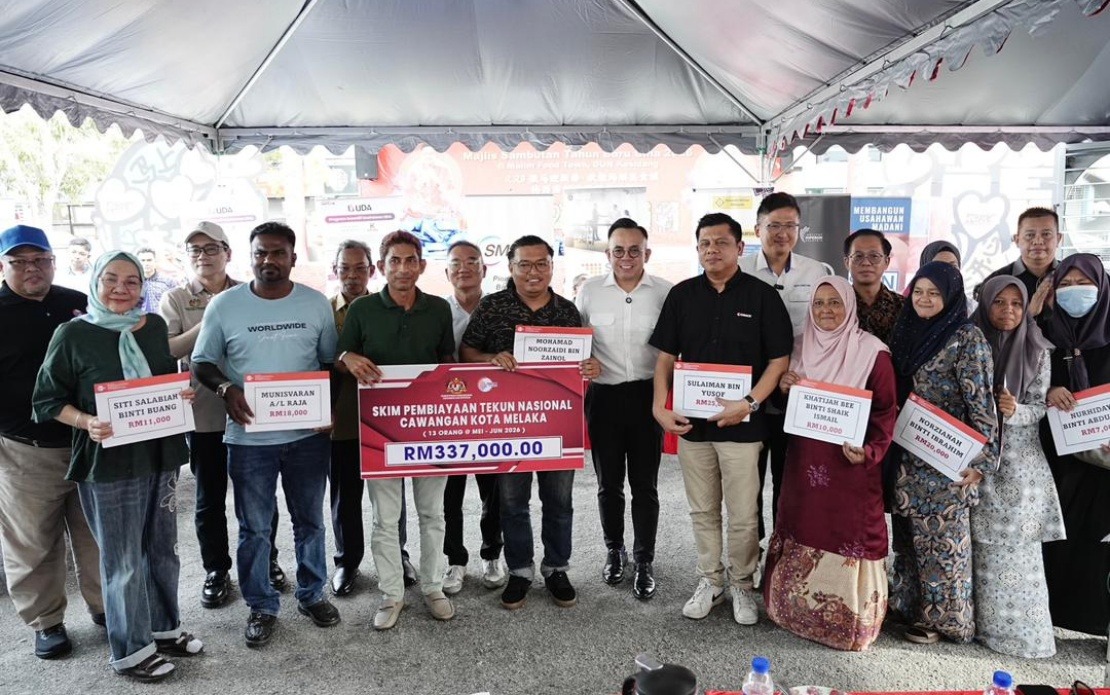
The Ministry of Entrepreneur Development and Cooperatives (KUSKOP) has channelled nearly RM100 million in financing to more than 4,300 entrepreneurs across Melaka as of the end of May, signalling a renewed push to bolster the state's micro, small and medium-sized enterprise sector. This approval underscores the ministry's strategic focus on ensuring capital accessibility for business expansion and economic stimulus across Malaysia's regions, with Melaka serving as a key hub for entrepreneurial development.
Minister Steven Sim has positioned financing as a foundational tool for business growth, arguing that capital injection creates a multiplier effect throughout the economy. When entrepreneurs access funds to expand operations, the benefits ripple beyond business owners themselves—employees gain stable employment, suppliers secure regular contracts, and local communities experience increased economic activity. This perspective reflects a growing emphasis within the federal government on viewing MSME support not as isolated subsidy but as a strategic lever for sustained economic development.
The timing of these disbursements aligns with Sim's three-day working visit to Melaka, which commenced on June 19 and focused on direct engagement with traders and business operators. The visit coincided with the Hebatkan Perniagaan Malaysia Carnival, a platform designed to connect the ministry with entrepreneurs while evaluating the practical implementation of various government initiatives. This hands-on approach suggests the ministry is moving beyond purely administrative channels to understand ground-level challenges faced by business owners.
During a high-profile gathering at Malim Food Town, Sim presided over a meet-and-greet session that attracted approximately 50 local entrepreneurs, many of whom operate within Malaysia's increasingly competitive food and beverage sector. The minister distributed nearly RM1 million in fresh financing to 18 entrepreneurs through TEKUN Nasional and SME Corp Malaysia, beneficiaries spanning diverse industries including wholesale, professional services, construction, retail, e-commerce, automotive and various service categories. The diversity of recipient sectors reflects the breadth of entrepreneurial activity in Melaka and demonstrates the ministry's commitment to supporting cross-sectoral business development rather than concentrating support in a single industry.
Nationally, the scope of KUSKOP's financing activities extends far beyond Melaka's figures. The ministry has already approved RM5 billion in financing during the first five months of this year alone, benefiting nearly 180,000 entrepreneurs nationwide. This trajectory suggests the ministry is on track to meet or exceed its PowerUp10K initiative target, which aims to channel RM15 billion in total financing to MSMEs throughout 2024. For Malaysian entrepreneurs, particularly those operating outside major metropolitan centres, such capital accessibility represents a significant competitive advantage against larger, better-capitalised firms.
The financing mechanism serves particular importance in Southeast Asia's economic context, where capital constraints often limit entrepreneurial ambition regardless of business viability or market opportunity. Malaysia's diverse population—encompassing multiple ethnic groups, languages and cultural traditions—positions the nation advantageously for attracting foreign investment while enabling locally-rooted businesses to expand into neighbouring markets with greater cultural fluency. Sim's emphasis on this diversity suggests the government views inclusive entrepreneurship support as intertwined with Malaysia's broader economic competitiveness and regional positioning.
For Melaka specifically, these financing flows carry particular significance given the state's strategic location along major transportation corridors and its established reputation as a tourism and commerce hub. Entrepreneurs in Melaka operate within an ecosystem where tourism-related ventures, food enterprises, retail operations and logistics-dependent businesses thrive. The geographic concentration of nearly 4,300 approved applicants indicates substantial entrepreneurial activity within the state, though questions remain regarding absorption capacity and the sustainability of growth among newly-funded ventures.
The scale of financing distribution raises important questions about implementation quality and outcomes measurement. While RM100 million represents a substantial capital injection, the average disbursement per entrepreneur in Melaka works out to approximately RM23,000, suggesting the financing targets primarily micro-enterprises and early-stage small businesses rather than established medium-sized concerns. This focus aligns with inclusive economic policy objectives but requires effective capacity-building support alongside capital provision to ensure entrepreneurs can deploy funds productively.
The ministry's emphasis on continuous financing availability reflects recognition that business growth rarely follows linear trajectories. Entrepreneurs frequently require sequential capital infusions as operations scale, inventory expands and market opportunities emerge. By maintaining pipeline access to financing and actively promoting awareness through field events like the Melaka carnival, KUSKOP aims to position itself as a consistent partner in the entrepreneurial journey rather than a one-time capital provider. This approach potentially strengthens business resilience across the state's MSME ecosystem.
Looking forward, the sustainability of this financing drive depends partly on absorption capacity within the entrepreneur population and the economic viability of funded ventures. Regional economies like Melaka face headwinds including inflationary pressures on input costs, evolving consumer preferences accelerated by digital transformation, and increased competition from e-commerce platforms. While government financing addresses capital constraints, entrepreneurs simultaneously require access to business development services, market information, and digital capability training to maximise returns on invested capital and ensure long-term viability.
For Malaysian policymakers, the Melaka initiative provides a test case for scaled entrepreneurship support. If properly implemented and monitored, the model could inform strategies for other states, particularly those seeking to diversify economic bases beyond traditional sectors. The emphasis on cross-sectoral support and direct ministerial engagement also suggests evolving approaches to economic development that prioritise responsive, locally-attuned strategies over centralised, sector-specific programmes.

