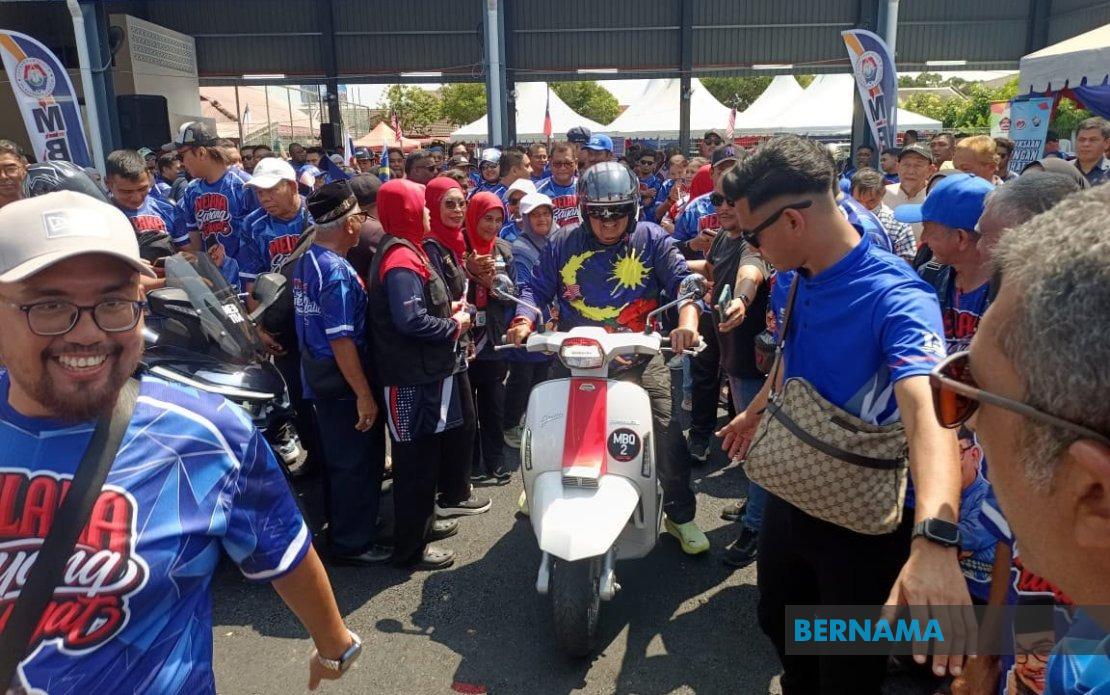
Melaka Chief Minister Datuk Seri Ab Rauf Yusoh has pushed back against suggestions that the state's recently held Jelajah Ketua Menteri Sayang Rakyat represents a campaign-style tour, instead framing it as the latest iteration of a structured two-year initiative to engage communities and tackle their grievances directly. Speaking following the 10th instalment of the programme in the Pengkalan Batu state constituency on August 4, the Chief Minister underscored that the approach reflects a deliberate policy commitment rather than opportunistic electioneering, having commenced well before any electoral considerations entered the political calendar.
The rationale behind the engagement strategy centres on operational efficiency and responsive governance. By maintaining consistent dialogue with constituents through these periodic visits, the state administration can identify bottlenecks in service delivery and resolve matters swiftly without allowing complaints to languish in bureaucratic channels. This hands-on methodology, as Ab Rauf characterises it, ensures that elected representatives maintain a granular understanding of local conditions and can calibrate policy responses accordingly. The decentralised problem-solving approach has become increasingly relevant in Malaysian states seeking to demonstrate tangible returns on governance beyond election cycles, particularly in an era where constituent expectations around service quality and responsiveness have risen markedly.
The Melaka government's broader engagement framework encompasses three complementary initiatives. The Wakil Rakyat Untuk Rakyat (WRUR) programme forms the foundational layer, having already progressed through 25 series with only five state constituencies remaining uncovered. This is supplemented by the Hari Exco Bersama Rakyat (HEBAT) sessions, which provide additional touchpoints for executive council members to interact with residents. The Jelajah Ketua Menteri Sayang Rakyat tour, now in its 10th edition, appears designed to consolidate and action follow-ups from these preceding engagement rounds, creating a feedback loop that translates citizen input into concrete interventions.
In Pengkalan Batu, the most recent tour generated measurable outcomes. Eight issues previously raised through WRUR and HEBAT channels were resolved during the visit, demonstrating the programme's capacity to convert complaints into solutions. Among the most notable achievements was facilitating the acquisition of land for a Muslim cemetery through the generosity of a Chinese landowner, who offered the property at a fifty percent discount from market rates. Such instances of inter-community cooperation reflect how structured engagement can sometimes uncover collaborative solutions that might otherwise remain hidden, strengthening social cohesion in the process.
Housing constituted another significant component of the Pengkalan Batu interventions. The state government facilitated repairs to five dilapidated houses, addressing a perennial concern in many Malaysian constituencies where aging housing stock reflects broader patterns of urban neglect in older suburbs and rural-fringe areas. Additionally, a house valued at RM100,000 was provided under the Baiti Jannati programme, a TNB-sponsored initiative aimed at improving living standards for vulnerable households. These tangible improvements carry obvious political benefit, but they also represent genuine material improvements in residents' quality of life, particularly for lower-income households that lack resources to address structural degradation independently.
Infrastructural development in Pengkalan Batu was further advanced through completion of an open hall constructed by the Melaka Historic City Council (MBMB), now handed over for community use. Such multipurpose facilities serve as anchors for neighbourhood social activity and provide affordable venues for residents to organise events, religious functions, and civic gatherings. For constituencies in states like Melaka where resources are more constrained than in wealthier jurisdictions, the provision of such facilities through existing municipal budgets represents a cost-effective approach to enhancing communal infrastructure without major capital outlays.
For Malaysian readers and regional observers, Melaka's model presents an interesting case study in state-level governance innovation. Unlike the fragmented approach where complaints languish in various departmental silos, the integrated WRUR-HEBAT-Jelajah framework creates institutional momentum around constituent satisfaction. This matters particularly in Melaka, which has experienced significant political volatility over the past decade, shifting between coalitions and grappling with legitimacy questions. A commitment to visible, documented responsiveness serves as a counterweight to cynicism about governance effectiveness.
The phased coverage of state constituencies through WRUR and related programmes also suggests strategic learning. By the time the Chief Minister's tour arrives at a location, ground-level engagement has already occurred through the WRUR mechanism, allowing the top executive's visit to focus on high-level problem-solving and ceremonial aspects rather than initial issue discovery. This sequencing maximises the symbolic and practical value of the Chief Minister's direct intervention, signalling that serious cases have been elevated appropriately.
However, the programme's true significance will ultimately depend on implementation consistency and the durability of solutions provided. Quick fixes to housing or rapid acquisition of cemetery land generate immediate goodwill, but sustaining service improvements and preventing regression require sustained institutional focus. The fact that the WRUR has advanced to its 25th series with only five constituencies remaining suggests the initiative has acquired programmatic momentum, though questions persist about whether this represents genuine systemic improvement or cyclical problem management.
For constituencies throughout Malaysia's other states, the Melaka experience offers both a template and a caution. Structured constituent engagement can demonstrably improve service delivery and public satisfaction, yet risks becoming performative if not backed by genuine institutional reform and resource allocation. The Chief Minister's emphasis on the non-electoral nature of the programme and its two-year gestation period reflects an understanding that such initiatives require credibility grounded in consistency and outcome rather than campaign timing. As other state governments evaluate their own engagement models, Melaka's approach suggests that integrating multiple feedback channels and creating clear decision-making pathways can bridge the persistent gap between constituent expectations and governmental capacity to respond.

