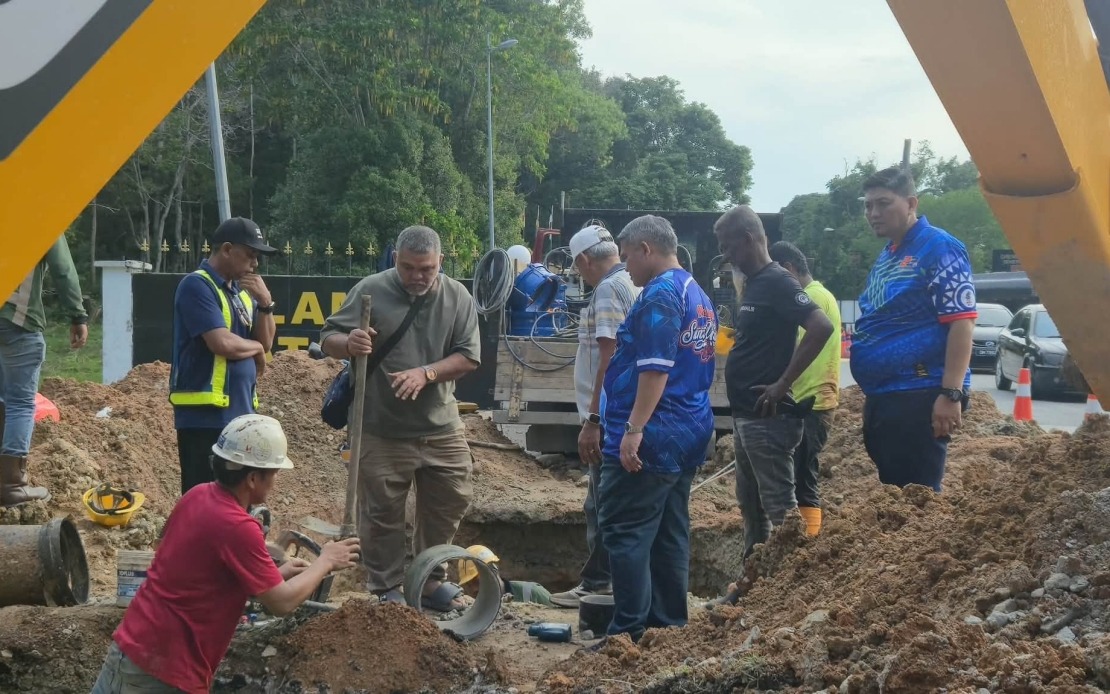
The Melaka state government is moving to alleviate a deepening water crisis at Kem Terendak in Sungai Udang by proposing the construction of a temporary water storage facility as part of immediate relief efforts. The proposal, which emerged following a severe pipe burst that disrupted supplies to the military installation over five consecutive days, reflects growing concern about the adequacy of existing water infrastructure serving the camp's substantial population. The initiative underscores the tension between providing urgent solutions and waiting for longer-term infrastructure overhauls that may take years to complete.
Through Syarikat Air Melaka Berhad (SAMB), the state authority responsible for water distribution, officials have put forward plans to construct the temporary tank while the military and state authorities pursue a more comprehensive Development and Upgrade of the Water Reticulation System project expected to be fully operational by April 2028. This layered approach acknowledges that immediate relief is necessary even as systematic improvements proceed. Datuk Rais Yasin, the Housing, Local Government, Drainage, Climate Change and Disaster Management senior executive councillor, explained that the temporary measure is designed to bridge what could otherwise be a multi-year gap in service reliability.
The scale of the disruption brought home the vulnerability of current arrangements. Approximately 2,000 military personnel, along with their households, experienced interrupted water supplies, as did five educational institutions located within the camp perimeter, including a MARA Junior Science College. The incident originated from a significant pipe fracture running along Jalan Kampung Payasum in the Sungai Udang area, with repair timelines stretching beyond initial estimates. While officials projected repairs would conclude by the evening of the announcement, complete restoration of normal water pressure and flow was forecast to require an additional one to two days.
The emergency response mobilised by SAMB demonstrates the logistical burden placed on water authorities when supply systems fail. The company deployed 25 tanker lorries delivering approximately 25,000 gallons of water daily beginning the day after the disruption was identified, a substantial emergency effort that nevertheless fell short of meeting the full requirements of the affected population. This shortfall highlights why permanent solutions, even if they require patience and investment, are preferable to perpetual reliance on temporary water transport and distribution methods that consume significant operational resources.
Approval from the Ministry of Defence emerges as a critical hurdle that could determine whether the temporary tank proposal advances. Because Kem Terendak operates as a military installation, responsibility for infrastructure decisions and site access involves complex coordination between Mindef, the Public Works Department, and the state's water authority. Rais Yasin, who represents the Sungai Udang state assembly constituency, indicated that SAMB would formally submit its proposal to Mindef while simultaneously identifying suitable locations for the temporary tank and maintaining contingency arrangements involving mobile water tankers for distribution.
The challenges at Kem Terendak reflect broader vulnerabilities in water infrastructure that extend beyond this single installation. Military establishments across Malaysia, like many public institutions, often operate with ageing reticulation systems that were designed decades ago for smaller populations or different consumption patterns. The concentration of personnel, families, and essential facilities within a confined area amplifies the impact of any supply disruption, creating cascading effects on operations, morale, and basic quality of life.
For Malaysia's defence sector, reliable water supply carries implications beyond domestic comfort. Military installations require consistent water access for operational readiness, including sanitation, health services, and equipment maintenance. Disruptions of the magnitude experienced over five days at Kem Terendak can compromise administrative functions and training schedules, making infrastructure reliability a genuine operational concern rather than merely a service quality issue. The involvement of senior officials and the rapid emergency response underscore this operational dimension.
The timeframe for the comprehensive reticulation upgrade—April 2028—places the completion date approximately four years into the future, assuming no delays during the design, procurement, and construction phases. This extended horizon suggests that temporary interventions may become necessary repeatedly unless the planned project accelerates or interim measures prove sufficient to prevent crisis situations. The temporary tank proposal represents a pragmatic acknowledgment that the military community cannot reasonably be expected to tolerate periodic water emergencies for four years while major infrastructure improvements progress.
From a broader governance perspective, the coordination between state and federal authorities through SAMB demonstrates how water challenges often require multi-layered institutional responses. State water companies, federal defence agencies, and local government drainage authorities must align priorities and procedures to resolve infrastructure problems efficiently. The need to obtain Mindef approval for what is essentially a civilian water infrastructure project at a military location exemplifies the administrative complexities that can slow responses to infrastructure crises, even when the underlying technical solutions are straightforward.
Rais Yasin's public apology to residents and affected families signals political accountability for service disruptions, though the underlying structural factors—ageing pipes, population growth, maintenance backlogs—ultimately require sustained investment rather than political gestures alone. The supply of water containers to schools demonstrates attention to educational continuity during disruptions, a practical measure that ensures institutional functions persist despite infrastructure failures.
Looking forward, the success of the temporary tank proposal depends partly on rapid Mindef deliberation and approval. Given that military personnel and their families comprise the affected population, the defence ministry has strong incentive to cooperate with state authorities in expediting solutions. However, bureaucratic processing timelines can introduce delays even in scenarios where stakeholder interests align, potentially extending the period during which mobile tankers remain the primary emergency response mechanism.
The incident also raises questions about maintenance protocols and infrastructure inspection schedules that might have identified the Jalan Kampung Payasum pipe defect before catastrophic failure occurred. Preventive maintenance regimes, when properly resourced and executed, can reduce the frequency and severity of water supply disruptions. Whether the comprehensive 2028 upgrade will incorporate enhanced maintenance capabilities alongside new physical infrastructure remains to be clarified in detailed project specifications.

