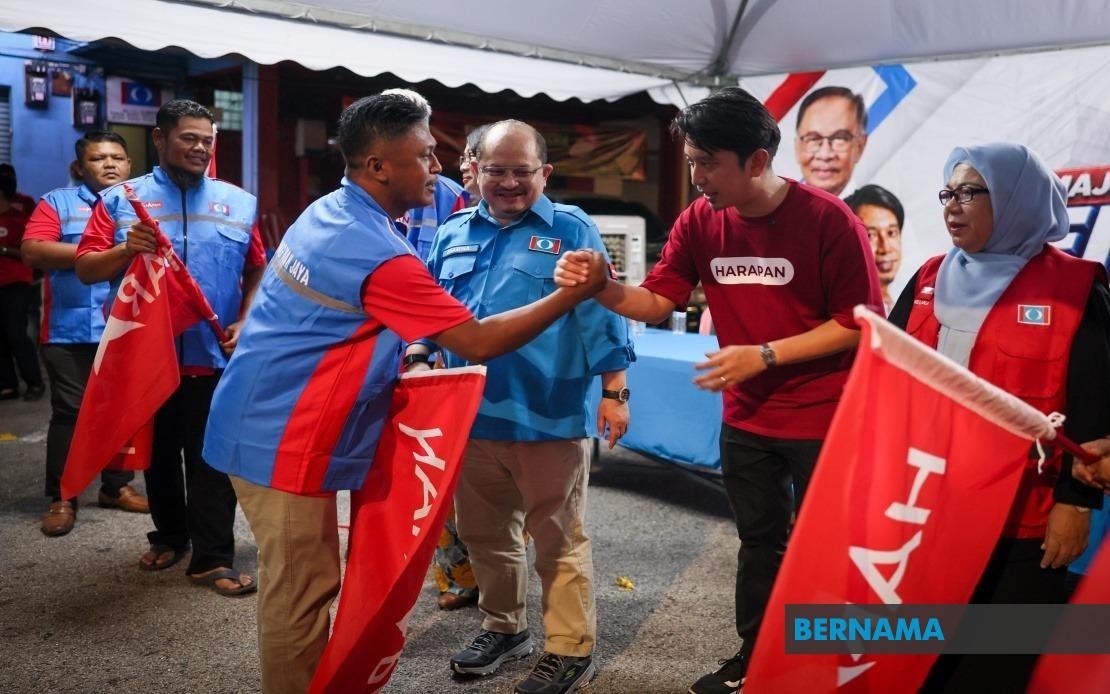
Parti Keadilan Rakyat's Melaka wing has resolved to accelerate its candidate announcement timeline for the forthcoming state election, seeking to grant its selection of fresh political talents sufficient runway to establish themselves before confronting voters. The decision reflects a deliberate strategic pivot away from past instances where candidate delays disrupted campaign preparation, as officials work to balance inclusivity with electoral readiness across the state's contested seats.
Adam Adli Abdul Halim, acting chairman of the Melaka PKR Leadership Council, outlined the party's revised approach during remarks at the launch of the Keadilan Election Machinery for the Hang Tuah Jaya branch in Taman Bukit Piatu. He acknowledged that previous election cycles had witnessed protracted candidate selection processes triggered by organisational complications, necessitating a structural overhaul to prevent recurring delays. The compressed timeline responds to PKR's intention to introduce multiple new candidates across constituencies, a demographic recalibration requiring extended ground-level cultivation.
The candidate vetting procedure operates through established hierarchical channels, beginning with screening at branch and constituency levels before progressing through state-level evaluation and ultimately reaching the central party apparatus for final ratification by the party president. This tiered mechanism, while administratively rigorous, has historically created bottlenecks that compressed final campaign periods. By commencing the selection process considerably earlier, PKR aims to permit each stage sufficient deliberation time without sacrificing overall schedule compression at the terminal phase.
Beyond purely expediting announcements, PKR's Melaka contingent prioritises achieving demographic equilibrium within its candidate roster, specifically integrating greater female representation and youth participation into its slate. Adam Adli framed this representational objective as integral to the accelerated timeline, acknowledging that cultivating newer voices requires institutional investment and mentoring incompatible with hasty last-minute selections. The party recognises that introducing candidates without adequate preparation risks compounding incumbency disadvantages in competitive constituencies, thereby necessitating extended pre-campaign familiarisation with voters and local issues.
Concomitantly, PKR has initiated a systematic fortification of its electoral infrastructure throughout Melaka, orchestrating successive machinery launches across five parliamentary divisions: Tangga Batu, Hang Tuah Jaya, Alor Gajah, Masjid Tanah, and Jasin. These concentrated organisational mobilisations underscore PKR's conviction that robust ground-level structures constitute prerequisites to candidate viability, regardless of individual contender prominence. By sequencing these launches preceding formal candidate announcements, the party establishes operational foundations capable of supporting any eventual nominee.
Adam Adli, simultaneously serving as Deputy Minister of Higher Education, reframed candidate nomination as secondary to organisational preparedness, emphasising that PKR's immediate imperative involves constructing reliable, responsive election machinery capable of functioning autonomously across multiple electoral scenarios. This institutional-first methodology diverges from personality-driven campaign models, instead privileging systemic resilience and volunteer cohesion as determining factors in electoral performance. The approach acknowledges that Melaka's competitive electoral environment demands sophisticated, granular campaigning operations extending beyond individual candidate appeal.
Regarding intercoalition negotiations between Pakatan Harapan and Barisan Nasional, Adam Adli disclosed that preliminary informal discussions had transpired, though formal substantive negotiations addressing cooperation frameworks remained pending. Communications between the two political blocs had occurred at various administrative levels, reflecting mutual interest in exploring collaborative possibilities. Nevertheless, these exchanges had not yet crystallised into structured negotiations capable of producing binding agreements regarding seat-sharing arrangements or joint electoral strategies.
PKR leadership has positioned cooperation discussions as beneficial beyond purely electoral calculations, framing inter-bloc communication as instrumental to elevating campaign discourse quality and constraining practises associated with adversarial politics characterised by personal attacks and procedural irregularities. This rhetorical positioning reflects broader Malaysian political discourse around political culture improvement, suggesting that even competitive electoral contests benefit from institutional restraint and mutual respect between opposing forces. The framing potentially appeals to voters fatigued by vituperative political exchanges while maintaining PKR's electoral competitiveness.
PH's election director Datuk Seri Amirudin Shari reportedly initiated contact with Melaka Chief Minister Datuk Seri Ab Rauf Yusof to schedule negotiations addressing potential cooperation arrangements. These exploratory communications indicate genuine appetite from PH's leadership for discussing collaborative frameworks, though significant substantive hurdles likely remain regarding seat allocation, policy coordination, and respective coalition members' interests. The timing of these discussions, preceding formal candidate announcements from either coalition, permits flexibility in determining electoral positioning.
Simultaneously, PKR maintains contingency preparations enabling independent electoral participation should negotiations with BN ultimately prove unproductive. This dual-track strategising reflects electoral pragmatism, ensuring the party possesses campaign readiness irrespective of coalition outcomes. For Malaysian voters and regional observers, Melaka's political trajectory carries implications extending beyond state-level significance, potentially foreshadowing coalition dynamics in subsequent federal electoral cycles. The state's competitive electoral history positions it as a bellwether reflecting broader Malaysian political realignment patterns and voter preference evolution across peninsular constituencies.

