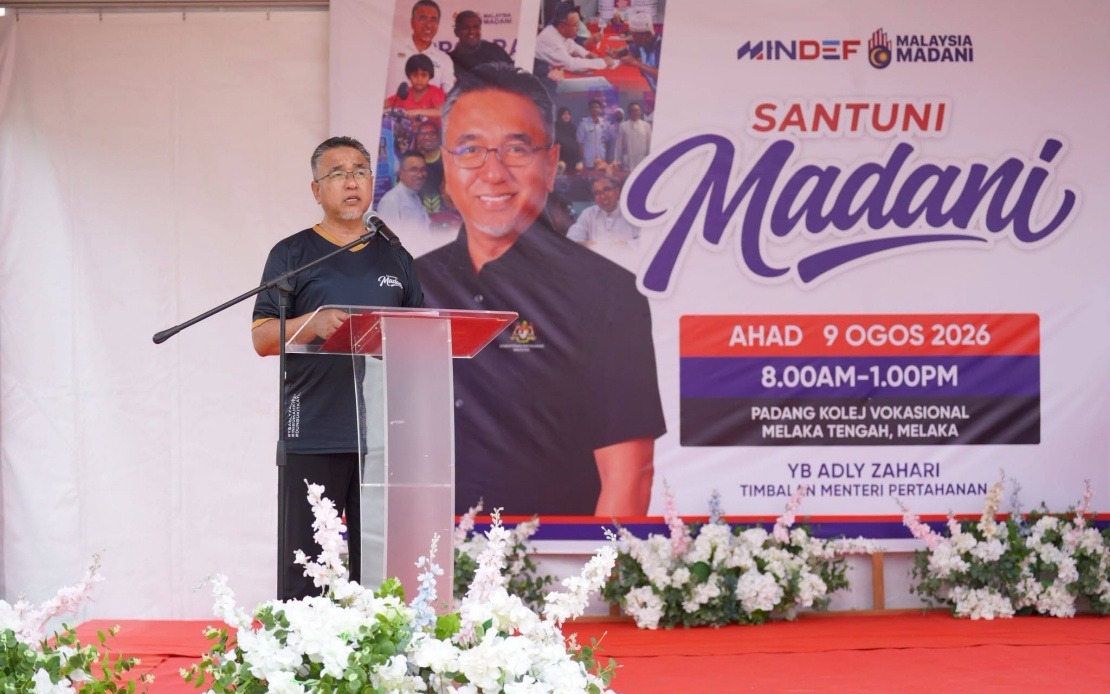
Melaka Pakatan Harapan has signalled its readiness to engage in talks with potential political partners ahead of the state election, according to the coalition's chairman Adly Zahari. Speaking in Melaka, Adly emphasized that while no formal agreements have been reached, the coalition remains receptive to dialogue with other parties interested in exploring collaborative arrangements. The leadership has completed two preliminary assessment meetings to evaluate the bloc's competitive standing, though substantive details regarding the structure and scope of any partnership remain unresolved at this stage.
The coalition's internal preparation strategy continues to be anchored within PH's existing membership, with external negotiations being treated as a secondary consideration at present. Adly's remarks reflect a deliberate approach: rather than rushing into agreements, the coalition is methodically evaluating its options within Malaysia's democratic framework, which permits multiple forms of political cooperation. This calculated stance suggests Melaka PH is determined to maximize its negotiating position by demonstrating organizational strength before committing to formal alliances.
When asked about potential cooperation with Melaka Barisan Nasional, Adly noted that no substantive discussions have occurred between the two major coalitions. However, PH remains philosophically open to partnerships with entities whose political platforms and values resonate with the Malaysia MADANI framework—the government's central developmental agenda. This conditional openness establishes a boundary: collaboration would need ideological alignment beyond mere electoral arithmetic. For Malaysian observers, this distinction matters because it suggests PH is not simply looking to maximize seat counts through unprincipled deals, but rather seeking partners whose governance philosophies are compatible.
Regarding territorial ambitions, Melaka PH has articulated an optimistic target: expanding its state legislative representation beyond the five seats it currently holds in the 28-member assembly. The coalition's assessments are grounded in geographical analysis of its existing strengths and emerging opportunities. PH's three confirmed parliamentary constituencies—Alor Gajah, Kota Melaka, and Hang Tuah Jaya—provide foundational support, but the coalition is also studying expansion potential in three additional state constituencies: Tangga Batu, Masjid Tanah, and Jasin. This targeted approach demonstrates that PH is not pursuing blanket expansion but rather identifying winnable ground through detailed electoral reconnaissance.
Adly expressed conviction that the coalition possesses genuine capacity to add to its existing seat count, framing the objective not as wishful thinking but as a product of rigorous internal assessment. Given that PH holds just five of 28 seats, even modest gains would represent meaningful progress toward competitive parity in the state assembly. The significance of this target-setting extends beyond Melaka itself: success here would provide PH with momentum in a state where it has historically underperformed relative to its national position, potentially reshaping the peninsula's political geography.
Partai Keadilan Rakyat, a major PH component, has presented its own perspective through Adam Adli Abd Halim, the PKR State Leadership Council's acting chairman. Adam Adli acknowledged that Melaka's political environment exhibits distinctive characteristics that differentiate it from other states participating in the federal Unity Government coalition. This recognition is significant because Melaka has experienced considerable political turbulence in recent years, with multiple changes of government and shifting allegiances that distinguish it from more politically stable states. The acknowledgment that "all factors must be considered" in negotiations suggests PKR is acutely aware that blanket national-level formulas may not transplant successfully to Melaka's local context.
On the question of BN engagement, PKR's position mirrors PH's broader stance: no formal negotiations have commenced, yet informal channels of communication remain active. Adam Adli's language—emphasizing individual and party-level discussions with BN counterparts—indicates that preliminary exploratory conversations are underway without the formality of institutional negotiation frameworks. This distinction between casual dialogue and structured talks is tactically important, as it allows both coalitions to maintain flexibility while avoiding public commitment. For regional observers, this pattern reflects how Malaysian political parties manage sensitive coalition discussions through multiple informal channels before any formal announcement.
The PKR leader also highlighted that current state assemblymen are prioritizing constituent service delivery over political grandstanding, a statement that carries operational implications. By encouraging PH representatives to focus on governance performance and public accountability rather than engaging in excessive political rhetoric, PKR is attempting to build an electoral case based on competence and delivery. This strategy recognizes that in state-level contests, voters often respond to tangible governance outcomes—infrastructure development, constituent services, administrative efficiency—rather than abstract ideological arguments. For Malaysian constituencies, this emphasis on performance-driven politics may resonate particularly in Melaka's more urbanized and suburban areas.
The broader political context surrounding these Melaka developments warrants consideration. Malaysia's federal Unity Government structure involves complex power-sharing arrangements among multiple blocs, and state-level dynamics do not automatically mirror national-level configurations. Melaka's case exemplifies this complexity: while the national government integrates PH, BN, and several other parties, state-level configurations may require different architectural arrangements based on local electoral mathematics and historical political patterns. The willingness both PH and PKR have expressed to negotiate suggests recognition that winning elections requires flexibility beyond ideological purity.
For Melaka's electorate and Southeast Asian observers monitoring Malaysian politics, these developments signal that while the state remains politically competitive, both major coalition blocs are approaching the upcoming contest with strategic pragmatism rather than inflammatory rhetoric. Adly's emphasis on welcoming negotiations, combined with PKR's focus on constituent service and governance performance, outlines a coalition strategy predicated on demonstrating administrative competence and building electoral coalitions through dialogue rather than confrontation. Whether this measured approach translates into electoral success will depend on whether Melaka's voters reward stability and pragmatism or demand more dramatic political change.

