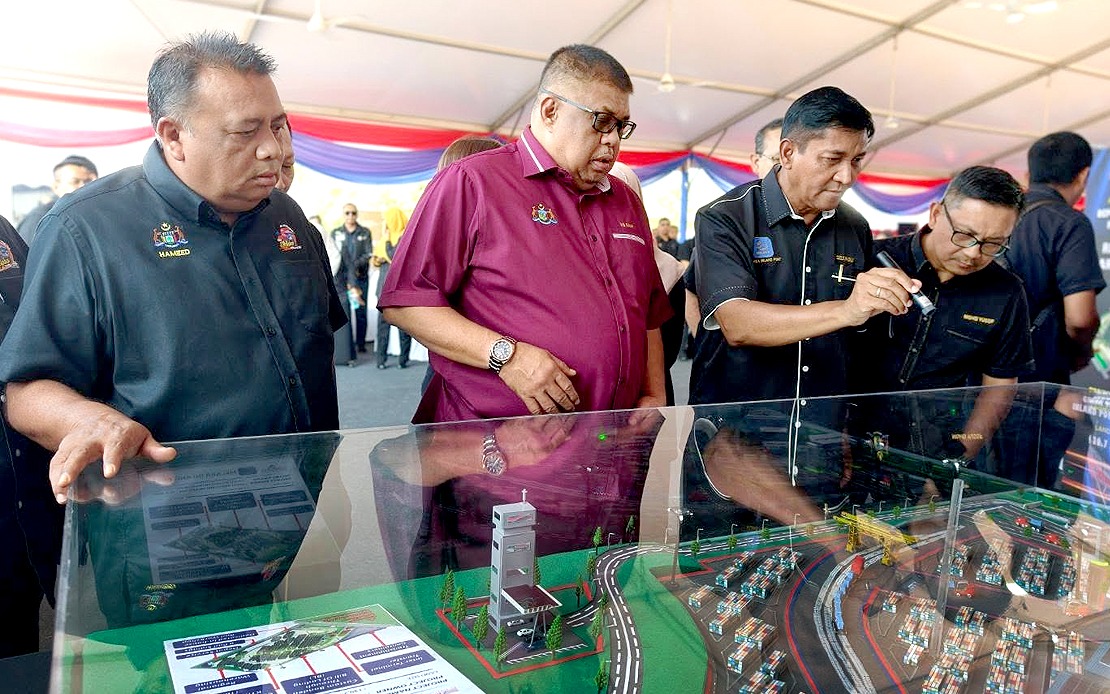
Melaka's government has announced an ambitious infrastructure initiative designed to integrate the state's fragmented port ecosystem into a unified logistics corridor. The centrepiece is a 12-kilometre road linking Kuala Linggi International Port (KLIP) to Ayer Molek in Kuala Sungai Baru, carrying an estimated price tag of RM129 million. The project reflects a broader strategic effort to position Melaka as a competitive player in Malaysia's port and maritime sector at a time when regional logistics networks face increasing pressure to modernise and streamline operations.
According to Datuk Hameed Mytheen Kunju Basheer, who chairs Melaka's Public Works, Infrastructure, Public Facilities and Transport Committee, the new corridor will deliberately route through the emerging Melaka Inland Port (MIP) to maximise synergies across the state's port infrastructure. This design choice signals recognition that modern port economics depend not merely on vessel capacity or terminal efficiency, but on seamless land-side connectivity that allows cargo to flow rapidly between maritime and inland facilities. The road will essentially serve as a arterial link binding together ports that currently operate in relative isolation, constraining their collective competitiveness.
The project currently exists in preliminary design phases under the Works Ministry's oversight. Hameed indicated that the formal procurement process—including quotation requests, open tendering, and contractor selection—is scheduled to commence during the following year. This timeline suggests the state government is proceeding with due diligence rather than rushing into execution, though it also means tangible construction activity remains some months distant. The phased approach reflects standard Malaysian public works practice, though critics might note that lengthy pre-construction periods can sometimes extend further than initially projected.
The primary efficiency gain justifies the substantial investment outlay. Currently, logistics operators traversing between KLIP and related port zones must navigate a circuitous 28-kilometre route. The new direct road would compress this distance to just 12 kilometres, dramatically reducing travel times and operating costs for trucking companies, container handlers, and goods distributors. For a sector operating on relatively thin margins where fuel consumption and driver hours directly impact profitability, such distance reductions translate to tangible bottom-line improvements. The logistics industry, which underpins Malaysia's broader manufacturing and export competitiveness, stands to benefit measurably from this infrastructure upgrade.
Beyond the flagship 12-kilometre corridor, Melaka's infrastructure ambitions extend to complementary connectivity projects that collectively reshape the state's port-hinterland relationships. The government plans concurrent upgrades to existing road networks connecting various port facilities to the MIP, including a widening initiative affecting the corridor from Tangga Batu to Sungai Udang—a route that terminates at Tanjung Bruas Port. These accompanying improvements, though less prominent than the primary project, prove essential to realising the full potential of enhanced logistics integration. Without such comprehensive upgrades, the new road would function as an isolated artery rather than part of an integrated circulatory system.
Another proposed corridor—a six-kilometre route extending from Telok Gong through Kampung Pulau to Paya Lebar—represents a second major investment piece carrying an estimated RM49 million price. This supplementary project aims to establish an alternative gateway linking coastal communities and port zones directly to the MIP without forcing traffic through established villages and residential areas. Such routing considerations reveal sophisticated understanding of the social externalities associated with logistics infrastructure. By directing heavy vehicle traffic around populated settlements, planners can mitigate congestion, pollution, and safety concerns that plague communities situated along traditional transport corridors.
The Telok Gong to Paya Lebar project exists at varying stages of maturity. The segment from Paya Lebar to Kampung Pulau has advanced to quotation stage, indicating engineers have completed sufficient design work to solicit pricing from potential contractors. Conversely, the alignment from Kampung Pulau to Telok Gong remains in preliminary design phases. This staggered progression suggests the state government may pursue phased implementation, potentially opening sections to traffic as they become ready rather than awaiting completion of the entire six-kilometre stretch. Completion horizons extend toward 2028 or 2029, acknowledging that such multifaceted infrastructure programmes typically span several years from initiation to full operationalisation.
For Malaysian readers and Southeast Asian observers, these developments carry significance extending beyond Melaka's provincial boundaries. As a state positioned along the Strait of Melaka—one of the world's most strategically vital shipping lanes—infrastructure improvements that enhance port efficiency and logistics capacity contribute to broader regional maritime competitiveness. Better roads and faster cargo movement translate to improved turn-around times for vessels, reduced port congestion, and enhanced attractiveness to international shipping lines and cargo operators. In an era when supply chain resilience has become a strategic priority for regional economies, Melaka's investments position the state to capture a larger share of maritime and logistics activity.
The broader policy context matters considerably. Malaysia competes against regional rivals including Singapore, Port Klang, and increasingly, Thai and Vietnamese port facilities for container traffic and logistics business. While Melaka cannot match Singapore's scale or Port Klang's proximity to Kuala Lumpur's industrial base, targeted infrastructure investment can carve out competitive advantages in specific niches. The emphasis on integrated port-hinterland connectivity reflects international best practices; leading global ports function as part of comprehensive logistics ecosystems rather than isolated maritime facilities. By investing in land-side infrastructure that knits together port facilities and inland distribution points, Melaka positions itself to serve businesses seeking efficient alternatives to more congested major ports.
The logistics sector itself represents a significant economic multiplier for Malaysia. Transportation, warehousing, and distribution activities generate employment across multiple skill levels—from truck drivers and warehouse operatives to logistics managers and supply chain specialists. Infrastructure that reduces operational costs and improves service quality creates conditions for sector expansion, supporting job creation particularly in secondary cities like Melaka where economic diversification remains an ongoing challenge. The state government's investment signals commitment to developing the logistics industry as a pillar of long-term economic development, complementing traditional sectors and appealing to investors seeking modern, efficient distribution capabilities.
Implementation success will ultimately depend on execution quality and adherence to timelines. Malaysian infrastructure projects have occasionally encountered delays, cost overruns, and completion challenges that extended initial projections. Moreover, the effectiveness of the RM129 million investment depends partly on factors beyond the state government's control—including shipping industry patterns, regional port competition, and broader economic conditions affecting container traffic volumes. Nevertheless, by investing in foundational logistics infrastructure, Melaka's government has positioned the state to benefit from whatever growth materialises in regional maritime commerce over the coming decade.

