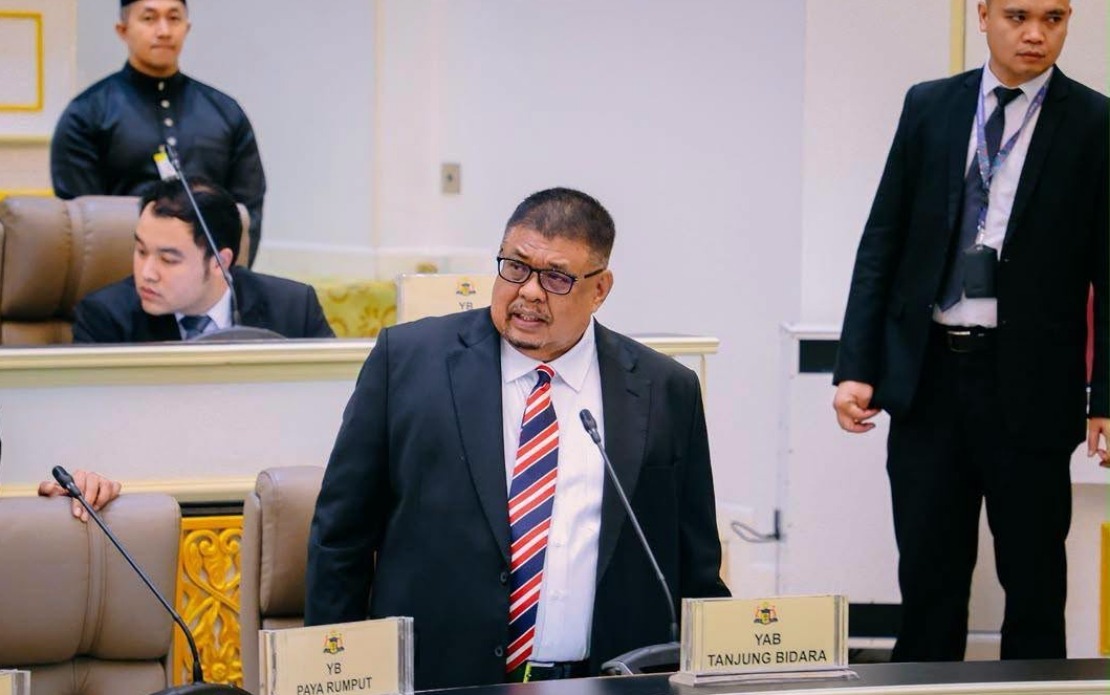
Melaka's Chief Minister Datuk Seri Ab Rauf Yusoh has moved to reassure the state that governmental operations will proceed without disruption following the Democratic Action Party's abrupt departure from the ruling coalition. Speaking at a press conference held at the Seri Negeri Complex in Ayer Keroh on July 15, Ab Rauf emphasized that the withdrawal of the DAP from state administration would not hinder the delivery of public services, infrastructure development initiatives, or the overall functioning of the Melaka government.
The announcement addresses concerns that have emerged following the party's decision to relinquish all executive positions held by its representatives in the state cabinet. Four DAP state assemblymen—Allex Seah Shoo Chin from Kesidang, Low Chee Leong from Kota Laksamana, Leng Chau Yen from Banda Hilir, and Kerk Chee Yee from Ayer Keroh—tendered their resignations immediately after the State Legislative Assembly approved a constitutional amendment permitting the appointment of assemblymen. The timing of this move has created significant ripples across Malaysian politics, signalling deeper fractures within the Pakatan Harapan coalition at the state level.
Ab Rauf's public messaging strategy appears designed to stabilize investor confidence and maintain public morale during what could be a transitional period of political uncertainty. He directed specific assurances toward the civil service, the business community, and external investors, underscoring the state government's commitment to sustaining its administrative machinery without the DAP's participation. This approach reflects an understanding that political discord at the state level can quickly translate into economic hesitation and reduced business activity, potentially undermining Melaka's development agenda.
Regarding the handling of vacant executive positions left by the departing DAP representatives, the Chief Minister announced that these roles will remain unfilled for the immediate term. Instead, existing administrative members will shoulder additional responsibilities and distribute the workload among themselves. This interim arrangement suggests a cautious approach, potentially allowing the political situation to stabilize before the government commits to filling these posts through appointment or other mechanisms.
The DAP's exit decision appears to have been finalized with little room for reversal. After submitting their resignation letters directly following the party's press conference, the possibility of negotiations had effectively closed before Prime Minister Datuk Seri Anwar Ibrahim could formally appeal for dialogue. When questioned about the Prime Minister's call for negotiations to proceed, Ab Rauf explained that the procedural sequence—resignation submission occurring immediately after the DAP's announcement—had rendered further talks impractical. This sequence of events highlights the speed with which Malaysian state politics can pivot, sometimes leaving little opportunity for federal-level intervention or mediation.
The Chief Minister adopted a notably conciliatory tone regarding the departed coalition partner, declining to engage in protracted debate over the DAP's reasoning or its constitutional right to make autonomous political decisions. His statement that Melaka's political actors need not become adversaries despite coalition dissolution reflects broader concerns about maintaining civic stability at a time of considerable government upheaval. Such rhetoric is particularly important in a diverse state like Melaka, where political conflict can acquire communal dimensions if left unchecked.
Ab Rauf explicitly acknowledged the cooperative contributions made by DAP representatives during their tenure in the state government, signalling a degree of mutual respect despite the acrimonious manner of departure. This measured response contrasts with more combative reactions sometimes seen in Malaysian state politics and may serve to preserve working relationships that could prove valuable if inter-party negotiations resume at a later stage. The emphasis on appreciation also attempts to depoliticize the withdrawal, framing it as a difference of principle rather than a personal or organizational failure.
Maintaining relations with the federal government has emerged as another priority for the Melaka administration in the post-DAP period. Ab Rauf affirmed that the state government would continue pursuing collaborative arrangements with Putrajaya, suggesting that despite the coalition rupture at state level, operational links with federal authorities and resource channels would remain intact. This commitment is pragmatic, as state governments in Malaysia remain dependent on federal allocations for capital development and recurrent expenditure for essential services.
The constitutional amendment that precipitated the DAP's departure introduces a significant structural change to Melaka's politics. The provision allowing the appointment of assemblymen rather than requiring electoral validation represents a departure from traditional Westminster conventions and has emerged as a contentious issue within Malaysian governance discussions. The DAP's interpretation of this amendment as undermining democratic accountability prompted the swift resignations, indicating that the party viewed the change as incompatible with its political principles.
For observers of Malaysian state governance, Melaka's situation highlights ongoing tensions between majoritarian democracy and constitutional flexibility. The ability of state legislatures to amend their own constitutional frameworks can enable responsive governance but also creates opportunities for power consolidation that opposition parties view with skepticism. The resulting political volatility, as evidenced by the DAP's exit, underscores why questions about electoral systems and legislative composition remain politically charged in Malaysia's federal framework.
The immediate implications for Melaka's governance capacity remain uncertain. While Ab Rauf's assurances project confidence, the loss of experienced DAP assemblymen represents a reduction in available talent within the state's administrative ecosystem. The temporary arrangement for handling vacant positions may suffice during a crisis period but could eventually create bottlenecks if prolonged. The broader coalition dynamics also remain in flux, with questions about whether other partners might follow the DAP's lead or whether the government's remaining members possess sufficient cohesion to govern effectively.
From a regional perspective, developments in Melaka carry implications for the stability of Pakatan Harapan's broader coalition arrangements. Coalition fragmentation at state level, if replicated across multiple states, could eventually weaken the federal opposition alliance or even trigger changes at national government level. The DAP's decision thus warrants close monitoring by stakeholders invested in Malaysia's political equilibrium and its ramifications for economic policy continuity across the federation.

