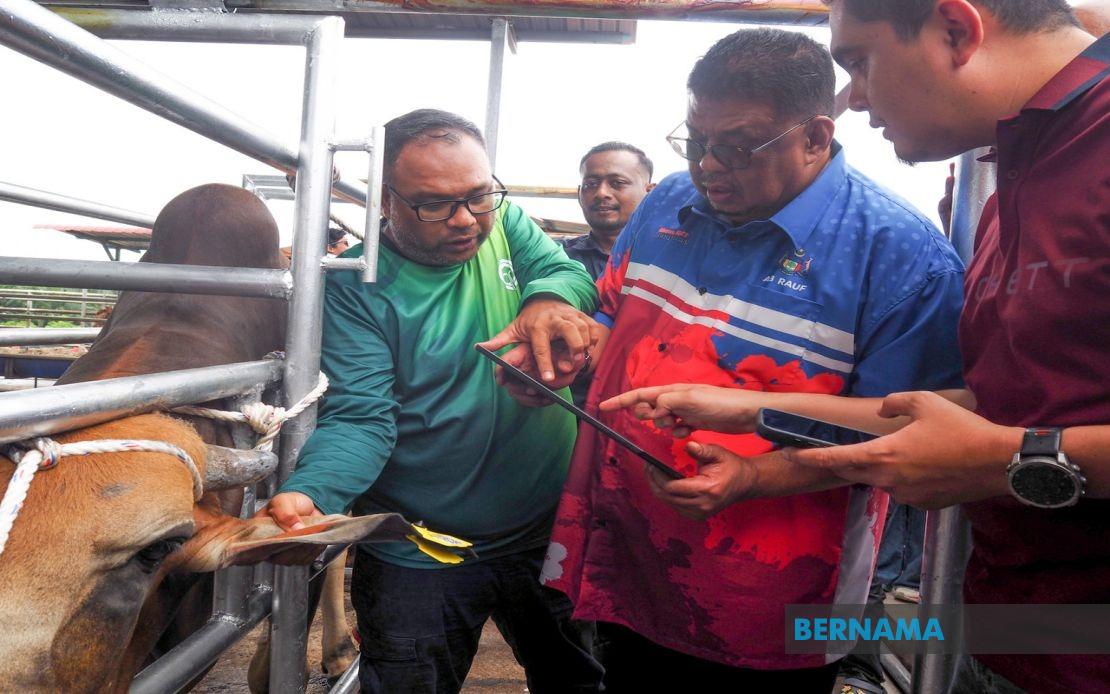
Melaka is pioneering a technological approach to livestock management through the introduction of a Livestock QR Tag system, a digital initiative designed to strengthen oversight of farm animals and enable rapid identification of owners during emergencies or when livestock cause public safety concerns. The programme represents a significant step forward in how Malaysian states are leveraging technology to address persistent rural and agricultural challenges, particularly the recurring problem of stray animals endangering communities and road users.
The system, developed through collaboration between the Melaka Veterinary Services Department and the Chief Minister's Department, originated from a directive by Chief Minister Datuk Seri Ab Rauf Yusoh. According to Mahathir Mustafa, chief assistant secretary of the Local Government Unit, the QR Tag initiative aligns with Melaka's broader digitalisation strategy to create a smart and livable state while simultaneously enhancing agricultural governance. This dual focus on technological advancement and practical livestock management reflects how Southeast Asian governments are increasingly integrating digital solutions into traditional farming sectors.
Each QR-tagged animal carries a unique identification number and code that smartphone users can scan to instantly access essential farming information. The tag serves as a permanent identifier throughout the animal's lifetime, remaining valid even if ownership transfers or the livestock is sold. This permanence ensures continuity in record-keeping and eliminates the complications that arise from manual tracking systems where information can be lost or become outdated during transactions. The system fundamentally shifts livestock identification from paper-based or informal mechanisms to a standardized digital framework accessible to both authorities and the public.
As of early June, approximately 2,000 livestock had already received QR tags, with the Melaka government targeting gradual expansion across the state's entire registered population. Officials estimate over 32,000 cows and buffaloes exist in Melaka, meaning the current coverage represents just six percent of the total. This phased rollout approach allows authorities to test implementation effectiveness, train personnel, and refine procedures before scaling to full coverage, a pragmatic strategy for managing large-scale digital transitions in agricultural sectors.
The impetus for this system stems from tangible public safety concerns. Since 2023, Melaka recorded 835 livestock-related accidents and more than 50 formal complaints about stray animals. These figures underscore how livestock management extends beyond agricultural economics into broader community welfare. Stray animals create hazards for motorists, damage public spaces, and create friction between farming communities and urban residents. The QR system directly addresses enforcement gaps by eliminating delays in owner identification when incidents occur, shifting accountability from reactive complaint-handling to proactive management.
Beyond rapid owner identification, the tagging system facilitates disease monitoring and livestock movement tracking, capabilities crucial for managing biosecurity threats in a region historically vulnerable to livestock diseases. Authorities can now cross-reference animal locations with vaccination records, health status, and recent movements, enabling faster responses to disease outbreaks before they spread across premises or to neighbouring states. This interconnected approach to livestock health represents a departure from fragmented reporting systems where information remained siloed across different agencies.
The technology integrates with the eVetPermit Malaysia system, ensuring ownership records remain current without requiring physical tag replacement. When livestock transfers ownership, only database information needs updating, reducing administrative burden and the likelihood of outdated records causing enforcement difficulties. This backend connectivity demonstrates how the QR system functions as part of a broader digital ecosystem rather than an isolated initiative. For Malaysian policymakers monitoring this programme, the integration model offers lessons applicable to other sectors requiring real-time ownership and compliance tracking.
Breeder response has been notably positive, with farming communities viewing the system as protective of their interests rather than merely a regulatory burden. Farmers recognise that rapid owner identification during incidents shields them from liability for animals they no longer own and demonstrates responsible stewardship to authorities. This perception matters significantly for programme adoption rates, as voluntary participation and breeder cooperation substantially influence success where enforcement alone cannot drive compliance. The state government's decision to fund tag installation at RM6.50 each through the end of 2025 further incentivizes participation by removing upfront financial barriers during the crucial rollout phase.
The subsidy structure reveals pragmatic thinking about behavioural economics in rural development. By covering full installation costs until year-end, Melaka removes hesitation among smaller breeders who might otherwise delay participation. Beginning in 2027, breeders assuming the RM5 per-head cost for new installations or replacements represents a sustainable funding model where costs distribute across the farming community. This transition from government-subsidized to user-pays creates financial sustainability while allowing initial penetration at minimal cost to participants.
Coordination between the Local Government Unit, Veterinary Services Department, and local councils constitutes an essential enabler often overlooked in technical discussions. The system's effectiveness depends not merely on the technology itself but on consistent implementation across multiple municipalities, each potentially facing different resource constraints and local conditions. Officers must be trained in tag application procedures, database entry, and troubleshooting. Ground-level enforcement personnel need clear protocols for using QR scans during incidents. This organisational alignment represents perhaps the greatest challenge in sustaining the programme beyond its initial rollout phase.
For Southeast Asian agricultural policy observers, Melaka's livestock tracking system offers a replicable model for addressing common challenges across the region. Malaysia, Thailand, Indonesia, and Vietnam all struggle with stray livestock incidents and disease monitoring complications. The QR system's relatively low technological barrier—relying on ubiquitous smartphone scanning rather than specialised equipment—makes it adaptable to different governance contexts. Success in Melaka could encourage neighbouring states or countries to develop similar programmes, gradually creating interregional traceability networks beneficial for cross-border livestock trade and disease prevention.
The initiative ultimately reflects a philosophical shift in how Malaysian states approach agricultural governance. Rather than relying solely on regulatory enforcement or traditional paperwork, Melaka is embedding accountability into the animals themselves through permanent, scannable identifiers. This approach distributes responsibility across farmers, traders, and enforcement authorities, each able to verify ownership status instantly. As Malaysia navigates post-pandemic economic recovery and digital transformation across sectors, successful agricultural technology adoption like the Melaka QR system demonstrates how targeted digital investment can simultaneously address social safety concerns, strengthen industry accountability, and advance smart-state aspirations without requiring extensive infrastructure overhaul.

