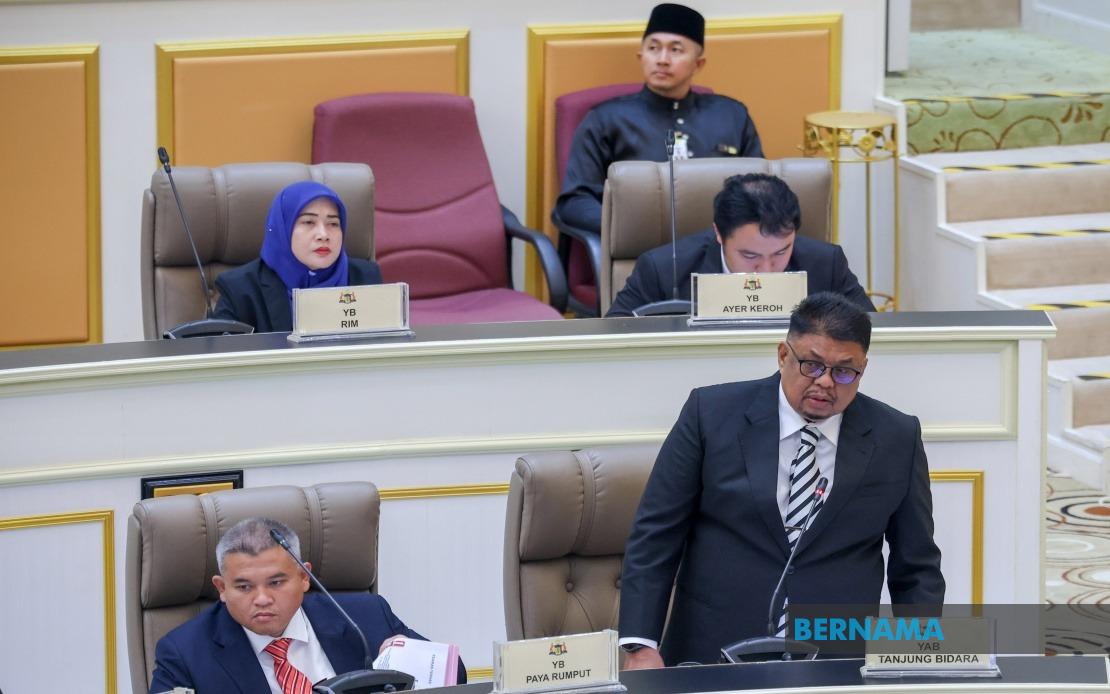
The Melaka State Legislative Assembly has cleared the path for a significant structural shift in how the state's representatives are selected, approving an amendment to the State Constitution that would introduce appointed lawmakers into the chamber for the first time. The Melaka State Constitution (Amendment) Bill 2026 secured backing from 23 assemblymen on July 14, with five members opposing the measure, indicating substantial cross-party acceptance of the proposal despite the dissenting votes.
Chief Minister Datuk Seri Ab Rauf Yusoh spearheaded the constitutional amendment, articulating a vision that extends beyond the traditional electoral process. The government's justification rests on a framework that would allow the appointment of up to seven nominated state assemblymen, individuals drawn from specialized professions and sectors deemed crucial to the state's governance. This approach distinguishes between those who succeed through electoral competition and those who bring technical capabilities directly into the legislative sphere.
The rationale presented by Ab Rauf centers on enriching the quality and diversity of parliamentary discourse. By introducing members with deep expertise in domains such as law, economics, education, investment, technology, and state development, the government argues that policy discussions would benefit from more technically rigorous analysis. This reflects a broader philosophy that legislative effectiveness depends not solely on electoral mandate but on the substantive knowledge contributors bring to deliberations on bills and administrative matters affecting the state.
Perhaps equally significant is the amendment's explicit emphasis on inclusion and representation of underrepresented communities. Ab Rauf highlighted that the appointment mechanism could create pathways for women, young professionals, the Orang Asli, minority ethnic communities, and industry specialists who might encounter barriers within the competitive electoral framework. This addresses a persistent challenge in Malaysian politics whereby certain demographic and professional groups struggle to secure seats through conventional polling processes, despite their potential contributions to governance and policymaking.
The appointed model mirrors mechanisms already embedded in Malaysia's federal structure, particularly the appointment of Dewan Negara members. This precedent lends institutional legitimacy to the Melaka initiative, suggesting that the state is adapting proven systems rather than experimenting with untested governance frameworks. The federal example demonstrates that appointed legislators can serve meaningful roles in scrutinizing government policy and strengthening institutional checks and balances, functions that appointed members could replicate at state level.
Opposition Leader Dr Mohd Yadzil Yaakub's endorsement of the measure carries particular significance for the amendment's legitimacy. His declaration of opposition support, contingent upon transparent and accountable implementation mechanisms, suggests that the constitutional change transcends partisan politics. By conditioning backing on proper procedural safeguards oriented toward public interest, the opposition leader articulated a framework whereby appointed seats could strengthen democratic institutions rather than merely serve as vehicles for patronage or political reward.
The amendment's inclusion within the Barisan Nasional's 2021 Melaka state election manifesto indicates this has been a planned institutional development rather than an improvisational policy response. Categorized under Thrust 1: Political Stability and the promotion of mature politics, the constitutional change reflects a strategic vision for state governance that values both electoral democracy and technocratic expertise. This positioning suggests the government views appointed members as complementary to, rather than corrosive of, democratic legitimacy.
The passage of this amendment with substantial legislative support opens important questions for Malaysia's broader constitutional architecture. As states and the federal government grapple with governance challenges spanning climate change, technological disruption, and economic complexity, the appointment of subject-matter experts into legislative bodies represents one approach to incorporating specialized knowledge into policymaking. Melaka's example may encourage other states to consider similar constitutional modifications, potentially reshaping how Malaysian legislatures balance electoral representation with technical expertise.
Implementation details remain crucial for determining whether appointed members genuinely strengthen legislative capacity or become embroiled in perceptions of political favoritism. The transparency mechanisms referenced by the opposition leader will likely become focal points for civil society scrutiny. How the government selects appointed members, the criteria employed, and the visibility afforded to appointment processes will substantially influence public reception of this institutional innovation and whether appointed assemblymen earn credibility for their substantive contributions to legislative deliberations.

