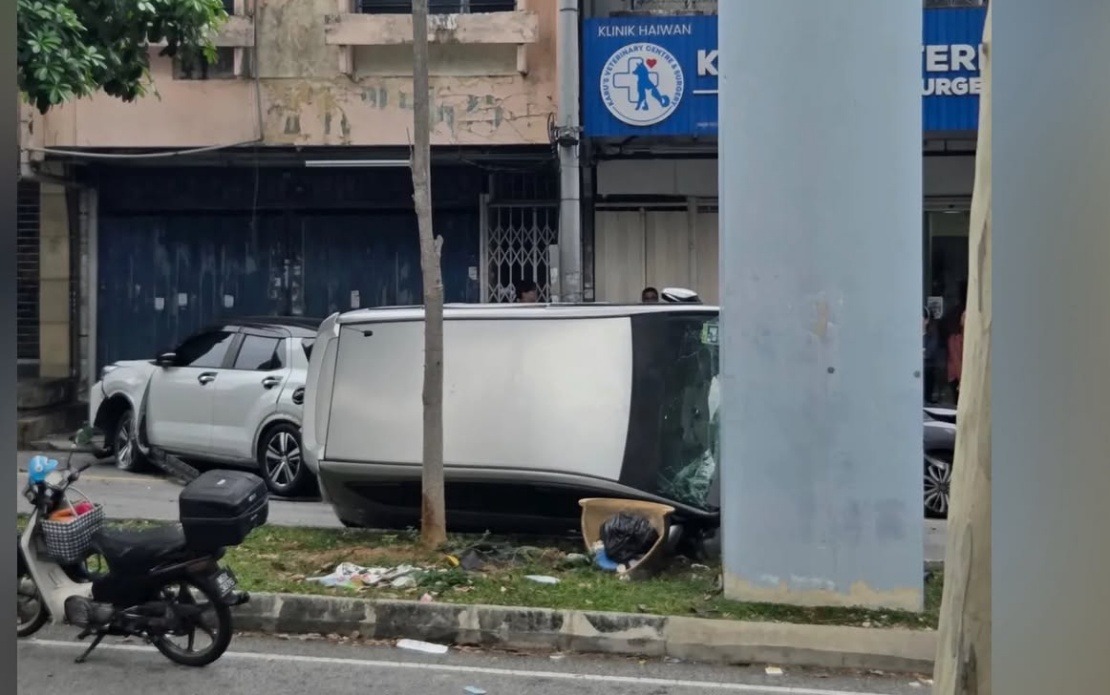
A seizure at the wheel led to a multi-vehicle collision in a residential area of Kuala Lumpur on Monday morning, when a 28-year-old BMW 320i driver lost control and ploughed into six stationary cars parked along Jalan Midah 1 in Cheras. The incident unfolded around 8.30 am as the driver was commuting from home to work at Taman Midah 1, highlighting the unpredictable nature of driving with an uncontrolled medical condition and raising questions about oversight of motorists with chronic neurological disorders.
According to ACP Mohd Zamzuri Mohd Isa, chief of the Kuala Lumpur Traffic Investigation and Enforcement Department (JSPT), the driver apparently experienced a sudden seizure that rendered him unable to steer or brake effectively. The vehicle veered off its intended path and collided with the parked cars, which were lined up along the left shoulder of the road. The sequence of events underscores how rapidly a medical crisis can escalate behind the wheel, transforming a routine commute into a property-damaging incident within moments.
Fortunately for the broader community, all six vehicles struck in the collision were unoccupied at the time, meaning no pedestrians or occupants sustained injuries. The targeted vehicles belonged to a diverse group of owners: four women ranging from 29 to 43 years old, one man aged 39, and one commercial vehicle registered to a company. While the absence of human casualties represents a stroke of luck, the property damage to these vehicles remains a significant financial and logistical burden for their owners, many of whom may face complications with insurance claims and vehicle repairs.
Investigations revealed that the BMW driver carries an extended medical history that amplifies the significance of this incident. Over the previous decade, the man had experienced recurring seizures, suggesting a chronic condition that presumably requires ongoing medical management. This background raises pertinent concerns about regulatory frameworks governing licence validity for individuals with epilepsy or similar seizure disorders in Malaysia. The discovery of this ten-year history prompts questions about whether appropriate medical checks and driver fitness assessments had been conducted, and whether the authorities maintain adequate oversight mechanisms.
A breathalyser examination administered at the scene yielded a reading of zero milligrammes per 100 millilitres, definitively ruling out alcohol intoxication as a contributing factor. This finding, while clarifying the immediate cause of the accident, actually sharpens focus on the medical dimension of the collision. With impaired driving through substance use eliminated, the incident becomes a case study in how pre-existing health conditions can pose genuine public safety risks on the road, and whether current driver-licensing protocols adequately screen for such vulnerabilities.
The Kuala Lumpur Traffic Investigation and Enforcement Department has classified the incident under Rule 10 of LN 166/59, the relevant legal framework governing traffic-related matters in Malaysia. This classification indicates that authorities are treating the collision as a traffic violation or breach, though the specific implications of this categorisation remain subject to further investigation and potential legal outcomes. The ongoing inquiry will likely examine whether the driver bore any culpability given his known medical condition, or whether this represents an unavoidable accident arising from sudden medical incapacity.
The incident unfolds against a broader backdrop of traffic safety in urban Malaysia, where rapid vehicle growth and increasing density of vehicles in residential areas create environments where accidents can cascade quickly. Cheras, as a mature residential and commercial zone with significant traffic volumes, experiences frequent movement of vehicles through neighbourhoods where parking constraints force residents to use roadside spaces. When a vehicle loses control in such an environment, the concentration of parked cars along roadsides means the potential for multiple impacts rises substantially compared to open-road scenarios.
From a public health perspective, this collision illustrates the intersection of medical management and transport safety policy. Individuals with seizure disorders often require careful medication regimens and lifestyle adjustments, and in many countries, driving privileges for such individuals are restricted or conditionally licensed, with requirements for medical certification and periodic reassessment. The question of whether Malaysia's regulatory framework adequately addresses this intersection warrants examination, particularly given the apparent lack of documented medical clearance or monitoring evident in this case.
The police department has appealed for witnesses or members of the public with information about the incident to come forward and assist the ongoing investigation. Interested parties may contact the Tun H.S. Lee traffic police station at 03-2071 9999 or any nearby police facility. Such witness accounts may prove valuable in establishing the precise sequence of events, including whether the driver demonstrated any warning signs prior to the collision that might inform broader road safety discussions.
Looking forward, this incident serves as a reminder of the multiple dimensions of road safety beyond the conventional focus on speeding, reckless driving, or impaired driving. Medical fitness to drive remains a less-discussed but equally important component of traffic safety policy, particularly in developing nations where licensing frameworks may not adequately account for chronic health conditions. For the six vehicle owners affected, the incident represents an inconvenient and costly consequence of being parked in the wrong place at the wrong moment, while for transport authorities, it presents an opportunity to reassess whether current medical screening protocols for licence holders are sufficiently robust to prevent similar occurrences.

