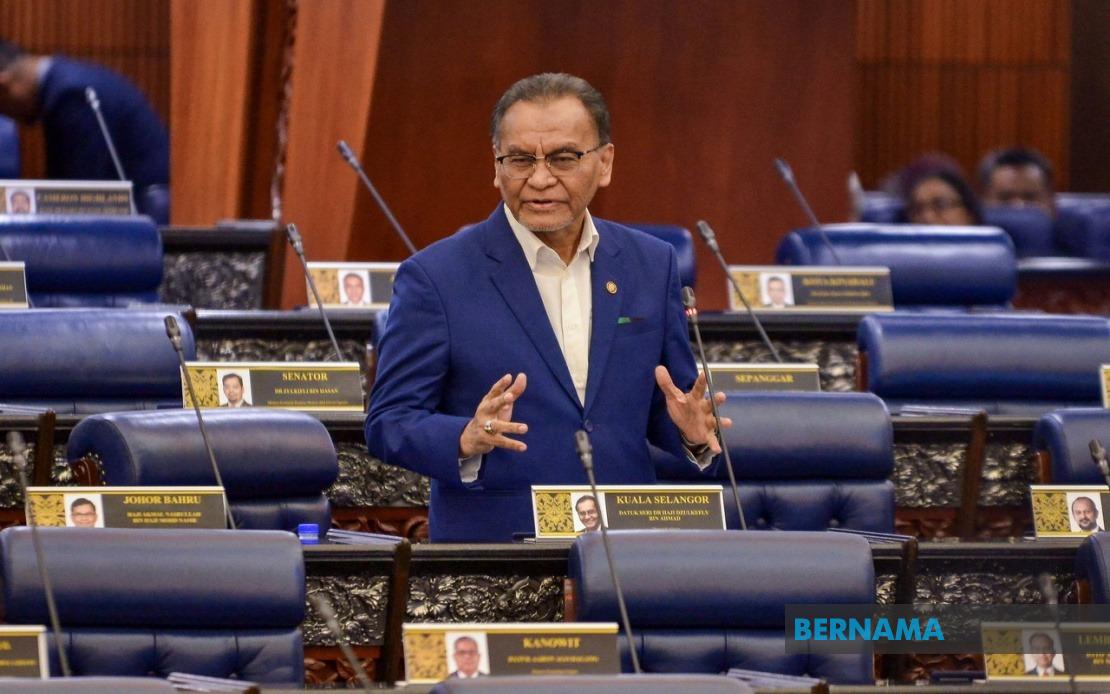
The Malaysian government is rolling out a suite of healthcare initiatives designed to ensure that both middle-income and lower-income households maintain reliable access to medical protection, with the newly introduced MediAsas Plan standing as a centrepiece of this expanded coverage strategy. Health Minister Datuk Seri Dr Dzulkefly Ahmad unveiled the multi-pronged approach during parliamentary proceedings, emphasising that MediAsas joins existing programmes including the Healthcare Scheme for the B40 Group (PeKa B40), the MADANI Healthcare Scheme, and MySalam as part of a comprehensive national health protection architecture.
MediAsas represents a targeted response to the escalating costs of private medical treatment in Malaysia, a persistent concern for households squeezed between public sector waiting times and ballooning out-of-pocket expenses. Structured as both a medical insurance and takaful offering, the scheme operates on a fundamentally different premise from traditional private healthcare access—it aims to deliver protection at premium rates that reflect the actual affordability constraints of the M40 segment, broadly defined as households earning between RM4,850 and RM10,970 monthly. This positioning reflects government recognition that private healthcare, while sometimes necessary for specialist services or faster access, has become economically inaccessible for millions of middle-income Malaysians without subsidised options.
The minister's clarification that MediAsas complements rather than replaces public healthcare carries strategic significance for regional health policy observers. Malaysia's public healthcare system, funded through general taxation and serving as the primary universal health coverage mechanism, continues as the foundational pillar for all Malaysians regardless of income. By explicitly framing MediAsas as an auxiliary layer rather than a substitution, the government signals commitment to preserving public health as a social good while acknowledging that supplementary private options serve legitimate demand. This distinction matters because neighbouring Southeast Asian nations grapple with precisely this balance—how to maintain robust public systems while allowing market mechanisms to address specific demand segments.
The MediAsas framework incorporates the Diagnosis Related Group (DRG)-based payment mechanism, a significant structural innovation that ties reimbursement to standardised treatment protocols rather than fee-for-service billing. This mechanism, gradually being integrated into participating private hospitals, theoretically constrains cost escalation by establishing expected reimbursement levels for defined conditions and procedures. For consumers, this creates more predictable out-of-pocket exposure; for private providers, it introduces discipline into billing practices that have historically contributed to healthcare inflation across the region. The pilot phase will involve six insurance and takaful companies operating within the Klang Valley catchment area, scheduled to commence at month's end before national expansion takes effect from January 2027.
The initiative sits within the broader RESET framework, an acronym that encompasses multiple healthcare system improvements extending well beyond insurance product innovation. Electronic medical records interoperability forms a critical component, addressing the inefficiency whereby patients undergo duplicate testing and imaging across public and private systems due to fragmented digital infrastructure. Restructuring of private hospital billing practices represents another RESET pillar, targeting the opacity and variable pricing that have made private healthcare costs unpredictable for consumers. These systemic reforms, while less visible than product launches, potentially offer greater long-term value by reducing administrative waste and improving clinical coordination.
The B40 group—households earning below RM4,850 monthly—remains protected through an established infrastructure comprising 154 hospitals and over 3,000 public healthcare facilities, supplemented by categorical schemes targeting their specific needs. PeKa B40 provides direct healthcare subsidies for this income segment, while MADANI Healthcare and MySalam offer additional protection layers. This tiered system acknowledges that lower-income households face distinct healthcare barriers centred on affordability and access to geographically proximate facilities, whereas M40 groups often seek choice, quality, and speed—factors that private options address but at costs previously beyond reach for many.
MediAsas's explicit inclusion of pre-existing conditions, non-communicable diseases (NCDs), and mental health coverage marks a departure from traditional insurance conservatism that excluded these categories or charged prohibitive premiums. Malaysia's epidemiological profile increasingly mirrors other high-income nations, with NCDs including diabetes, hypertension, and cardiovascular disease accounting for the majority of disease burden and healthcare expenditure. Mental health, historically marginalised in insurance frameworks across Southeast Asia, receives explicit attention within MediAsas parameters. These inclusions reflect evolving government recognition that modern health protection schemes must address the actual disease patterns affecting insured populations rather than cherry-picking low-risk cohorts.
The phased rollout strategy—pilot in Klang Valley followed by nationwide expansion—reflects cautious pragmatism. The Klang Valley, encompassing metropolitan Kuala Lumpur and surrounding areas, contains concentrated private hospital capacity, insurance distribution infrastructure, and high penetration of banking services necessary for premium collection. Testing MediAsas within this geography allows authorities and participating insurers to refine operational processes, identify unanticipated adverse selection or utilisation patterns, and adjust premium or benefit structures before scaling nationally. This approach contrasts with programmes that launch fully nationwide without graduated implementation, minimising operational disruption risk.
For Malaysian consumers, MediAsas potentially redistributes private healthcare access away from high-income groups exclusively. Middle-income households currently employ various coping strategies—delaying treatments, seeking services at crowded public facilities, or stretching household budgets to access private care—that MediAsas aims to obviate through systematically cheaper premium options. The scheme's success hinges on whether affordable premiums reflect genuine cost discipline at private hospitals or represent temporary subsidisation unsustainable long-term. Early pricing signals and claims experience from the Klang Valley pilot will offer investors and observers crucial information about scheme viability and scalability.
Regionally, Malaysia's approach offers a demonstration model for neighbouring economies wrestling with similar healthcare access and affordability challenges. Thailand, Indonesia, and the Philippines all manage mixed public-private healthcare systems where middle-income populations face coverage gaps and cost pressures comparable to Malaysia's M40 situation. The integration of takaful products alongside conventional insurance reflects Malaysia's distinctive Islamic finance development, a feature difficult to replicate elsewhere but illustrative of how schemes can accommodate local institutional and cultural preferences. Success with MediAsas could influence regional health financing policy discussions, particularly regarding voluntary insurance expansion for middle-income cohorts as a complement to public systems.

