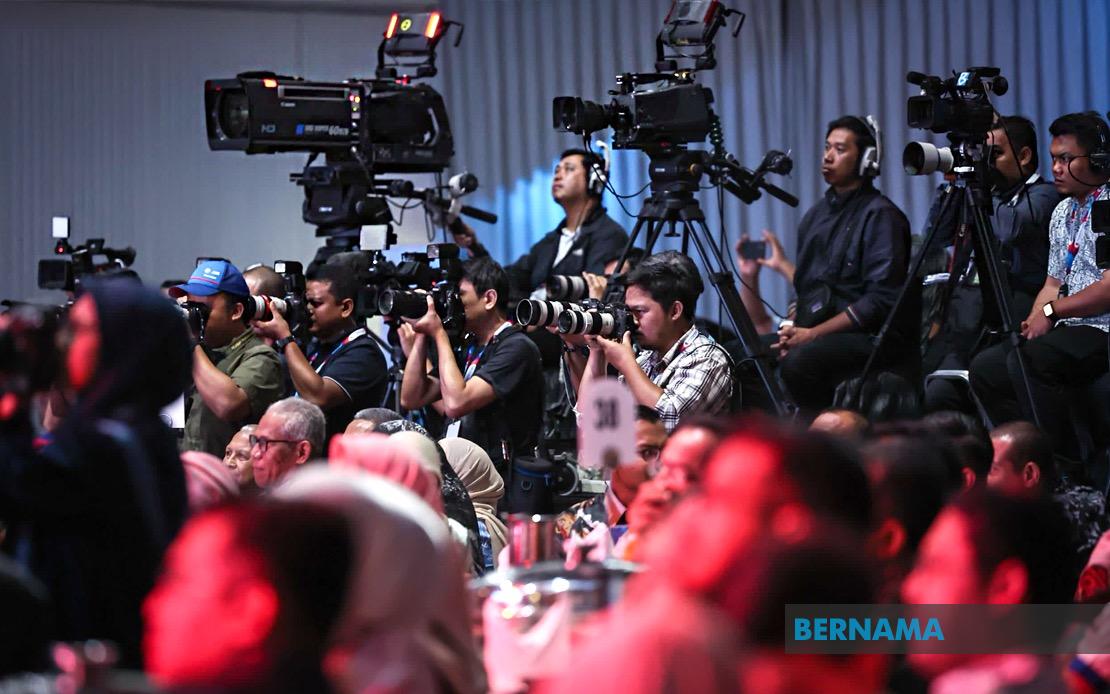
The Malaysian Media Council has publicly supported Prime Minister Datuk Seri Anwar Ibrahim's recent position that grievances lodged against journalists working for recognised news organisations must be initially processed through the Council's established procedures rather than proceeding directly to law enforcement or legal action. This endorsement represents a significant development in how Malaysia approaches the balance between media accountability and press freedom, two principles that have come under considerable scrutiny both domestically and internationally.
The Council's backing of this approach underscores its conception of itself as an autonomous regulatory institution capable of managing disputes within the journalism sector according to professional standards rather than through conventional legal channels. By accepting complaints first and subjecting them to structured assessment, the MMM positions itself as a buffer between aggrieved parties and more formal punitive mechanisms, thereby creating space for proportionate and contextually appropriate responses to journalistic concerns. This institutional intermediary role has become increasingly important as media outlets face mounting pressure from various quarters, and as questions mount about whether traditional legal frameworks adequately account for the specific nature of journalistic work.
According to the Council's interpretation, the Prime Minister's statement carries particular weight because it formally recognises the legitimacy of media self-regulation as distinct from judicial intervention or law enforcement action. This recognition matters substantially within Malaysia's media landscape, where questions about editorial independence and the chilling effects of legal action against journalists have periodically surfaced. The MMM argues that by channelling complaints through its mechanism first, the system protects journalists from what it terms arbitrary pressure, hasty investigations, or punitive measures taken without due consideration of journalistic context and democratic principles.
The Council has been explicit that its role is not to replace courts or law enforcement agencies entirely, but rather to specialise in disputes arising from journalistic practice, media ethics, reporting accuracy, the right of reply, correction requests, and allegations of unfair media treatment. This demarcation suggests a tiered approach where the Council handles professional and ethical matters while criminal or civil cases proceed through conventional channels when warranted. Such a framework aims to prevent low-level professional disputes from automatically escalating into formal legal proceedings, which could carry severe consequences for journalists and newsrooms regardless of the underlying merits.
When complaints are submitted to the MMM—from members of the public, organisations, government bodies, or any entity affected by media coverage—the Secretariat first determines whether the grievance falls within the Council's jurisdiction and genuinely relates to journalistic or media practice rather than other matters. If deemed appropriate, the Council may request the relevant media organisation to provide a response, seek clarification, or take corrective measures. Should the preliminary assessment not resolve the issue, the complaint advances to more detailed evaluation under the Council's Code of Conduct and established journalism principles, ensuring a structured progression rather than immediate escalation.
The Council emphasises that this mechanism is not designed to shield journalists or media organisations from accountability but rather to ensure that accountability operates through proper, independent, transparent, and balanced procedures. This distinction is crucial for understanding how the MMM reconciles seemingly competing objectives: protecting media freedom while maintaining professional standards and responsibility. The Council argues that these principles need not conflict if institutions are designed to pursue both simultaneously, with robust self-regulation serving as evidence that the media industry takes accountability seriously.
The timing of this statement reflects growing international attention to Malaysia's media environment, particularly regarding the country's ranking in the World Press Freedom Index. The Council has acknowledged that the Prime Minister's directive emerged partly from concerns about Malaysia's international standing on press freedom, suggesting that institutional improvements to complaint handling could help address external perceptions about the state of journalism in the country. By establishing clear procedures that prioritise professional review over immediate legal action, the MMM and the government signal a commitment to media freedom principles recognised by international monitoring bodies.
The Council has also appealed to all stakeholders—including government agencies, politicians, public institutions, civil society organisations, and private citizens—to embrace the complaints mechanism whenever disputes arise concerning media reporting. This broader call represents an attempt to shift Malaysia's institutional culture toward resolving media disputes through professional channels rather than resorting to public pressure, threats, harassment, or punishment outside formal processes. Such a cultural shift would require sustained engagement and cooperation among numerous actors with differing interests and perspectives on media accountability.
For Malaysian media practitioners and organisations, this development potentially reduces exposure to sudden legal or administrative action triggered by complaints, provided they remain responsive to the Council's assessments and recommendations. However, the arrangement also places significant expectations on the MMM to handle complaints with rigour and impartiality, maintaining credibility with both media organisations and the wider public. Any perception that the Council operates as a rubber stamp for media interests or, conversely, as an extension of state pressure on journalism could undermine the legitimacy this framework requires to function effectively.
The emphasis on proportionality and context in addressing journalistic concerns aligns with international best practices in media regulation, where self-regulatory bodies in functioning democracies typically assess whether coverage involved negligence, malice, or genuine professional disagreement rather than treating all complaints with uniform severity. This approach acknowledges that journalism inherently involves judgment calls, interpretation, and professional discretion that may not align with every reader's preferences or even with disputed factual claims, yet still serve legitimate democratic functions.
Looking forward, the success of this framework depends heavily on whether all relevant parties—journalists, media organisations, government authorities, and the public—genuinely accept the MMM as an appropriate first point of resolution for media-related grievances. Building such institutional trust requires transparent operations, consistent application of standards, and demonstrated willingness to find fault with media organisations when evidence warrants. The Council has committed to working closely with the government, Parliament, media organisations, civil society, and the public to implement this approach effectively and in alignment with Malaysia's democratic interests, suggesting an intention to maintain ongoing dialogue and refinement as the system develops.

